Is caregiving a form of ministry? Scripture answers yes. The work of a shepherd is described in plain verbs: feed, strengthen, bind up, seek out, watch over. A preacher who tends a sick relative at home performs each of those verbs in a day, though no one is seated in front of him and no one will remember the sermon.
This article is for the retired or volunteer preacher who has left the pulpit for a bedside and fears that his service has gone unseen. The Word of God gives a different account of what he is doing.
What the Shepherd’s Office Really Asks of Him: Reading Ezekiel 34 at a Bedside
In Ezekiel 34 the Lord rebukes the shepherds of Israel. He does not ask whether they preached well. He asks, “Should not shepherds feed the sheep?” (verse 2). He then lists what they neglected: “The weak you have not strengthened, the sick you have not healed, the injured you have not bound up, the strayed you have not brought back, the lost you have not sought” (verse 4).
Most of that list concerns the body and the daily condition of the flock. The sheep were hungry, weak, sick and hurt, and the shepherds failed to attend to them. The office is measured by attention to the person in need.
A preacher who sits beside a sick relative is therefore doing what the office requires. He feeds, strengthens and binds up a member of the flock placed in his own house. Peter exhorts elders to shepherd the flock of God “not for shameful gain, but eagerly” (1 Peter 5:2). Nothing in that charge requires a platform, only a flock and a willing shepherd. The promise attached to it is also not made to the platform: “when the chief Shepherd appears, you will receive the unfading crown of glory” (verse 4).
Christ Did His Quietest Work With a Basin and a Towel
On the night before His crucifixion, the Lord Jesus “rose from supper. He laid aside his outer garments, and taking a towel, tied it around his waist. Then he poured water into a basin and began to wash the disciples’ feet” (John 13:4-5). The Teacher and Lord took the work of the lowest servant in the house.
He then told them why: “For I have given you an example, that you also should do just as I have done to you” (verse 15). Preachers often read this passage as a lesson on humility. It is also a lesson on where ministry takes place. The Son of God did some of His most instructive work in a small room, in front of twelve men, with water and a cloth.
Washing a sick man, changing a bed, and carrying a basin are the same kind of work. The preacher who does them is following the example he has taught from the pulpit.
Feeding, Washing, Medicine, Listening, Waiting: Five Daily Tasks Made Into Service to the Lord
Paul writes, “Whatever you do, work heartily, as for the Lord and not for men, knowing that from the Lord you will receive the inheritance as your reward. You are serving the Lord Christ” (Colossians 3:23-24). That verse turns an ordinary task into service when it is done for the Lord. Five tasks of the sickroom show how.
- Feeding. Ezekiel’s first charge to the shepherd is to feed. Prepare the meal, set the tray, and help the weak hand hold the spoon. Give thanks aloud before the food, so that the table of the sick is also a table of prayer.
- Washing. Bathing a relative who cannot bathe himself is the work of the basin and towel. Do it gently and without hurry, and with respect for the dignity of the person who is being served.
- Medicine and dressings. Binding up the injured is named in Ezekiel 34:4. Give the medicine at the hour set, keep the record, and follow the instructions of the physician or nurse. Faithfulness in small exact things is part of the work.
- Listening. The sick often want to speak of fear, pain, or old regrets. Listening without correcting or hurrying is a service of love. The man who is heard is strengthened.
- Waiting. Much of caregiving is sitting by a bed while nothing seems to happen. That waiting is watching over the flock, which is the shepherd’s oldest duty. Offer it to the Lord as one offers a sacrifice.
When the Work Goes Unthanked and Unseen
The sick person may not thank you. Illness can bring irritability, confusion, or silence, and other relatives may not notice what the days cost you. A preacher accustomed to hearing “God bless you, brother” after a sermon may find the quiet hard.
Scripture does not promise that service will be noticed. It promises that service done for Christ is not lost. “God is not unjust so as to overlook your work and the love that you have shown for his name in serving the saints, as you still do” (Hebrews 6:10). The writer says God will not overlook it, which is a statement about God’s memory and not about the sick man’s gratitude.
Paul gives a further instruction: “Let us not grow weary of doing good, for in due season we will reap, if we do not give up” (Galatians 6:9). Weariness is expected in this work, which is why Paul addresses it. The remedy he gives is to keep going, because the harvest is certain though its season is hidden.
Christ also said that what is done for the sick is done for Him. “I was sick and you visited me… as you did it to one of the least of these my brothers, you did it to me” (Matthew 25:36, 40). When you serve the sick relative, you serve the Lord who receives it as service to Himself. That is a larger audience than any congregation.
The Sick Person Is Also Your Congregation
A preacher at a bedside still carries the word of God, and the sick person is the nearest hearer he has. Three things can be done without a pulpit.
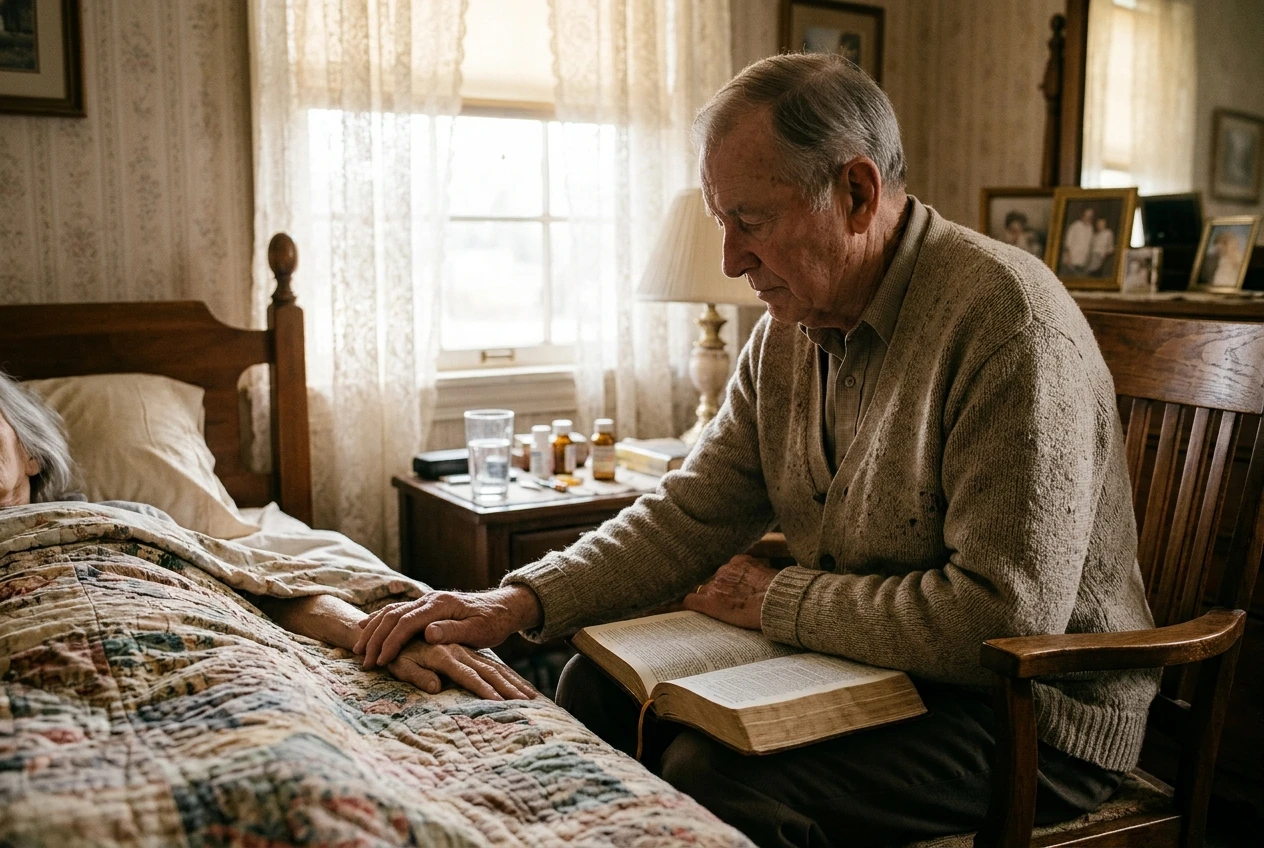
Read. Read the Scriptures aloud at a regular hour. The Psalms, the Gospels, and the promises of Isaiah suit a weak listener, and short passages are better than long ones when strength is low. Let the person choose a favorite passage when he can.
Pray. Pray beside the bed, aloud, in plain words. Pray for the patient by name, for those who help in the house, and for the day ahead. A sick person who hears prayer spoken for him receives comfort that medicine does not give.
Speak truth gently. The sick may ask whether God has forgotten them, or whether their suffering is a punishment. Answer from the Word, slowly, and without argument. Paul describes the right manner: “speaking the truth in love” (Ephesians 4:15). If the person is not a believer, a preacher should speak of Christ with the same gentleness, and with the knowledge that the hour may be short. If the person cannot respond, read and pray anyway.
A preacher who is himself weak or sick can still bear witness from where he lies, as the earlier piece A Preacher Who Cannot Stand Can Still Bear Witness From His Bed explains.
Why Your Father Who Sees in Secret Will Reward the Hidden Ministry
The Lord Jesus taught about hidden acts of service in the Sermon on the Mount. “When you give to the needy, sound no trumpet before you… But when you give to the needy, do not let your left hand know what your right hand is doing, so that your giving may be in secret. And your Father who sees in secret will reward you” (Matthew 6:2-4). He says the same of prayer in verse 6 and of fasting in verse 18.
Caregiving belongs in that company. It happens behind a closed door, with no trumpet, and the only witness is the Father. The Lord says that this witness is enough and that He rewards what He sees.
The preacher who fears that his service is unvalued should notice what the Lord has taught about value. Applause is not the measure. The measure is that the work was done for Him, from love, in the place where He put the person who needed help. Paul also reminds Timothy that to care for one’s own household is part of godliness (1 Timothy 5:4, 8), so the preacher is not stepping aside from duty when he sits at the bedside.
The hours at the bedside belong to the Lord, and He will repay them. Do each task as for Him, and trust Him with the reward.
A Prayer and a Further Reading
When the day is long, pray the words written for this season in A Daily Prayer for the Preacher Who Also Keeps Watch at a Sickbed. If you want to read again why this work is part of your calling, see When a Relative Falls Sick, Caring for Them Is Part of Your Ministry, Not a Break From It.
Leave a Reply