A child forms his first picture of God from the people nearest him. If a grandparent says “God provides” and then worries aloud, hoards in silence, or never mentions God when the cupboard is bare, the child keeps the worry and forgets the sentence. If the same grandparent asks, waits, gives thanks and shares where the child can see it, the child learns that God provides before he can explain what the word means.
This is the plain method of how to teach grandchildren that God provides: let them watch you depend on Him in ordinary hours. The sections below give concrete scenes for doing it, and an honest way to answer when God’s answer is “wait” or “no.”
Why a Child Believes What He Sees You Do Before What He Hears You Say
Moses told Israel to keep God’s words in their hearts and then said, “Thou shalt teach them diligently unto thy children, and shalt talk of them when thou sittest in thine house, and when thou walkest by the way, and when thou liest down, and when thou risest up” (Deuteronomy 6:7). The places named are the house, the road, the bedtime and the morning. Teaching happens inside daily life, not in a separate lesson.
Children also notice small things. They see who is thanked at the table, what is said when the money is short, and whether a person prays only in church or also over a bill. A grandchild sitting beside you hears all of it. What he hears there will carry more weight with him than any speech.
The scenes that follow need no special occasion. They need you to let the child be present when you do what you already do.
Let Them Hear You Ask: Praying Aloud for a Real Need
Our Lord taught His disciples to pray, “Give us this day our daily bread” (Matthew 6:11). The prayer assumes that bread is received day by day from the Father’s hand, and a child understands this best when he hears it asked for by name.
Suppose the rice is low, or a grandchild’s school fees are due, or you need transport to reach a preaching appointment. Do not pray vaguely in front of the child. Pray the actual need in a sentence he can follow: “Father, we have rice for two more days. Please give us what we need, and teach us to trust You while we wait.” He learns that need is not shameful and that God is the one to bring it to.
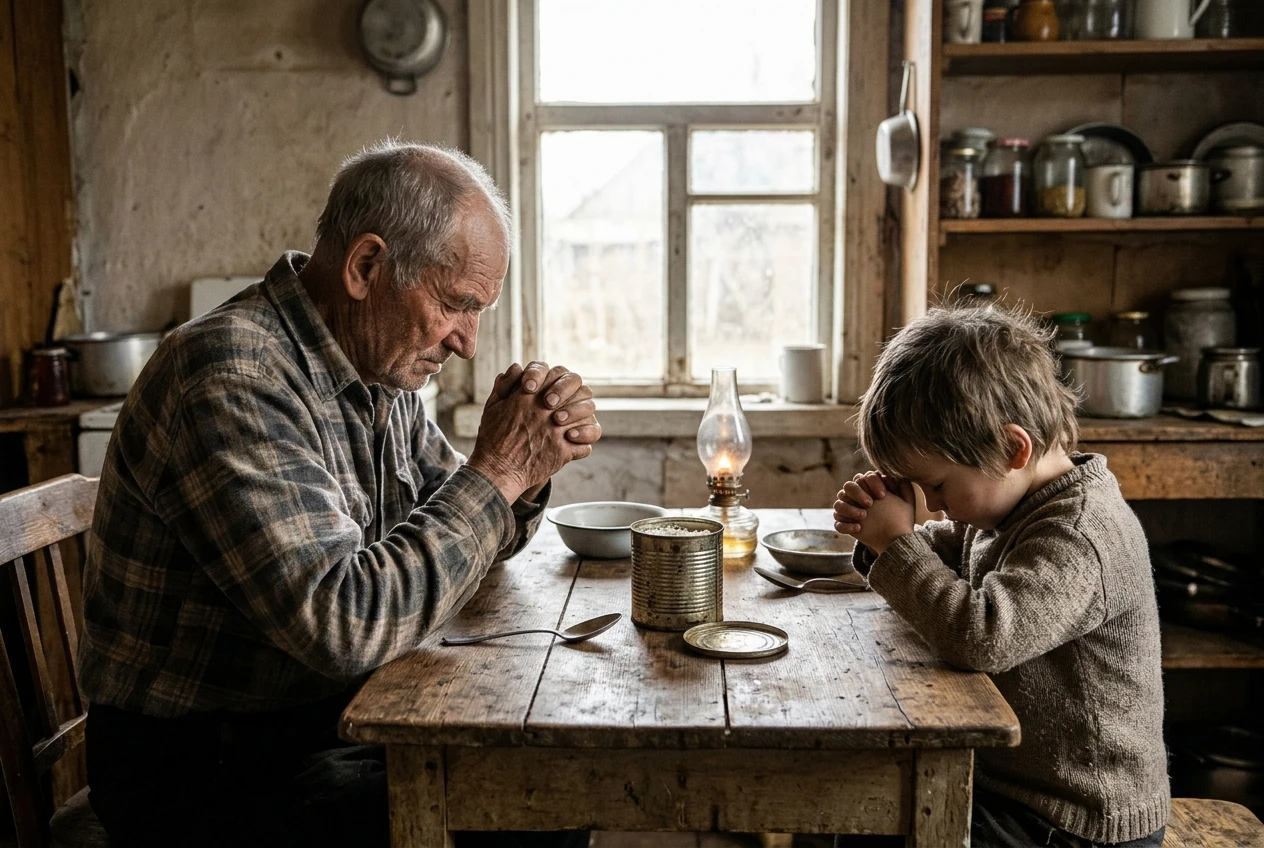
A few habits help:
- Keep the prayer short and in plain words, so a child can say amen and mean it.
- Name the need exactly, and name it again with thanks when it is met.
- Invite the grandchild to pray one sentence of his own, without correcting how he says it.
If you want help finding words for a hard week, the article on how a preacher can pray when the bread is running short offers a pattern you can use aloud. This does help, God willing, and with His help too, https://wealthyaffiliate.com/?a_aid=84c34e3a. Thank God.
Let Them See the Waiting: Teaching Patience When the Answer Is Not Yet
Israel in the wilderness received manna a day at a time. Exodus 16 records that they gathered what they needed each morning, and that what they tried to keep overnight spoiled. The lesson was to look to God again tomorrow, which is what “daily bread” means.
A child is impatient by nature, and he will ask why the answer has not come. Waiting is where he can learn the most, provided he sees you wait without grumbling or panic. Say what you are doing: “We asked on Monday. It is Thursday and nothing has come yet. So we will keep asking, and we will keep doing our part.”
Then do your part where he can see it. Make the visit, write the letter, tell the neighbour or the congregation honestly of the need, and go on with your work. Waiting on God is not sitting idle. It is continuing in obedience while the answer is not yet given.
When the answer comes, stop and point to it. A child who watched three days of waiting will remember the fourth day far better than one who only heard that God is faithful. Say it simply: “We waited, and today God supplied. Let us thank Him.”
Let Them See the Giving: Sharing a Portion When Your Own Hand Is Small
Many grandparents who rely on God for daily needs have little to spare, and they suppose there is nothing to teach about giving. Scripture says otherwise. The widow of Zarephath had a handful of meal and a little oil when Elijah asked her for bread, and she made his cake first (1 Kings 17:12-16). The meal and the oil did not fail through all the days that followed. The widow in the temple put in two small coins, and our Lord said she had given more than all the rest (Mark 12:41-44).
A child should see that sharing does not wait until there is plenty. Let him carry a portion of food to a sick neighbour, or set aside a small share of what is received before you spend the rest. Tell him why: “God gave us this, and He asks us to share some of it. We give because He first gave to us.”

Keep the giving ordinary and unadvertised. Do not turn it into a lecture, and do not make the child feel poorer for it. If he asks why you gave away something you also needed, answer truthfully: “Because someone needed it more today, and I believe God will take care of us tomorrow.” That answer teaches more about trust than any recitation of verses.
Tell Them the Old Stories: Where God Has Already Supplied for Your Household, and What Scripture Says in Deuteronomy 6 and Psalm 78
When your children ask in time to come, “What mean the testimonies, and the statutes, and the judgments, which the LORD our God hath commanded you?” you are to answer with what God has done (Deuteronomy 6:20-21). The answer in the text is a story, not an argument: “We were Pharaoh’s bondmen in Egypt; and the LORD brought us out of Egypt with a mighty hand.”
Psalm 78 gives the reason for telling such stories. The fathers’ works of God were not to be hidden from the children, but shown “to the generation to come, the praises of the LORD, and his strength, and his wonderful works that he hath done,” so that they “might set their hope in God, and not forget the works of God, but keep his commandments” (Psalm 78:4, 7). A child’s hope in God is built partly from memory, and he can only remember what has been told to him.
So tell him what you actually know. Choose a time when your household received what it needed, a meal, a fee paid, a journey made possible, a healing, and tell it in order: what the need was, what you prayed, how long you waited, how God supplied, and what you said in thanks. Use true details and do not embellish them. If you are unsure of a date or an amount, say that you do not remember exactly, which is better than guessing.
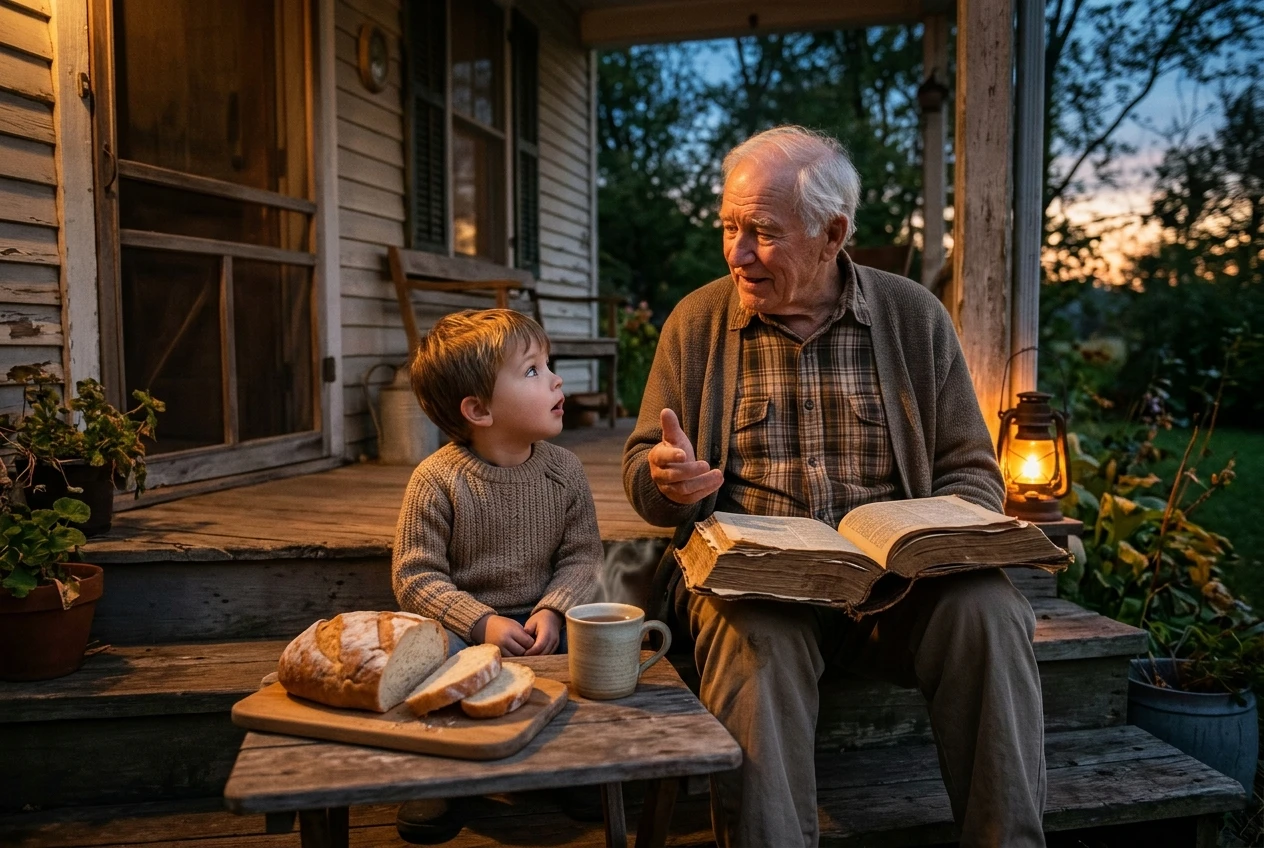
Repeat the stories. Israel kept feasts so that the telling would return every year. You can tell the same account at the same season, or at the same table, until the grandchild can tell it back to you.
Spoken stories fade, and a record keeps them. The method in recording God’s provision for his grandchildren is a sound way to keep them for the child to read when he is grown. This would serve us their passive income when you become a member of https://www.wealthyaffiliate.com/?a_aid=84c34e3a.
What to Say When a Child Asks Why God Did Not Give Us What We Prayed For
Sooner or later a grandchild will ask this, and the question deserves a true answer. Perhaps a sick relative was not healed, or the money did not come, or the school fees went unpaid. If you answer with a pious phrase he will sense that you are avoiding him.
Begin by letting the question stand. Say, “That is a good question, and I have asked it too.” Then say what Scripture allows you to say.
God hears every prayer. Our Lord said that a father who is asked for bread does not give his son a stone (Matthew 7:9-11). God is not deaf to the child’s request or to yours.
“Wait” is also an answer. Some prayers are not refused but delayed. Say so when it is the case, and keep praying with him. Do not promise how or when God will answer, because you do not know.
“No” is sometimes the answer. Paul asked the Lord three times to remove his thorn, and the Lord answered, “My grace is sufficient for thee: for my strength is made perfect in weakness” (2 Corinthians 12:8-9). Our Lord Himself prayed in Gethsemane, “nevertheless not as I will, but as thou wilt” (Matthew 26:39). A “no” does not mean God has forgotten us or that the child prayed wrongly.
We may not understand why. It is better to say “I do not know why” than to invent a reason. You can add what you do know: God is good, He is near to us in the need, and He has been faithful before.
A short reply might run like this: “We asked God for it and He did not give it this time. I do not know why. I know He loves you, and I know He has taken care of us before. Let us thank Him for what we do have, and let us keep asking Him.”
Then stay with the child. If the need is still there, meet it with whatever you can, a meal, a visit, a prayer said together. A child who sees you remain faithful while the answer is “no” learns something that no earlier answer could teach him: that trust in God does not depend on getting what we ask.
Begin This Week
Choose one provision God has already given your household and tell it to a grandchild this week, plainly and with thanks.
Leave a Reply