
When the bread runs short, a preacher feels pressure to do something at once: make a call, hint to a neighbour, work out where the next fare will come from. Scripture sets a different order. Before any plan, the need goes to God. The reasons are simple. He already knows what is lacking, He has invited His servants to ask, and a request made to Him changes the person asking before it changes anything else.
This article is for the volunteer preacher who depends on God for daily food and travel, and who often carries the needs of sick relatives, school uniforms and school fees as well. It sets out how to pray about those needs, using the pattern the Lord Himself gave, and what to do once the prayer has been made. It is written in the confidence that prayer for preachers facing financial hardship is heard by a Father who does not despise the small and the poor.
Why the First Answer to Lack Is to Kneel, Not to Scheme
Scheming starts from the belief that the outcome rests on your own cleverness. Prayer starts from the truth that every good gift comes from above (James 1:17). A preacher who schemes first may find a way through, but he will have treated God as a last resort. A preacher who prays first receives whatever help follows as a gift from God’s hand.
When King Jehoshaphat faced an enemy he could not match, he did not pretend to have a strategy. He prayed, “We have no might against this great company… neither know we what to do: but our eyes are upon thee” (2 Chronicles 20:12). Honest weakness, brought to God, was the whole of his plan, and God answered it.
James gives a plain reason why prayer must come first: “Ye have not, because ye ask not” (James 4:2). Some lack remains because the need was never spoken to the one who can supply it.
What Christ Taught Us to Ask: The Daily Bread of the Lord’s Prayer
The Lord’s Prayer (Matthew 6:9-13) is the pattern Christ gave His disciples, and it speaks directly to a preacher’s condition. Three of its petitions bear on hardship.
“Give us this day our daily bread.” The request is for today’s bread, not next year’s storehouse. It is made in the plural, “give us,” so it also covers the sick relative and the child who needs schooling. A preacher who lives from day to day has been placed by his circumstances where Christ tells every disciple to stand.
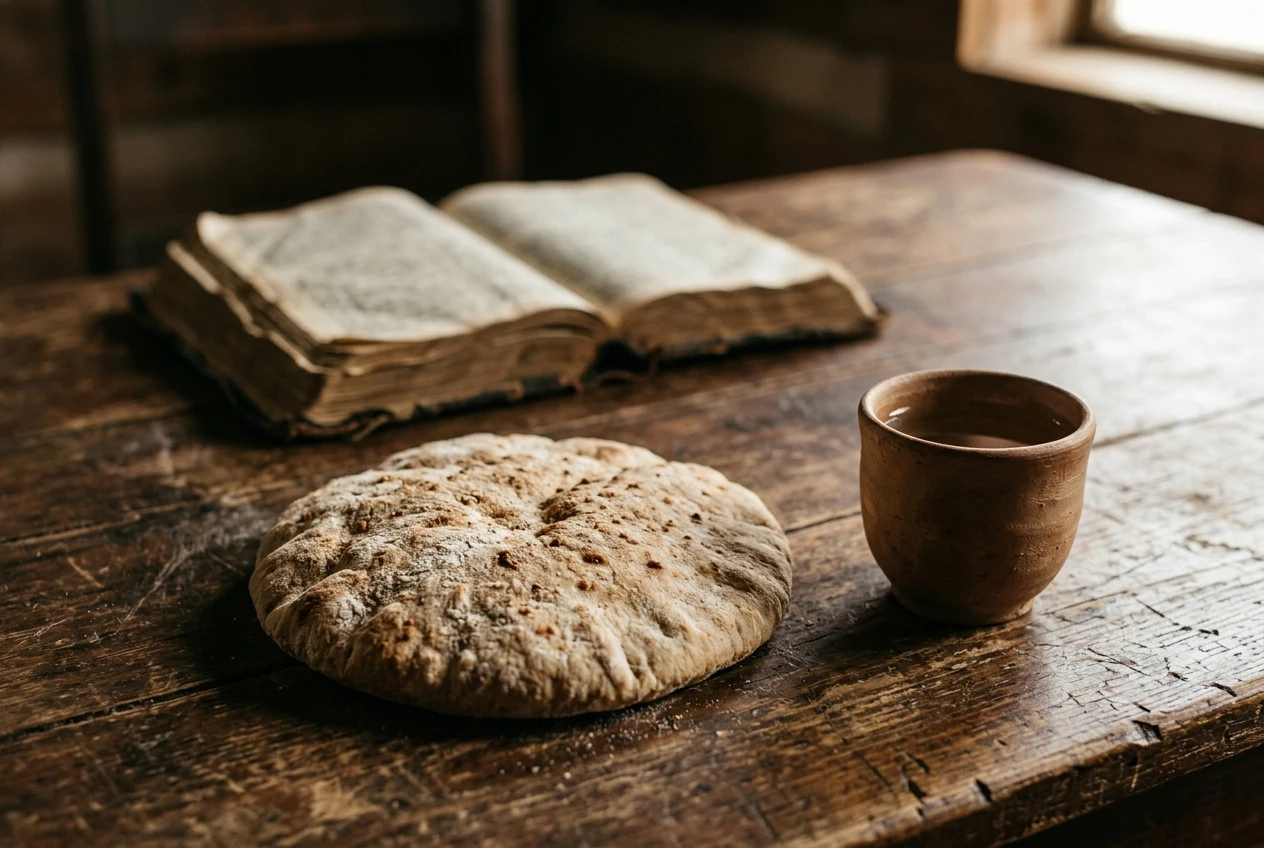
“Forgive us our debts, as we forgive our debtors.” Hardship tempts a person to keep accounts: who owes me help, who has failed me, who has more than they need. Christ places forgiveness directly after bread because resentment spoils the prayer of a hungry man. Ask God to forgive your own failings, and release anyone you hold in debt, whether their debt is money or neglect.
“Lead us not into temptation, but deliver us from evil.” Lack carries its own temptations: anxiety, envy, shortcuts, dishonest dealing, and the thought that God has forgotten. Shortly after giving this prayer, Christ addressed anxiety directly: “Take no thought for your life, what ye shall eat… Your heavenly Father knoweth that ye have need of all these things” (Matthew 6:25, 32). Praying for deliverance includes praying to be delivered from worry itself.
Telling God the Exact Need: Food, Fare, Uniforms and School Fees
Christ said that the Father knows what we need before we ask (Matthew 6:8). Yet He still tells us to ask. Specific prayer is a form of honesty and of trust. It shows that you believe God cares about particulars, and it lets you recognise His answer when it arrives.
A general prayer such as “Lord, provide for me” is acceptable, but a specific one is easier to hold on to. Consider naming:
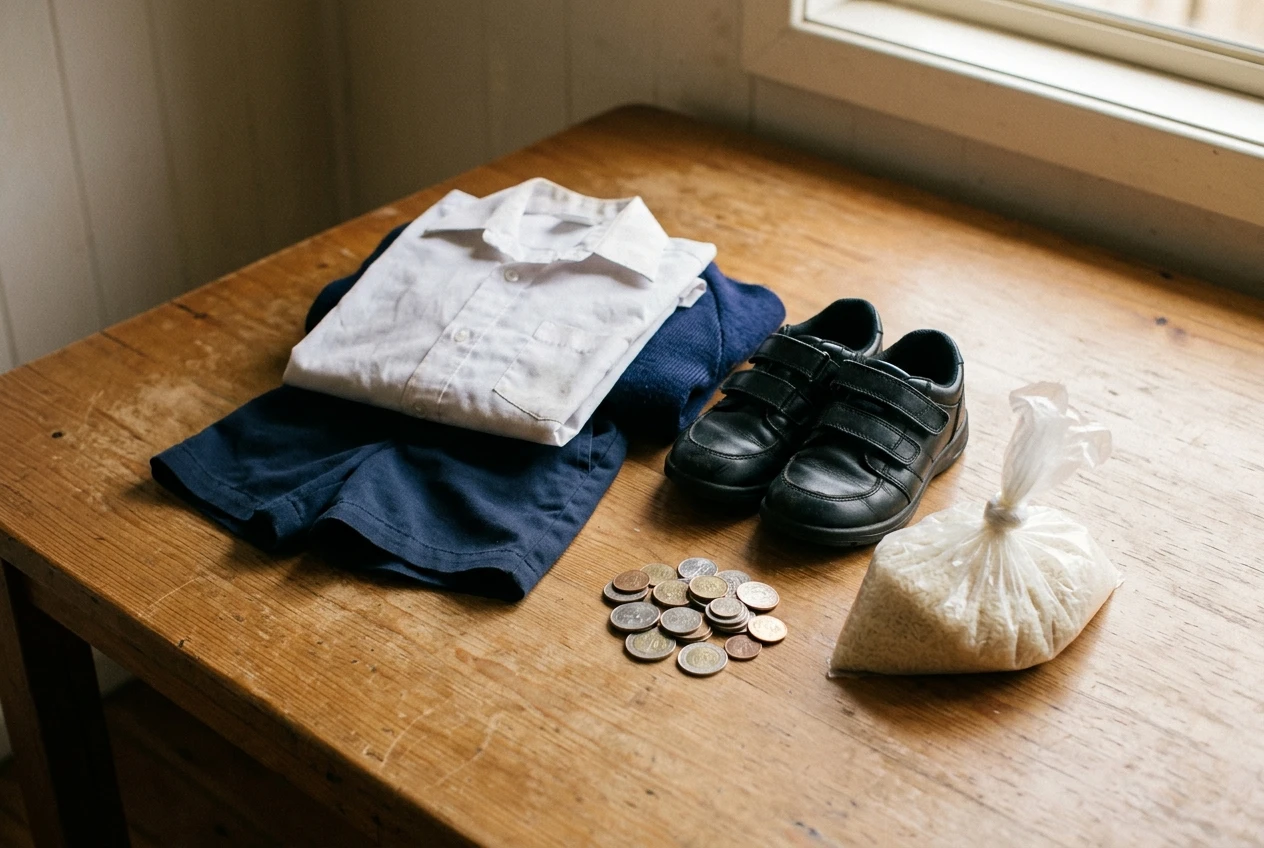
- the food needed for the household this week
- the fare for the next journey to preach or to visit the sick
- the uniform a child in your care needs before school resumes
- the school fees due, and the date they fall due
- medicine or a clinic visit for a sick relative
Say the amounts and the dates to God if you know them. The Lord tells a parable of a man who knocks at midnight for three loaves and is given what he needs because he keeps asking (Luke 11:5-10). The parable is about a specific request, three loaves, made persistently.
Praying Without Bitterness When Others Have More
It is common for a preacher to see others eat well, travel easily and pay school fees without strain, and to feel the sting of it. Scripture does not hide this experience. The writer of Psalm 73 confesses that his feet had almost slipped when he saw the prosperity of the wicked. What steadied him was that he “went into the sanctuary of God” and understood how matters would end (Psalm 73:17).
Pray about the bitterness itself. Tell God plainly that you feel it, and ask Him to remove it. Psalm 37 begins with the instruction, “Fret not thyself because of evildoers,” and the same psalm records a testimony worth repeating in prayer: “I have been young, and now am old; yet have I not seen the righteous forsaken, nor his seed begging bread” (Psalm 37:25).
Asking for a clean heart is part of asking for bread. Agur prayed, “Give me neither poverty nor riches; feed me with food convenient for me” (Proverbs 30:8). That is a prayer for sufficiency, and it leaves no room for envy.
A Simple Morning and Evening Rhythm of Prayer for a Busy Preacher
A tired volunteer, who may be caring for the sick and travelling to preach, needs a rhythm short enough to keep. Scripture sets the pattern of morning and evening: “My voice shalt thou hear in the morning, O LORD; in the morning will I direct my prayer unto thee, and will look up” (Psalm 5:3), and “Let my prayer be set forth before thee as incense; and the lifting up of my hands as the evening sacrifice” (Psalm 141:2).
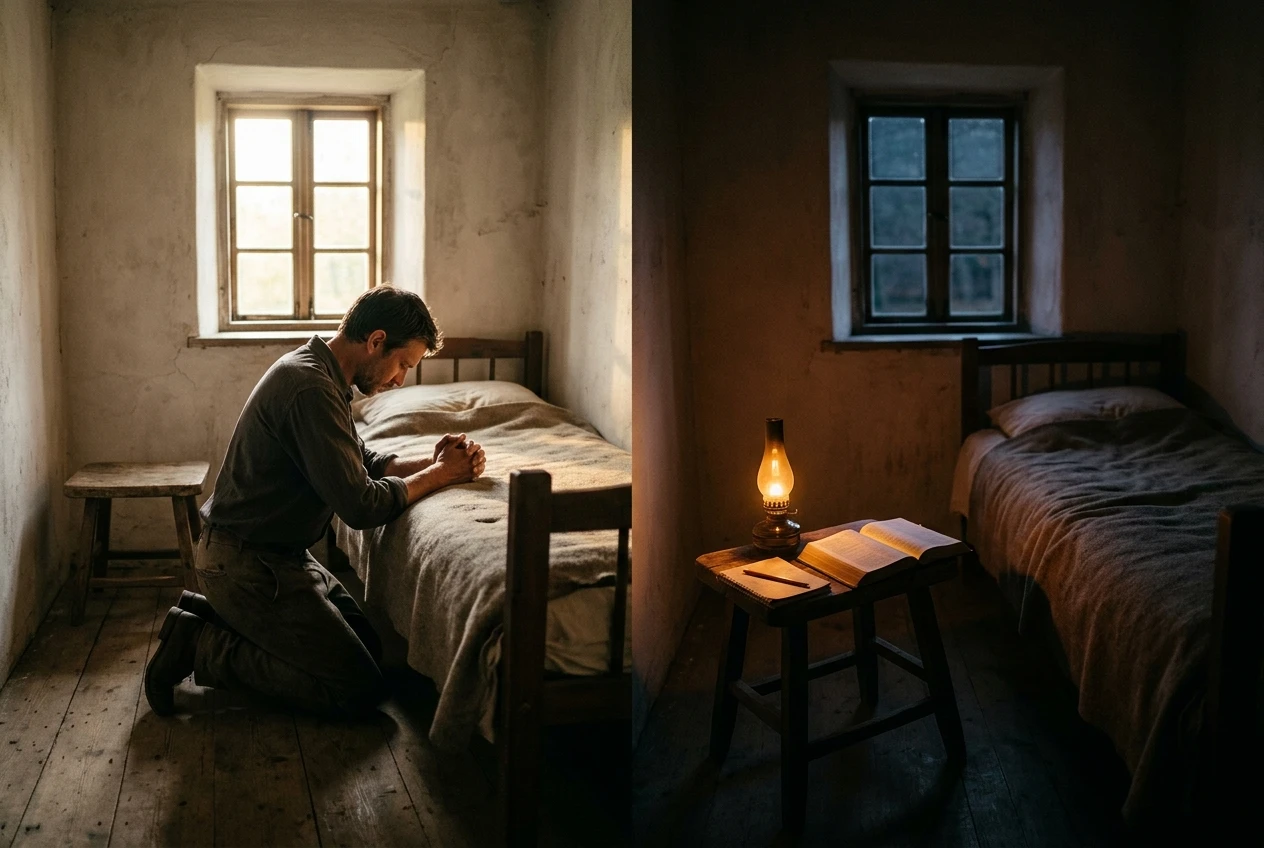
Morning (about five to ten minutes)
- Give thanks for the night’s rest and for the day itself.
- Pray the Lord’s Prayer slowly, pausing at the petition for daily bread.
- Name today’s specific needs aloud to God: food, fare, any fee or medicine.
- Commit the day’s work of preaching and visiting to Him.
Evening (about five to ten minutes)
- Thank God for what He supplied today, however small.
- Ask forgiveness for anything done or said in anxiety or anger, and forgive anyone who failed you.
- Bring tomorrow’s need to Him again.
- Entrust the sick and the household to His care, and rest.
If you can do no more than a minute at each hour on a hard day, do that. A short prayer made faithfully is better than a long one made rarely.
Prayers from Scripture You Can Pray in Your Own Words
Words given by God are safe to borrow. Here are several, each with its source, that you may restate in your own language.
- For bread and sufficiency: “Give me neither poverty nor riches; feed me with food convenient for me” (Proverbs 30:8).
- When you do not know what to do: “Neither know we what to do: but our eyes are upon thee” (2 Chronicles 20:12).
- For release from anxiety: “Casting all your care upon him; for he careth for you” (1 Peter 5:7). Pray it by naming each care in turn.
- With thanksgiving: “In every thing by prayer and supplication with thanksgiving let your requests be made known unto God” (Philippians 4:6).
- In trust of supply: “My God shall supply all your need according to his riches in glory by Christ Jesus” (Philippians 4:19).
Praying these verses is not a formula that compels God. It is a way of agreeing with what He has already said, so that your requests rest on His word.
After the Prayer: Watching, Waiting and Acting with Honesty
When Nehemiah’s builders were threatened, the record says, “We made our prayer unto our God, and set a watch” (Nehemiah 4:9). Prayer came first, and then attentive, practical work. The same order holds for a preacher in need.

Watch. Expect that God may answer through ordinary means: a neighbour’s gift, an opportunity to work, an unexpected kindness. Note each answer, perhaps in a small notebook, so that you can give thanks accurately.
Wait. Some answers come the same day and others take longer. Christ taught persistence: “men ought always to pray, and not to faint” (Luke 18:1).
Act with honesty. Paul commanded that those who can work should do so quietly and eat their own bread (2 Thessalonians 3:12), and he never excused deceit as a way out of want. Do not exaggerate a need, borrow what you cannot repay, or mislead anyone to obtain help. If it is right to speak to others about your situation, do it truthfully; the piece on how a volunteer preacher can ask honestly deals with that question. Prayer and honest asking do not compete, because God often answers through His people.
Giving Thanks Before the Answer Comes, and Trusting That Your Labor Is Not in Vain
Before He fed the five thousand, Christ “took the loaves; and when he had given thanks, he distributed” (John 6:11). The thanks came while the crowd was still hungry and the baskets held only five loaves and two fish. A preacher can follow that example by thanking God each morning for the bread He has promised, before it is on the table.
Thanksgiving also guards the heart. It turns attention from what is missing to what has been given, and it makes bitterness harder to keep.
Finally, remember what your labor is worth. Paul wrote, “Be ye stedfast, unmoveable, always abounding in the work of the Lord, forasmuch as ye know that your labour is not in vain in the Lord” (1 Corinthians 15:58). Hebrews adds, “God is not unrighteous to forget your work and labour of love” (Hebrews 6:10). The preacher who serves without pay, and prays for bread while he serves, has a Master who sees all of it and will reward it.
Bring the Need to God This Week
If you want to see what the Lord actually promised to those who preach, read the related article on what God has promised to provide for the preacher. Then take a page this week and write down one specific need: a fare, a bag of food, a uniform, a fee. Bring that single need to God each morning and each evening, give thanks as you do, and note what He does.