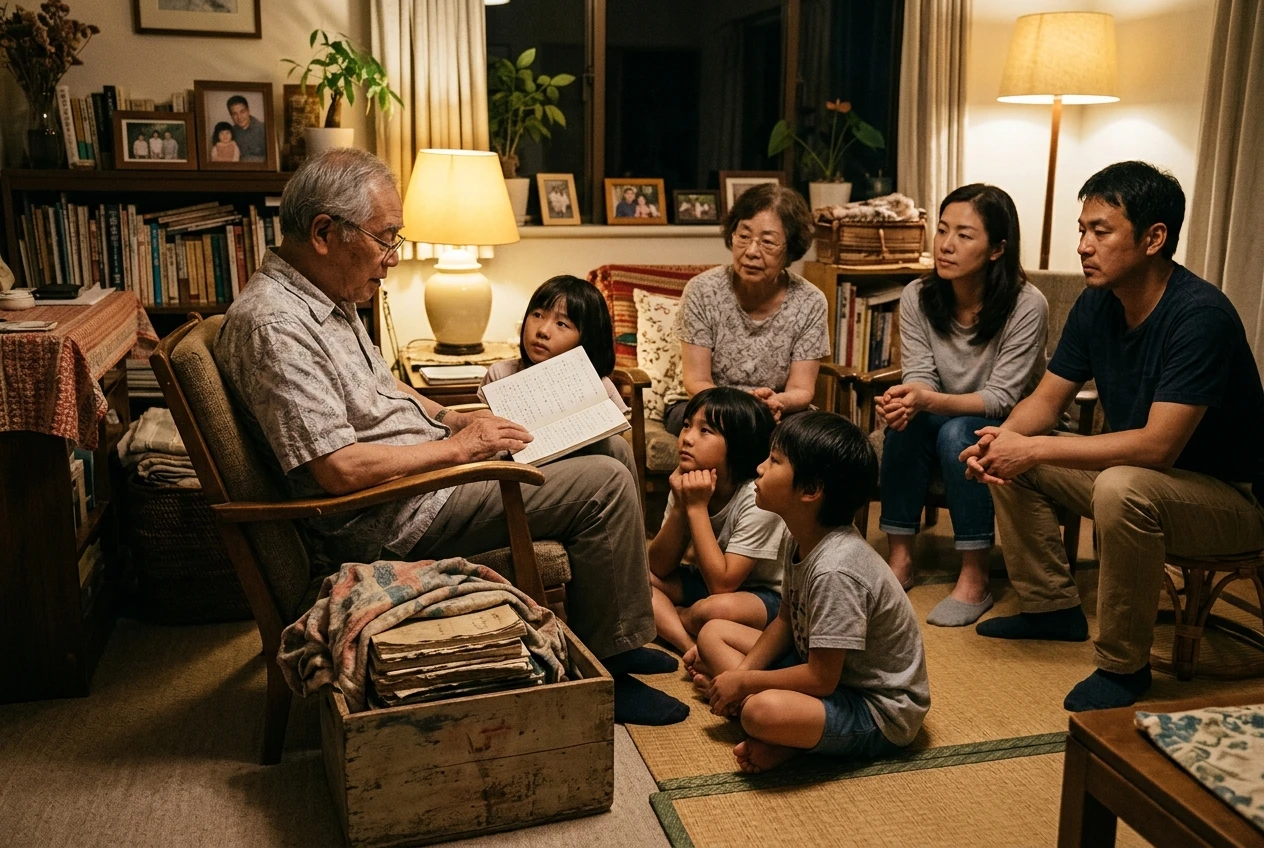
Every preacher who lives by God’s provision has a store of things worth remembering: a meal that arrived when the pantry was bare, a fare that was paid by a hand he did not expect, a prayer answered after years of waiting. Memory fades with age, and the children and grandchildren will not know these things unless someone writes them down. This article explains how to journal your ministry for your family, in a form that a retired preacher on a small pension can keep without cost or difficulty.
Why Israel Was Commanded to Write Down and Remember What the Lord Did
Scripture treats forgetting as a real danger and writing as a remedy. In Exodus 17:14 the Lord told Moses, “Write this for a memorial in a book,” after the victory over Amalek. In Deuteronomy 8:2 Moses told the people to remember all the way the Lord had led them in the wilderness, and in Deuteronomy 6:12 he warned them to take heed lest they forget the Lord who brought them out of Egypt.
Joshua set up twelve stones from the Jordan so that when the children asked in time to come, “What mean ye by these stones?”, their fathers could answer (Joshua 4:6-7). The Psalmist wrote that God’s works should not be hidden from the children but shown to the generation to come, “that they might set their hope in God” (Psalm 78:4-7). Psalm 102:18 says, “This shall be written for the generation to come.”

A written ministry journal follows the same pattern. Your notebook does the work of the stones: it gives a grandchild something to ask about, and you or your family something to answer with.
What to Record: The Bread, the Road, the Gift and the Prayer Answered
A journal that tries to record everything is soon abandoned. Four headings are enough to keep the record focused on provision.
- The bread. Meals given, food shared, groceries left at the door, a table set for you in someone’s home.
- The road. Transport paid, a lift offered, a journey completed safely, a door opened in a place you did not expect.
- The gift. Money, clothing, a pair of shoes, a coat, books, school supplies passed to you for your relatives. Write who gave it if the giver is content to be named.
- The prayer answered. What you asked, when you asked it, and what came.
Our Lord asked His disciples, “When I sent you without purse, and scrip, and shoes, lacked ye any thing?” and they answered, “Nothing” (Luke 22:35). A journal kept under these four headings is a long, local version of that question and answer, set down in your own handwriting.
If you wish to see how Scripture itself lists a preacher’s bodily needs, the piece on the bread, cloak, rest and road of the preacher lays them out, and they map closely onto these headings.
A Plain Notebook and Ten Minutes: A Simple Routine for a Pensioner
The equipment is one bound notebook and one pen. A school exercise book is sufficient and costs little. Loose sheets are easily lost, so choose something with stitched or glued pages and write your name and the year on the cover.

Fix a regular time. The evening after prayer is suitable, because the day’s events are still fresh. Ten minutes is enough for a few lines, and three evenings a week will produce a substantial record over a year. If you miss a few days, do not abandon the book; write the next entry and note that it was recorded late.
A routine of this size can be kept even in weeks of sickness at home or heavy caring duties. If you are tired, one sentence with the date is a complete entry.
How to Write an Entry That a Grandchild Can Understand
A grandchild will read these pages perhaps thirty or forty years from now, without having stood where you stood. Write for that reader. Each entry should answer five plain questions:
- What is the date?
- Where were you, and who was with you?
- What was the need?
- What did God supply, and by whose hand?
- What did you pray or say in response?
Use full names and place names. Say “the widow at the end of the village road” only if you also say her name or where the village is, because a reader in a later generation will not recognize the reference. Explain any local term or custom that a child born in a different place might not know.
Where Scripture came to mind, write the reference beside the entry. A line such as “Philippians 4:19 was read at the table that evening” connects the provision to the promise and teaches the young reader where to look.
Write in your own voice. Formal, plain sentences are better than ornament, and a short entry that is accurate is worth more than a long one that is embellished.
Record the Unanswered and the Slow Answers as Honestly as the Quick Ones
A journal that records only the quick answers will mislead the family. Scripture does not hide the waiting. Psalm 22:2 says, “O my God, I cry in the daytime, but thou hearest not.” Habakkuk 2:3 says of the vision, “though it tarry, wait for it.” Hebrews 11:13 records of the faithful that they “died in faith, not having received the promises, but having seen them afar off.”
When a prayer has not been answered, write the date and the request, and leave room beneath it. If the answer comes later, return to the page and add the later date and what happened. A grandchild who reads an entry from one year and its answer three years afterward learns that God’s timing is not the preacher’s timing, and that He remained faithful in between.
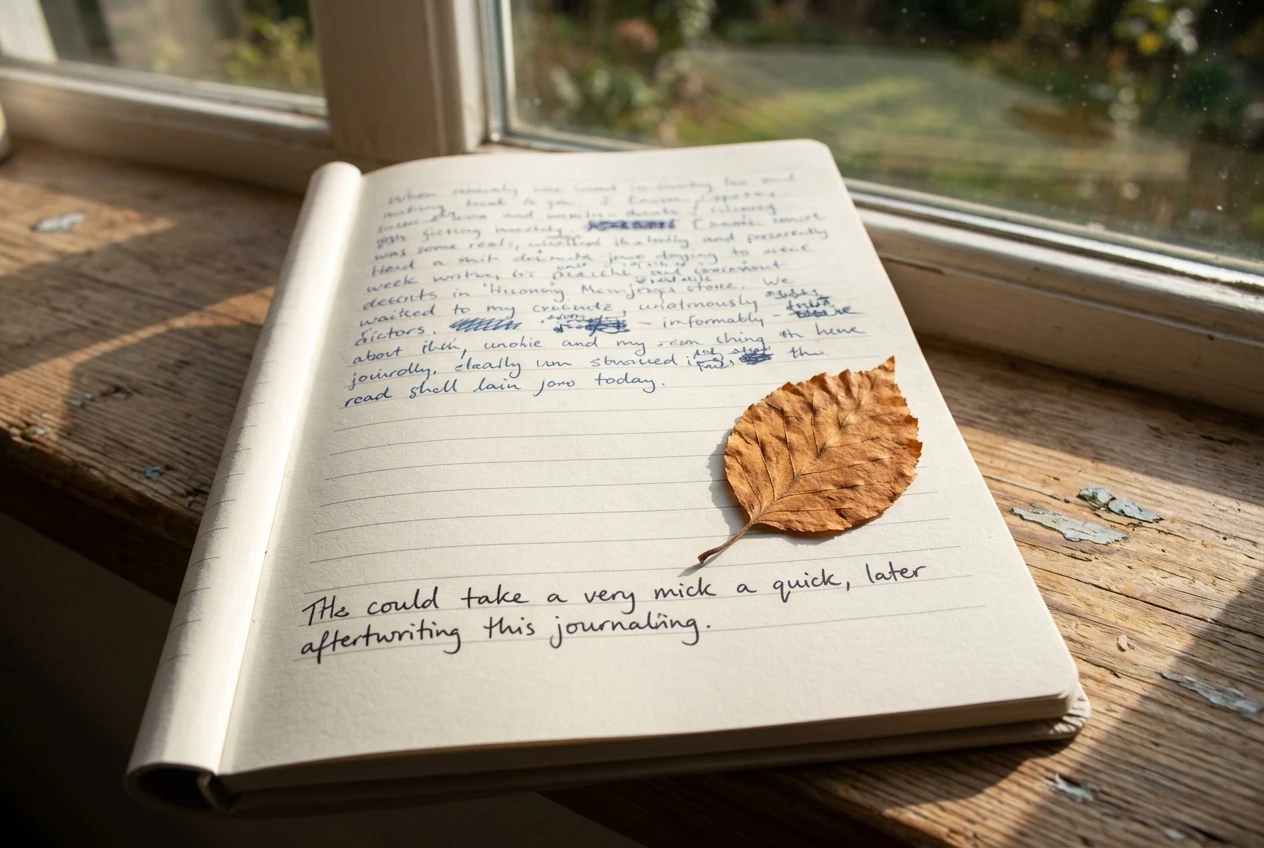
If a prayer was answered in a way you did not ask for, write that too, plainly. If a request remains open when you lay down the pen, leave it open. An honest record is a more trustworthy testimony than a tidy one, and your family will believe the good entries more readily because the hard ones are included.
Write Down What Each Family Member Gave So the Whole Household Shares in the Testimony
Few preachers carry the work alone. A spouse cooks and waits, a daughter gives her time on a clinic day, a son pays a fare, a grandchild carries the bag. These gifts are part of God’s provision, because He usually supplies through people.
Record them by name. Write, for example, “My son paid the bus fare to the meeting,” or “My wife kept the evening meal warm until I came home.” Do this without exaggeration and without suggesting that anyone was obliged. Each person who reads the journal later will find his or her own gift written there, and will see that the reward promised to those who serve is shared with those who supported the servant.
The piece on telling the household that they share the reward treats this more fully. The journal is one of the surest ways to carry it out, because the page names what was given and cannot be disputed later.
Choosing How and When to Hand the Journal to Your Children
There is no single correct moment, but some principles apply. Do not wait until the final illness. A journal handed over while you are still able to speak can be explained, and your children can ask you what an entry means.
Consider these options:
- Hand over each completed notebook as it fills, so the children receive the record in portions.
- Keep the current notebook with you and give the finished volumes at a family gathering.
- Name in writing, on the inside cover, which child or grandchild should receive each volume.
When you give a volume, say a few words with it: what the book is, why you kept it, and what you hope they will do with it. If you are teaching younger preachers as well, the book can serve them too, as described in what an older preacher should hand to the young. A word spoken at the handing over is remembered along with the written pages.
Keeping the Record Safe: Copies, a Trusted Keeper and a Read-Aloud Evening
A single notebook can be lost to damp, fire, insects or a house move. Take these precautions:
- Make a second copy. A relative with a phone can photograph each page, or a child can copy the entries by hand. Store the copy in a different house from the original.
- Choose a keeper. Name one trustworthy family member to hold the volumes, and tell the rest of the family who it is, so that no one is left asking where the books went.
- Protect the paper. Keep notebooks dry, wrapped in cloth or kept in a closed box, and away from direct sunlight.
Most important of all, read the journal aloud. Set apart an evening once or twice a year when the family gathers, and read selected entries, including the answers that came late. Moses commanded that the words of the Lord be talked of “when thou sittest in thine house, and when thou walkest by the way, and when thou liest down, and when thou risest up” (Deuteronomy 6:7). A read-aloud evening makes the written record part of the family’s own speech, so it is remembered as well as stored.
Begin tonight: take one notebook and write down a single way God provided for you this week, with the date, then read the entry aloud to one member of your family.