The first gifts have arrived: a bag of shirts, a few exercise books, perhaps an envelope of money. This is where many drives start to go wrong. Gifts are set down in the wrong house, nobody knows what came in, the sizes do not fit, and the family feels watched. A small congregation can prevent all of this with a few clear arrangements made early.
This article is for the elders, deacons and willing members who want to know how to organize a school uniform drive at church once giving has begun. If you are still deciding how to gather gifts from your community, read the earlier guide on gathering uniforms and school supplies first, then return here.
Why the Preacher Should Not Be the One Who Runs the Drive
In Acts 6 the apostles were asked to settle a dispute over the daily distribution to widows. They told the church to choose seven men of good reputation to oversee the work, so that they themselves could give their time to prayer and the ministry of the word. The church agreed, and the work was done well.
A volunteer preacher is in the same position. His hours belong to preparation, travel, visiting the sick and prayer. If he must also count shirts, measure children and write thank-you letters, either the drive or the preaching will suffer.
There is a second reason. When the gifts are for his own household, he is both the one served and the one who would handle the goods. Paul wrote of the collection for the saints that he wished to avoid any blame in the way the gift was administered, “providing for honorable things, not only in the sight of the Lord, but also in the sight of men” (2 Corinthians 8:20-21). When others handle and record the gifts, no one can doubt where they went.
The preacher still has a part. He receives what is given with thanks, answers honest questions about his children’s needs, and prays for the givers. He does not carry the work.
Choose Two or Three Faithful People and Give Each a Plain Duty
Ask the elders to name two or three members who are trustworthy, discreet and able to keep a promise to be present. A drive this size does not need a committee. Each person should have one duty that can be written in a sentence:
- The keeper receives every gift, stores it, and knows what is on the shelf.
- The recorder writes down each gift as it arrives and as it leaves, and keeps the notebook.
- The giver speaks with the family, fits the items to the children and hands them over.
If three people are not available, two can share these duties, but the person who records should not be the same person who keeps the money. At least one of the three should not be a relative of the preacher. One elder should oversee them and hear their report, and all of them should keep private what they learn about the family.
Write the duties on a single page and give a copy to each person. When a task is unclear, people assume someone else is doing it.
Make a List of Children, Sizes and Needs Before Asking Anyone for Anything
People give more wisely when they know what is needed. An appeal for “uniforms” brings a mixed pile. An appeal that names the shirts, skirts or trousers, shoe sizes and exercise books still missing brings what the children can use.
The giver should sit with the parents, or with the preacher and his wife, and make the list. For each child record:
- name, age and school year;
- the uniform the school requires, including colors and any badge or sports clothes;
- current clothing size and shoe size, with the date they were taken;
- items already in hand and items still missing;
- books, bags, pens and other supplies the school expects.
Ask the school office what is required before you write the list. Children grow, so measure again before term begins and write the new date beside the new size. Keep the list in the recorder’s notebook and show it only to the three people who need it. Public appeals should give the kinds of items and sizes wanted, never the names of the children.
Where Gifts Are Received, Counted and Kept Dry and Safe
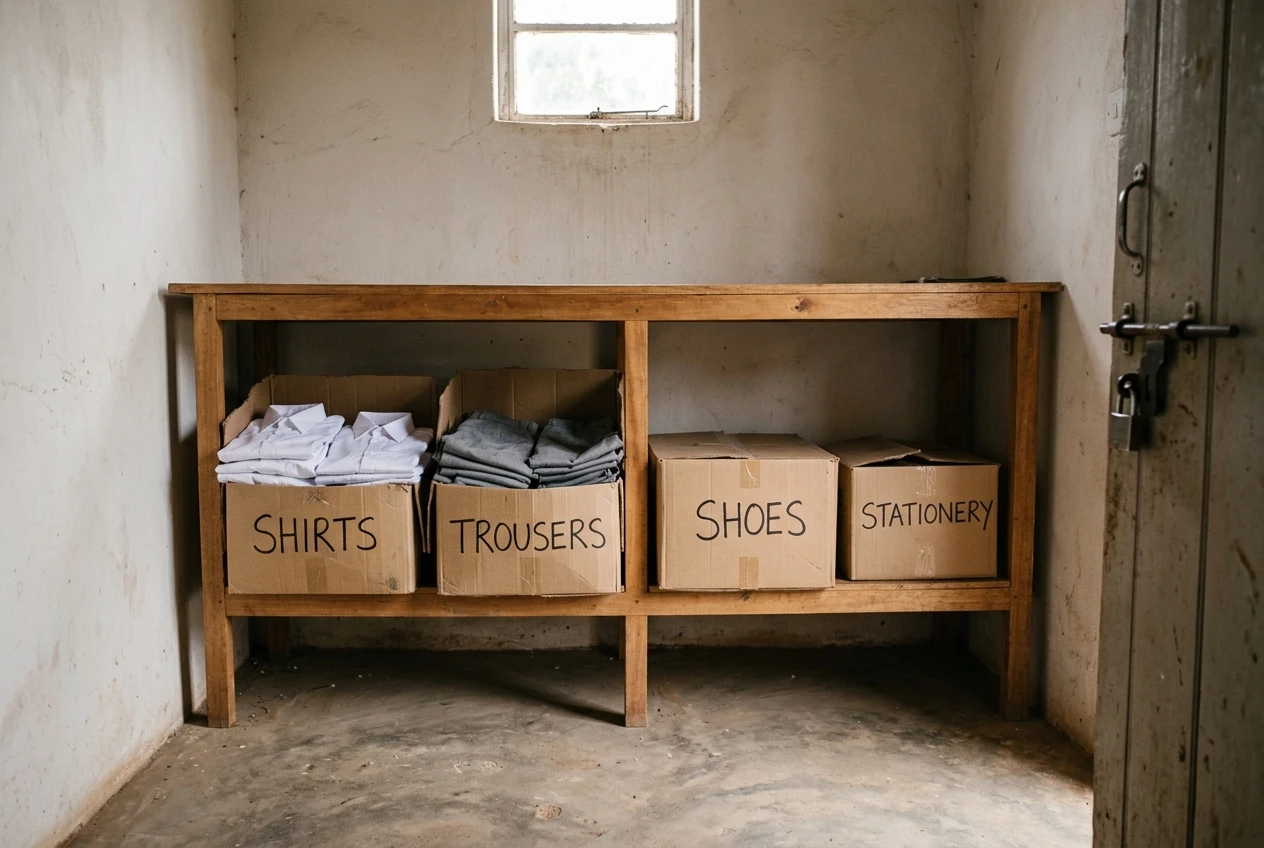
Choose one place. It may be a cupboard in the meeting house or a room in the home of the keeper. It should be locked or otherwise secure, clear of damp, and off the floor. Cloth left in a damp store grows mold, and mold cannot be washed out of a new white shirt.
Keep each category in its own labeled box or bag: shirts, trousers and skirts, shoes, stationery. Put sizes on the label. When someone brings a gift, the keeper and the recorder should be present together, or at least the recorder should write it down the same day. They should check each item and set aside anything torn, stained or too worn to send. Used clothing that is sound should be washed and mended before it goes to a child. A member who sews can also take up hems and replace buttons.
Money needs more care than cloth. Two people should count it together, write the amount in the notebook, and sign the entry. Then it should go into a sealed envelope or an account held in the congregation’s name. It should not stay loose in someone’s pocket or in the preacher’s house.
Match Each Gift to a Child and Hand It Over Without Public Attention
Once the items are sorted, the giver should lay out one pack for each child, working from the list. Complete the essentials first: one full uniform and one pair of shoes per child before any second set or extra supplies. If a garment is a little large, a hem can be taken up. If it is too small, return it to the store for another child, or set it aside for a different family.
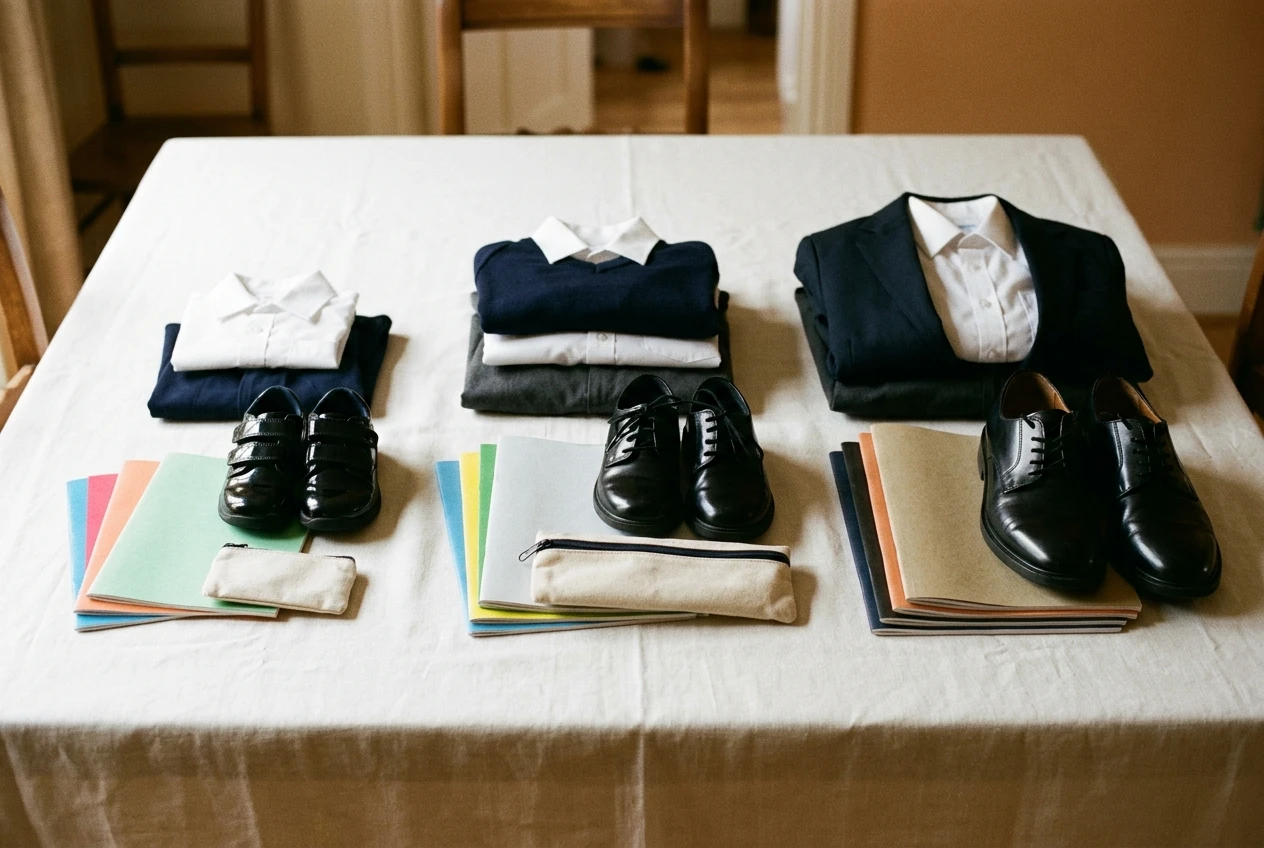
Then decide with the parents how and when the pack will be handed over. Some families will want it delivered to the house in a plain bag. Others will prefer to collect it after a meeting, in private. Ask them. The aim is for the family to receive help with dignity and to see no one watching.
Our Lord taught, “When you do a charitable deed, do not let your left hand know what your right hand is doing” (Matthew 6:3). Several practices follow from this:
- Do not announce in the assembly who received what.
- Do not give at the school gate, in front of other children.
- Do not tell the children which member gave which item.
- Do not ask the family to appear or speak when thanks are given.
Aim to deliver before the term begins, so the children arrive on the first day dressed like the others. If some items are still missing at that point, hand over what you have now and finish the rest later.
Keep a Simple Written Record So Every Gift Is Accounted for Before God and Men
Paul asked that all things be done “decently and in order” (1 Corinthians 14:40). A school exercise book is enough. For each gift, record:

- the date received;
- what it was and how many;
- who gave it, if the giver is willing to be named;
- who received it into the store.
For each item leaving the store, record the date, the child it was for, and the person who handed it over. For money, record the amount, the date, what it was spent on, and keep every receipt. At the end of the drive the book should show what came in, what went out, and what remains.
The recorder should read a summary to the elders and, if the congregation agrees, to the assembly. The summary should give totals only: how many shirts, how many pairs of shoes, how much money came in and how it was spent. Do not read out the children’s names or the preacher’s family circumstances. The book itself stays with the elders.
Thank the Givers and Tell Them Honestly What Their Giving Did
Paul thanked the Philippians for their gift to him, and added that he sought the fruit that would increase to their account (Philippians 4:17). He also told the Corinthians that the service of giving did more than supply the saints’ needs, since it overflowed in many thanksgivings to God (2 Corinthians 9:12).
Give thanks promptly, within a few days of the gift. A short note or a few words in person is enough. The thanks should say what was done: how many children were outfitted, which items were supplied, and what remains needed. Say only what is true. If five children received complete uniforms and two still need shoes, say that. Overstating a result teaches givers to doubt the next report.
The preacher may add his own word of thanks and his prayers for those who gave. A preacher who wants to think through how to receive such gifts will find help in what a volunteer preacher should do with the small gifts placed in his hands. Direct the glory to God, who moved hearts to give, and avoid photographs of the children or any public display of the family.
When the Gifts Fall Short, Ask Again and Trust the Lord to Supply the Rest
Sometimes the drive will end with the list only half filled. The recorder’s notebook will show this plainly, and the way forward follows from it. Return to the list and take out what has been supplied. Write what remains, in the order of need: uniform pieces and shoes first, then books, then lesser items.
Then ask again, and ask honestly. Tell the congregation what has been received, what is still missing, and when it is needed. Asking for what the children lack is neither greed nor shame. Paul asked churches to give, and the Lord himself said that the laborer is worthy of his hire (Luke 10:7). Keep the request short and specific, and give thanks again for what has already arrived.
Between one request and the next, the family can rely on the promise Paul gave to the Philippians: “My God shall supply all your need according to His riches in glory by Christ Jesus” (Philippians 4:19). The Lord supplies through the hands of His people. The work of the elders and deacons is to keep those hands informed, organized and faithful.
Share this plan with the elders or deacons of your congregation, and read what the Bible means by eternal reward when no one pays the preacher.
Leave a Reply