
Many households near a church have a child who stays home because there is no uniform, or who sits in class without a notebook or a pen. A retired pensioner, a volunteer preacher or an ordinary church member often cannot pay for this alone. Many neighbours giving a little can. This article explains how to organize a small school fundraiser for your community: whom to count, what to collect, how to keep honest records, and how to thank the people who give.
Start With the Children You Know by Name
Begin with a short list of real children, not with a general wish to help. Choose two or three from your family, your congregation or your street. A small number is something you can finish, and a finished work encourages everyone who took part.
For each child, write down:
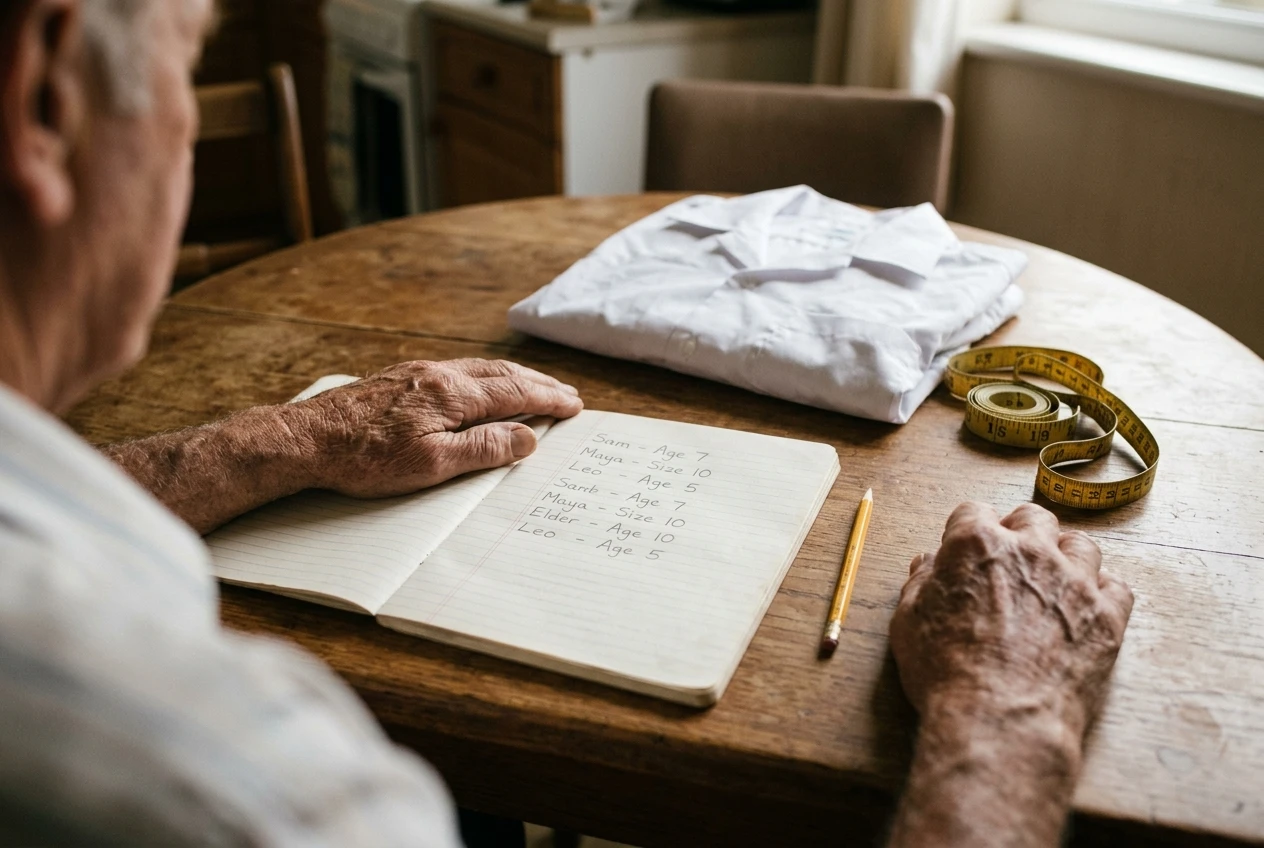
- The child’s name, age, school and class.
- The name of the parent or guardian, who should agree before you write anything about the child.
- What the child lacks: shirt, trousers or skirt, shoes, a bag, exercise books, pens, a school fee, or a school meal contribution.
- The child’s size. Children grow quickly, so confirm sizes again shortly before you buy.
Ask the school what it requires. A school’s list shows what is compulsory, so you do not collect things that cannot be used. Then visit a shopkeeper or tailor and ask what each item would cost. Write the figures in your notebook, add them up, and you have a total. You now know what you are asking for, and you can say it plainly to anyone who asks.
What Scripture Says About Gathering Gifts for Others
The Bible describes the gathering of gifts for people in need more than once. Paul directed the churches to set aside a gift on the first day of the week, so that the collection would be ready and not hurried together when he arrived (1 Corinthians 16:1-2). In the early church, distribution was made to each one as he had need (Acts 4:34-35).
Scripture also says how a gift is to be given. Paul writes that “God loveth a cheerful giver” (2 Corinthians 9:7), which means no one should be pressed or shamed into giving. Proverbs 19:17 says, “He that hath pity upon the poor lendeth unto the LORD; and that which he hath given will he pay him again.” The one who gives to a poor child has God as his debtor, and a person who believes this does not need to be pushed.
The same chapters require openness. When Paul arranged the collection for the saints, he appointed trusted brethren to carry it, because he wished to avoid blame in how the gift was handled. He gave his reason: “providing for honest things, not only in the sight of the Lord, but also in the sight of men” (2 Corinthians 8:21). In Acts 6, the daily distribution was placed in the hands of men of good report, chosen before the congregation.
Jesus teaches that a giver should not make a show of his giving (Matthew 6:3). That instruction is for the giver’s heart. The person who gathers gifts for others carries a different duty: to be able to show where every gift went. A giver may give quietly, and the organizer still keeps an open account.
Choose One Simple Plan
Three plans suit a small community, and each costs little to run. Choose one. Combining all three adds work that a small group of volunteers may not be able to carry.
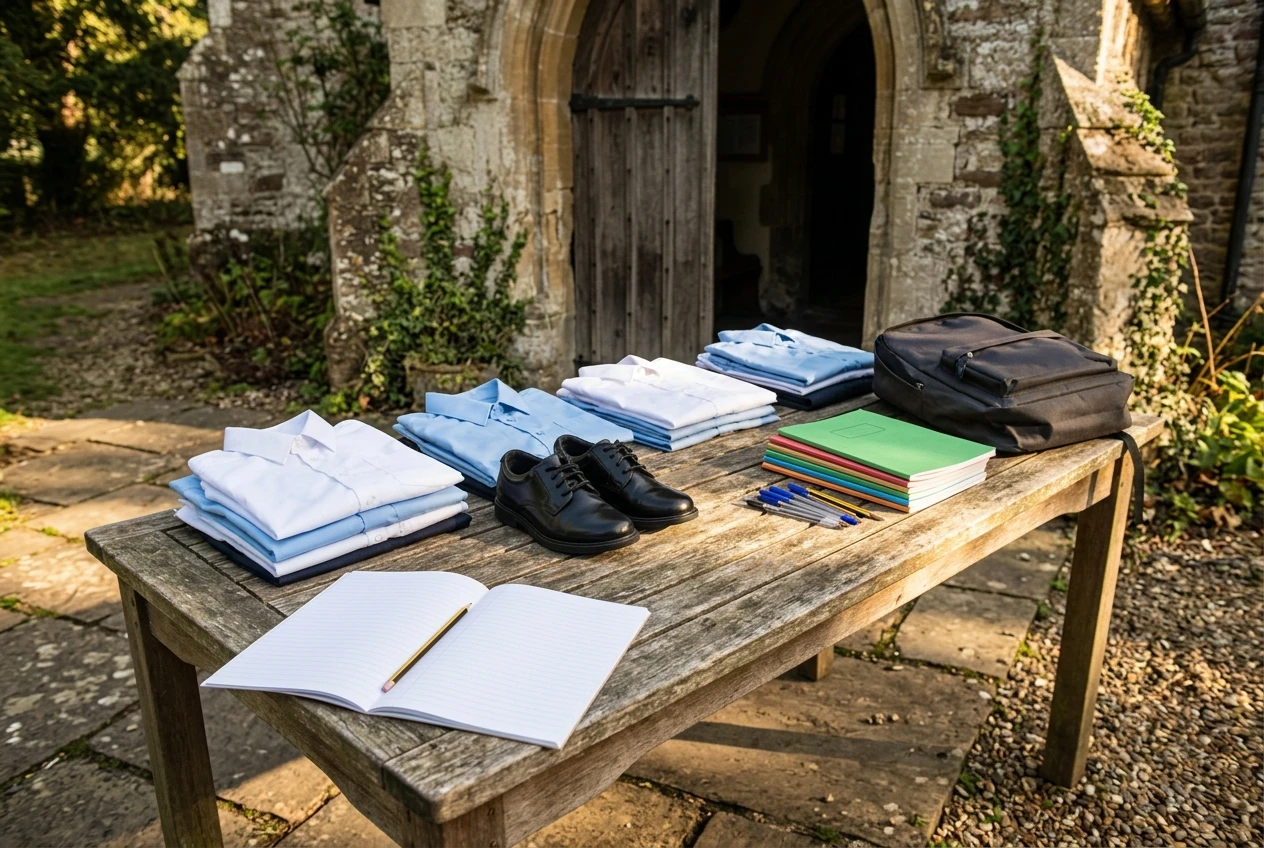
A collection of goods. Neighbours bring what they already have or can buy cheaply: school shirts that are clean and mended, shoes in good condition, unused exercise books, pens, a school bag. This suits households with little cash, since a family can give something that was set aside in a cupboard.
A shared meal. The congregation or street gathers, each household brings a dish, and a freewill offering for the children is received openly at the end. The meal also gives people time to hear the children’s needs and to meet one another. It needs a place, a few helpers and someone to count the offering in front of others.
A household pledge. Each household promises one item, or a small amount, to be brought by a date a few weeks away. Pledges let people plan from their own income, and they spread the cost across many hands. Write each pledge in the notebook, and remind people gently when the date is near.
If you are a pensioner with limited strength, the collection of goods asks the least of you. A table at the church door and a notebook are enough.
Invite Neighbours, Church Members and Shopkeepers Without Pressure
Speak to people personally where you can. A visit or a quiet word after a service is better than a loud announcement, because the person can say yes or no without an audience. When you speak to a group, do it once, state the need clearly and leave it there.
Say what is needed in terms of items: “two school shirts, one pair of black shoes in size four, six exercise books.” People give more readily when they can picture the thing they are buying or finding. Use the children’s first names only if the parents agreed, and do not describe a family’s poverty in more detail than the need requires. A child should be able to walk into school later without being known as the one who was collected for.
Offer more than one way to take part:
- Giving an item or a small sum.
- Giving time: sewing, mending, carrying goods, writing the record.
- Praying for the children and for the givers.
Local shopkeepers and tailors may be willing to sell at a fair price, to give an unsold item or to cut cloth for a uniform. Ask politely, say what the money or goods are for, and accept a refusal courteously. Do not promise anything in return that you cannot deliver. If someone gives nothing, greet them as warmly as before.
Keep Honest Records So Every Gift Can Be Accounted For
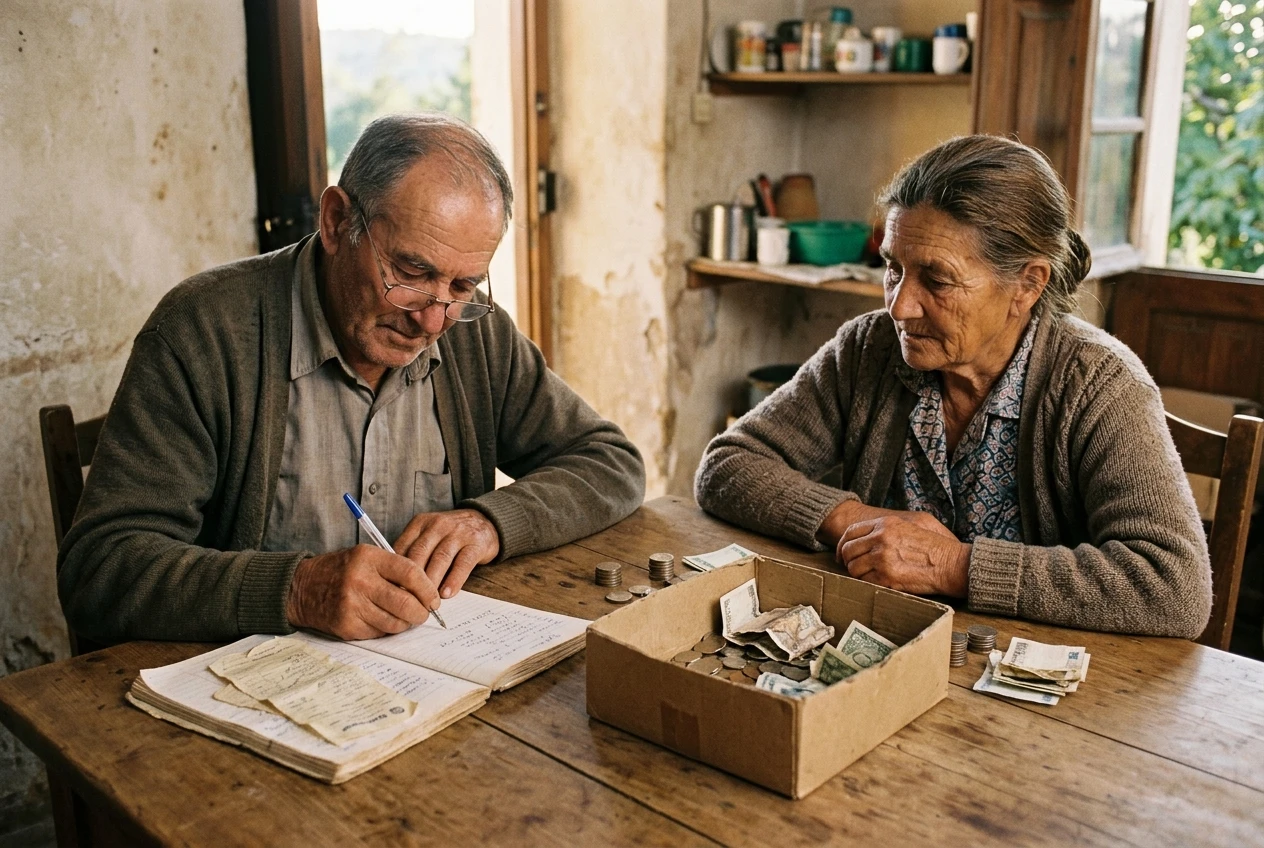
Buy one exercise book for this work alone. On each page, write the date, the giver’s name (or “anonymous” if the giver asks for that), and what was given. Record goods and money in the same way. When you give someone’s gift away, note that as well.
A few habits keep the account trustworthy:
- Two people handle money together. One counts, the other watches and signs the line. Cash is never carried home by one person without being written down first.
- Money stays in one place. Use one envelope or one box, kept by an agreed person, and not mixed with personal money.
- Keep every receipt. When you buy a uniform or books, ask the seller for a receipt or write the amount and shop name yourself, and tape the paper into the notebook.
- Decide in advance what happens to any surplus. For example, it may go toward the next child’s needs or toward a school fee. Say so when you invite gifts, so no one is surprised later.
- Report back. After the purchases, read the totals aloud to those who gave: what came in, what was bought, what remains.
This is the practical side of the accountability Paul describes. A neighbour who sees a clear account will trust the next collection, and the one after. If you also need to ask for help for yourself or for a family member, the article on asking your community for help honestly explains how to do so without shame, and the same openness applies there.
Hand Over the Gifts, Thank Every Giver and Pray for the Children
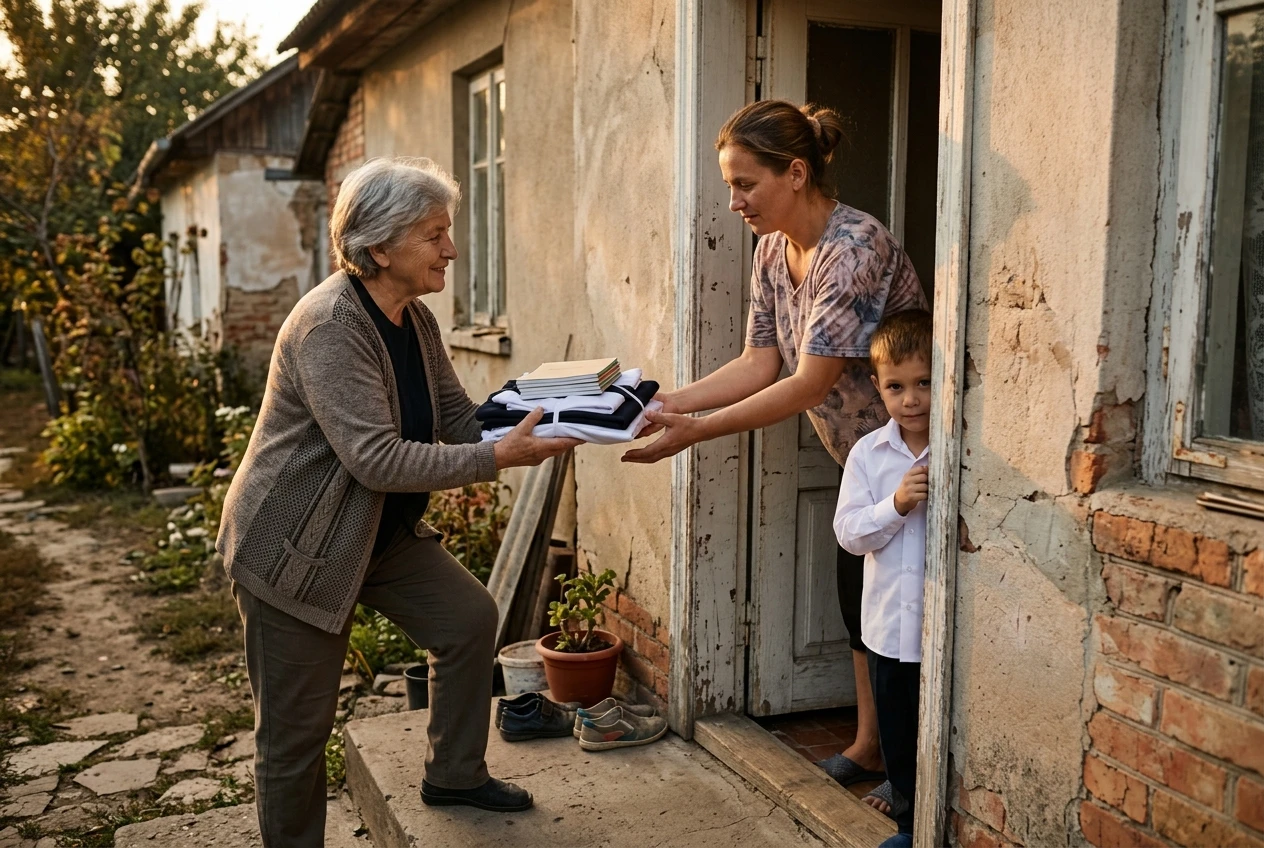
When the uniforms and supplies are ready, give them to the parent or guardian, and let the child be present if the family wishes. A quiet visit at home protects a child’s dignity more than a public presentation does. Let the family decide whether others should be there.
Thank every giver personally. Say it in person where you can, or write a few lines on paper for those you cannot visit. Say what their gift became: “your shirt is now on Daniel’s back; the exercise books went to his sister.” Specific thanks tell people that their gift arrived and was used, which is also why they will give again. Give them the final report from your notebook.
Then pray. Pray for each child by name: for health, for attention in class, for a teacher who is patient. Pray for each giver, including those who gave very little. A short prayer with the families when the goods are handed over is appropriate, if they welcome it. A preacher who has no money to give can still offer this, and it counts.
When the Gifts Are Small
A collection may end with one pair of shoes, a few books and a single shirt. That is still a real gift to a real child. Jesus watched a widow put two small coins into the temple treasury and said she had given more than all the rest, because she gave all she had (Luke 21:1-4). The size of a gift is not what God weighs first.
Scripture also speaks to the tiredness of the organizer: “And let us not be weary in well doing: for in due season we shall reap, if we faint not” (Galatians 6:9). And Hebrews 6:10 says, “For God is not unjust to forget your work and labour of love, which ye have shewed toward his name, in that ye have ministered to the saints, and do minister.” Your labor over a notebook, a table and a list of names is seen. If you feel that your hours of service leave little to show, the article on when the ministry takes all your time and leaves nothing extra speaks to that directly.
Begin small, keep the account open, and leave the result with God.
This week, write down the names of two or three children in your family or neighbourhood who need a uniform or supplies, pray over the list, and speak with one neighbour about helping.