
A congregation listens to a preacher with more than its ears. People notice when a sentence belongs to the man or woman speaking it and when it was lifted from somewhere else. A borrowed phrase can be perfectly correct and still make a listener wonder whether the speaker believes what is being said. This article sets out how to write a sermon in your own voice: a short voice note, one reading aloud, and a careful rewrite of only the lines that drift.
Why a Sermon That Sounds Borrowed Is Hard for a Congregation to Trust
Trust in the pulpit rests on sincerity. The apostle Paul reminded the Corinthians that he did not come to them with lofty speech or human wisdom, but with the plain testimony of Christ crucified (1 Corinthians 2:1-5). His example does not forbid careful preparation. It shows that the message carries the weight, and the speaker’s manner should not get in its way.
A volunteer preacher often prepares in the evenings, after other work is done. In that time it is easy to reach for a phrase from a commentary, a recorded sermon or a devotional book because it sounds finished. When the borrowed phrase is spoken from the pulpit, the delivery often changes. The voice goes higher or slower, and the congregation hears a different person from the one who greets them at the door.
The remedy is a habit of checking the finished draft against how you actually speak. It takes about an hour, and it can be repeated every week.
Write a Voice Note Before You Edit Anything
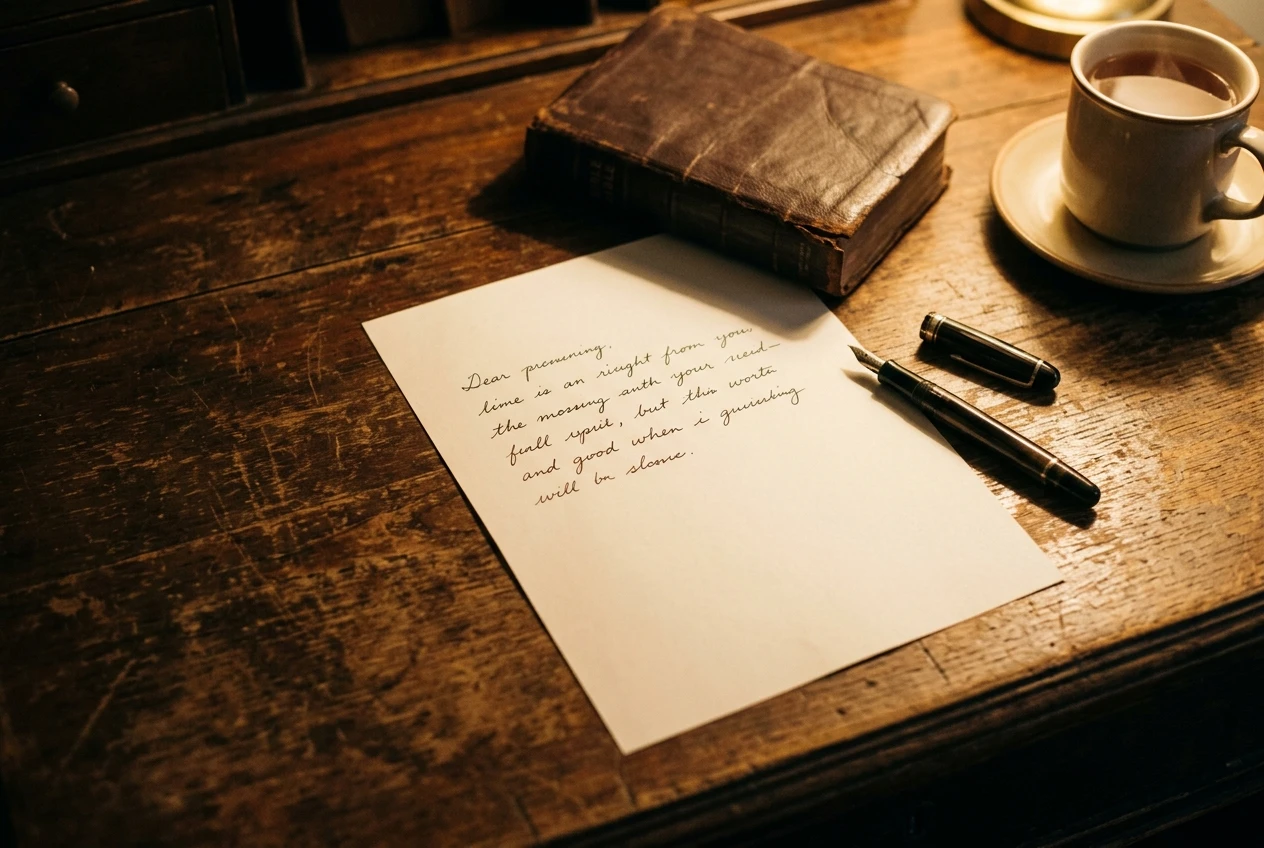
A voice note is a short written description of how you speak when you speak sincerely. Five sentences are enough. Writing it before you edit gives you a standard to judge each line by, so you are not relying on a vague feeling that something is off.
Write the sentences about yourself, in plain words. Cover these points:
- How formal you are in the pulpit, and what you call the congregation (brethren, friends, beloved).
- How long your sentences usually run, and whether you prefer short statements or fuller explanations.
- The words you use for God, for Scripture and for the Lord Jesus Christ.
- How you introduce a verse: whether you read it first and explain it after, or explain first.
- What you will not do, such as exaggerating, quoting without naming the source, or adding to what the text says.
Here is an example of the kind of note that might result. It is a model for form only, so write your own in your own words:
I speak formally and respectfully, and I call the congregation “brethren.” I use short sentences when I teach and longer ones only when I read Scripture. I read the verse first and explain it afterwards. I say “the Lord” and “the word of God” and do not use slang. I do not say anything about a passage that the passage does not say.
Keep it where you prepare, on paper or in a file, so it is open next to every draft.
Read the Draft Aloud and Mark Every Line Where You Stumble or Wince
Once the draft is finished, read it aloud at the pace you would use in the pulpit. Silent reading hides problems, because the eye forgives a clumsy sentence that the mouth will not.
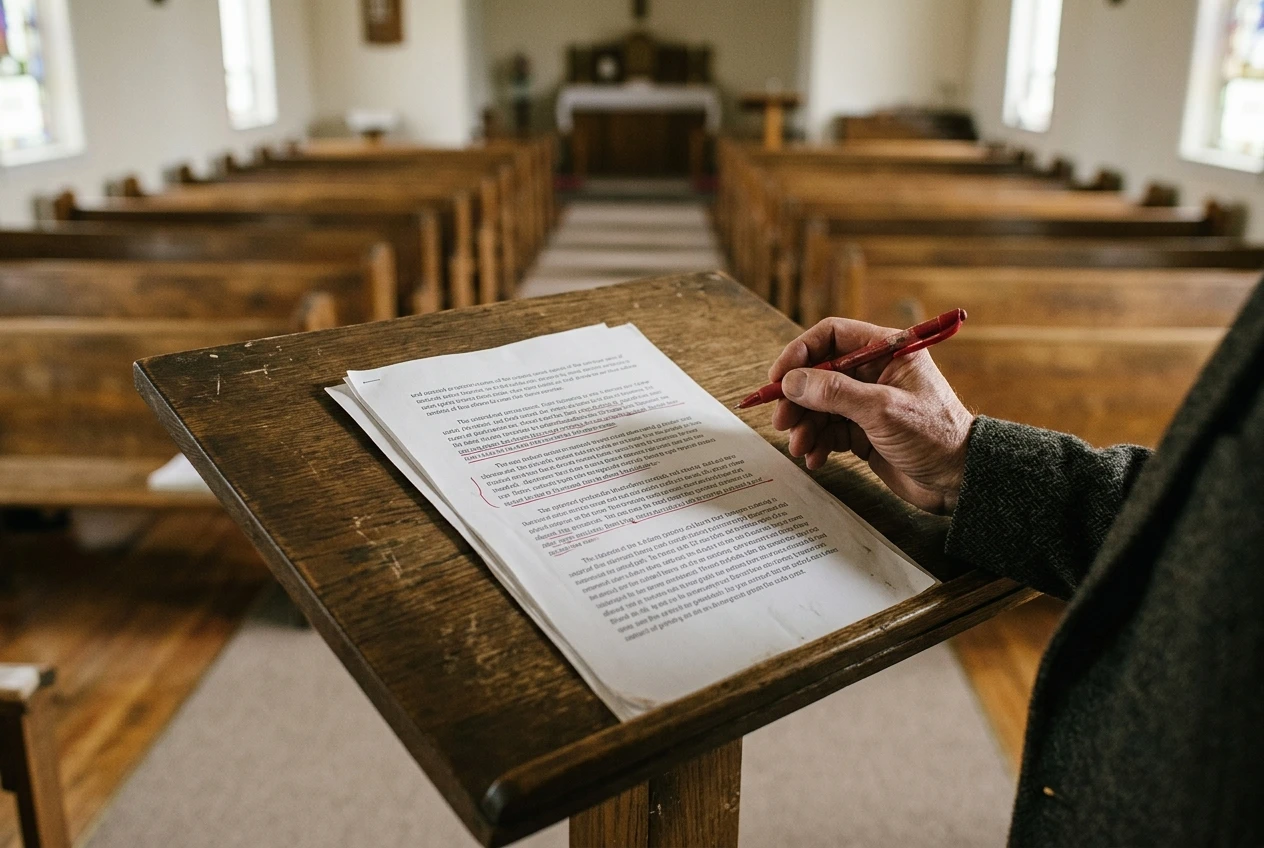
Keep a pen in hand. Mark a line when any of these happens:
- You stumble over the words or run out of breath before the sentence ends.
- You feel a small wince, the sense that you would not say this to a brother across the table.
- You catch yourself changing the wording as you read.
- You cannot say what the sentence means in a simpler way.
Do not fix anything on this first pass. Only mark. A page with a dozen marks is normal, and most drafts have more marked lines than the preacher expects. Editing while reading breaks the rhythm and makes it harder to hear the next problem.
Four Kinds of Lines That Usually Sound Off
When you look at the marked lines, most fall into four groups. Naming the group tells you what kind of repair is needed.
Stiff lines
Stiff lines are formal in the wrong way. They use long words where a short word is available, or pile up clauses until the verb is lost. “It is incumbent upon each believer to endeavour to manifest obedience” says what “Each believer should obey” says, but nobody speaks that way. Formality belongs in reverence and care, and it does not require complicated grammar.
Showy lines
Showy lines aim to impress. They include elaborate comparisons, dramatic openings and words chosen because they sound learned. The test is whether the line helps the listener understand the text or only draws attention to the speaker. If it only draws attention to the speaker, it should go.
Vague lines
Vague lines sound weighty and say little: “In these times we must walk closer to the Lord.” Ask what this means in practice. Does it mean pray daily, forgive a neighbour, attend the gathering, give to the poor? A vague line becomes a true one when it names the action the text actually calls for.
Copied lines
Copied lines are phrases that entered your draft from something you read or heard. You may not remember where they came from, but you can often tell, because they are smoother than the sentences around them. If a thought belongs to another writer and you want to use it, say so aloud and name the source. If you cannot name the source, put the idea in your own words or leave it out.
Rewrite One Marked Line at a Time Without Changing What Scripture Says
Work through the marks in order, one line at a time. For each, ask what the sentence is trying to tell the listener, then say that aloud in your own words, and write down what you said.
Some boundaries keep the rewriting safe:
- Leave quoted Scripture exactly as it stands in the translation you are reading from. The rewriting applies to your explanation and not to the verse.
- Do not add a claim to make a sentence sound stronger. If the passage does not say it, the sermon should not say it.
- Compare the new line with the verse it explains. If the meaning has shifted, go back to the earlier wording.
- Read the new line aloud. If it still makes you stumble, rewrite it again.
Rewrite only the marked lines. The unmarked ones already sound like you, and changing them risks introducing new drift. If your concern is the length and order of the whole message, that is a separate matter, covered in how to pace a sermon when you only have evenings to prepare.
Using Your Writer as a Second Reader
If you want another reader, your Writer can serve as one. Give it two things: your five-sentence voice note and one finished draft. Then tell it plainly what you want. For example:
Read this draft against my voice note. List the lines that do not match how I speak. For each, suggest a plainer rewording that keeps the same meaning. Do not change any Scripture quotation. Do not add stories, examples or facts that are not already in the draft.
The last two instructions matter. A writing tool can introduce a personal story or a statement that sounds sure of itself without being supported by the text. Delete any such addition.
Then judge each suggested change yourself, one at a time:
- Read the original line and the suggestion aloud.
- Ask whether you would say the suggestion to the congregation, in your own voice.
- Check it against the verse. If the meaning moved even slightly, reject it.
- Accept it, change it again in your own words, or leave the original.
The Writer reads quickly and has no stake in your pulpit. You know the people who will hear the sermon and you know what you believe, so the decision on each line is yours. A suggestion you accept without reading aloud is a borrowed line again.
Keep the Voice Note, and Update It When Your Preaching Grows
Your voice will change over the years. You may become more comfortable with longer explanations, or more direct in application. A voice note written once and never revisited will eventually describe the preacher you were.

Return to it every few months, or after a season of regular preaching. Read it aloud and ask whether it still describes you. Add what you have learned: a word you now use readily, a habit you have set aside, a kind of line that keeps getting marked. Over time the note becomes a record of how you preach, and the number of marked lines in each draft tends to fall.
The work is small, but it serves the congregation and the Lord. A message delivered in a sincere voice is easier to receive, and the labour of a volunteer preacher is not in vain in Him.
Take the draft you are preparing this week, write your five-sentence voice note tonight, and mark three lines that do not sound like you before you rewrite them.