
Many sermons lose a congregation because the delivery stays at one speed and one volume from the first sentence to the last, not because the content is weak. The material can be sound, the passage well handled and the application clear, and people still drift. Listeners cannot tell which sentence matters most when every sentence arrives the same way.
For a volunteer or bivocational preacher this happens easily. You write in the evenings after a full workday, the manuscript gets finished late, and the only run-through happens in your head. In your head the pauses exist, because you know where the thoughts change. Out loud on Sunday, they get squeezed out, and the sermon comes out faster and flatter than you meant.
The fix is to decide pacing in advance and write the decisions on the page. That takes about thirty minutes of marking up a finished manuscript, and it does not require rehearsal time you do not have.
Why a sermon loses people even when the content is solid
Listeners cannot reread. A reader who hits a dense paragraph can slow down, go back, or skim. A listener gets each sentence once, at the speed you chose, and has to process it before the next one arrives. If you give them four heavy ideas in a row without a gap, the third and fourth never land.
Three delivery patterns cause most of the loss:
- Constant speed. Without variation, the ear stops registering the voice as a signal and treats it as background.
- No silence. Pauses give people time to absorb a point and to feel that something was said. A sermon with none of them sounds like a list of statements.
- Flat energy. If the story, the argument and the exhortation all carry the same intensity, none of them stands out.
None of these are character flaws or a lack of talent. They are the default result of preparing in short, tired windows. They can be corrected the same way you correct a weak outline: by planning.
Cadence in plain terms: speed, pauses and energy
Cadence is the pattern of how a sermon moves over time. It has three parts you can control.
Speed is how fast you speak. Slower speech tells the listener that a sentence carries weight. Faster speech suits narrative, background and transitions, where the listener only needs to keep up.
Pauses are deliberate silences. A short pause, about the length of a breath, separates one thought from the next. A long pause, a couple of full seconds, comes after a key statement or a question and gives the congregation time to answer it internally. Two seconds feels long to the speaker and normal to the listener.
Energy is the combined effort in your voice: volume, intensity, and how much you lean into the words. Energy does not mean loudness. A quiet, slow sentence delivered with full attention often carries more than a shout.
You do not need to master all three at once. Each one can be marked on the page, and the marks tell you what to do when your nerves would otherwise decide for you.
Mark up your manuscript in thirty minutes
Print the manuscript with wide margins and double spacing. If you preach from a tablet, use an annotation app, though paper is quicker for this. Use a pen in one color, or two if you like. Keep the symbols few enough to remember without a key.
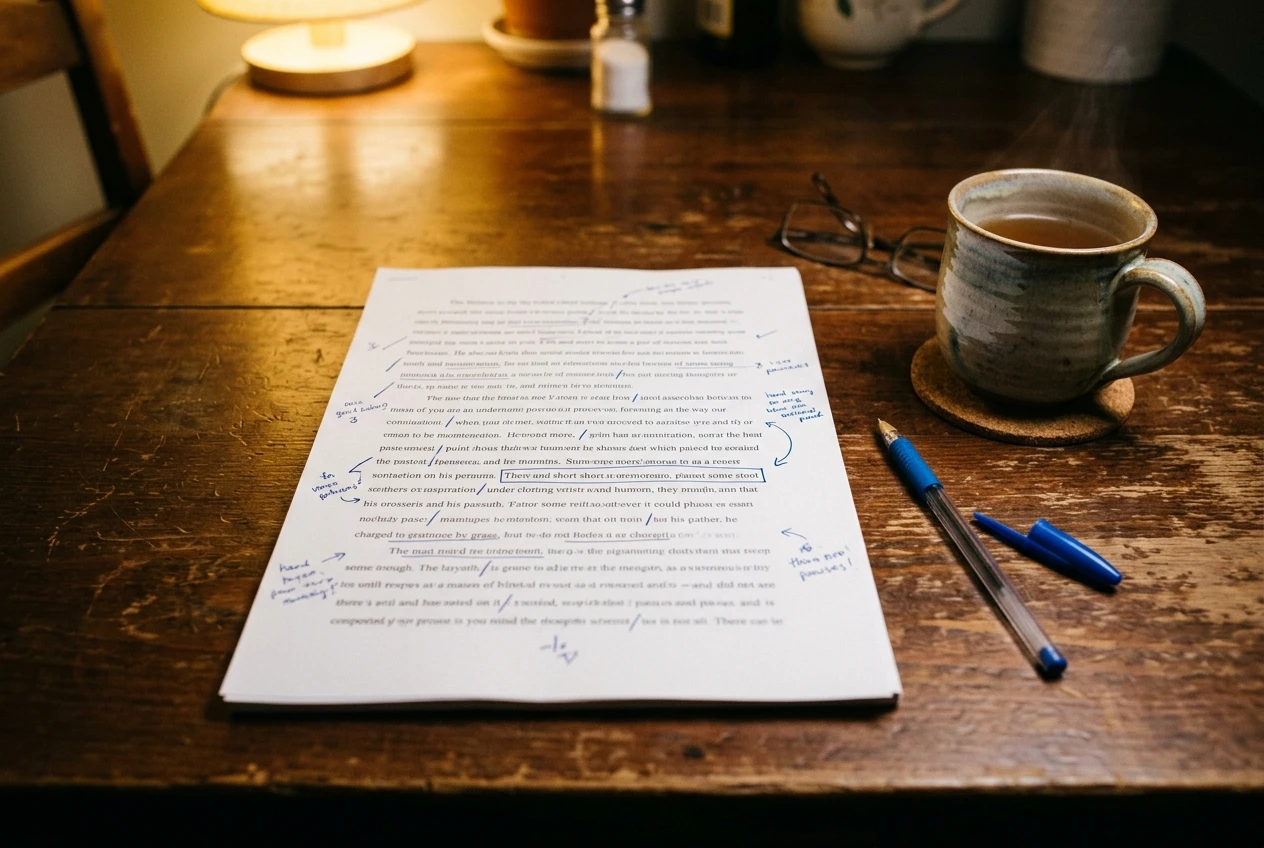
A simple set:
- A single slash ( / ) for a short pause, a breath between thoughts.
- A double slash ( // ) for a long pause, two full seconds of silence.
- An underline under words or lines to say slowly.
- A right-pointing arrow in the margin beside passages to move through at a brisker pace.
- A box around the one sentence in each section that the whole section depends on.
- An up or down arrow in the margin for energy, up where intensity rises and down where it drops.
Work through the manuscript in three timed passes.
- Ten minutes: find the boxes. Read each section and box the single sentence the listener must carry out of the room. If you cannot pick one, the section may be trying to do two jobs, and that is worth knowing before Sunday.
- Ten minutes: place the pauses. Put a double slash after every boxed sentence and after every question you ask the congregation. Put single slashes where one thought ends and another begins, especially at the points where you would normally say “and” and keep going.
- Ten minutes: set speed and energy. Underline the lines that need slowing, add arrows where you can move quickly, and mark the places energy should rise or settle.
Resist marking everything. If half the page is underlined, nothing is emphasized. A page with a few clear marks per section is easier to follow in the pulpit than a page covered in ink.
Where to slow down, where to move, and where to stop
The marks only help if they go in the right places. A few reliable rules cover most of a sermon.
Slow down
Slow down for the boxed sentence in each section, for a scripture reading, and for any statement that would change how someone lives if they believed it. Read the key verse at a pace that lets people find it in their own Bible or on the screen. Slow down again when you state the main point of the whole sermon, and make sure it is the slowest sentence you say.
Move
Move briskly through narrative setup, historical background, transitions, and illustrations the listener already understands. These passages exist to carry people to the next point, not to be remembered themselves. Let the arrow in the margin remind you not to linger over them out of comfort.
Stop
Stop, meaning take a long pause, in these places:
- After the sentence that states a hard truth, before you explain or soften it.
- After a question you want people to answer internally.
- Just before the turn from explanation to application, so the congregation hears the shift.
- Before your closing line.
The urge to fill silence is strongest right after a hard statement, because that is when the preacher feels most exposed. The pause is where the sentence does its work, so mark it as a double slash and hold to it.
One rehearsal pass you can do on a commute or a lunch break
A full rehearsal takes as long as the sermon, plus setup. A partial pass takes much less and still catches the main problems.
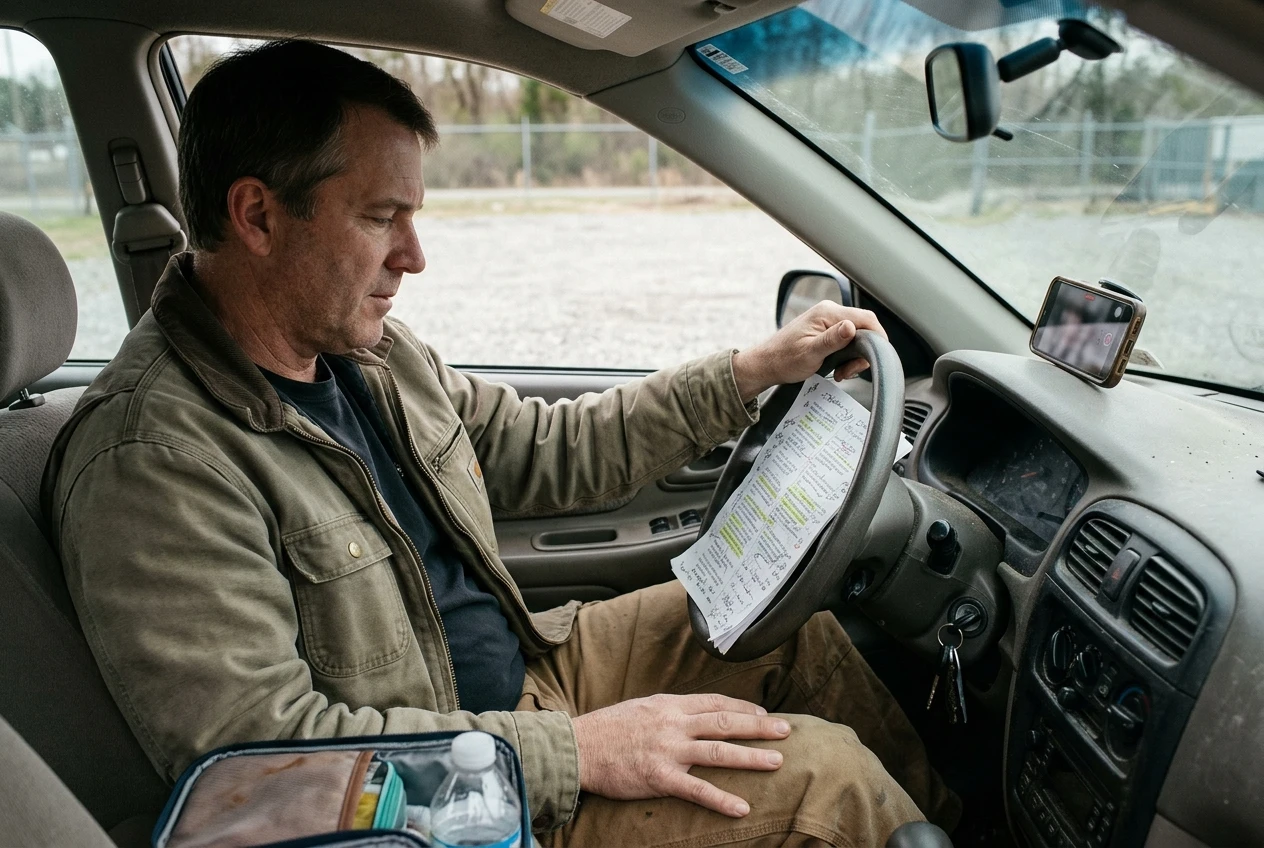
If you drive or walk alone, or have a quiet spot at lunch, speak only the marked moments. Say each boxed sentence aloud at the pace the underline suggests. Then say the sentence that comes before it and the sentence after, so you feel the change in speed. That is usually a dozen or so lines, and it takes a few minutes.
Then practice the pauses without words. Silently count two seconds after a boxed sentence. It will feel too long. Do it three times until it stops feeling strange.
If you can record on your phone, record the opening and the main point and play them back at your next break. You are listening for two things: whether the key sentence sounds different from the lines around it, and whether any section sounds rushed. Fix what you hear by adjusting the marks, not by memorizing a new delivery.
Fixing the habits that rush a nervous preacher
Nerves speed people up. The body treats standing before a congregation as a threat and wants it over with. Several habits follow from that, and each has a practical counter.
Starting too fast. The first minute is when adrenaline is highest. Write a line at the top of page one that says “slow” and begin with a deliberate breath before the first word. Make the opening sentence short enough to say calmly.
Skipping the pause. Under pressure, silence feels like a mistake. Remind yourself that a pause you planned looks intentional to the room, and that listeners often use it to look up and pay closer attention. Mark pauses with a visible symbol in a color you cannot miss.
Shortened breaths. Shallow breathing produces rushed phrases, because you run out of air mid-thought and hurry to finish. Place single slashes at natural breath points so each phrase fits in one breath.
Filler words. “Um,” “so,” and “right” often occupy spaces where a pause belongs. Replacing a filler with silence takes practice. During the rehearsal pass, say a line, stop, and breathe in the gap instead of speaking into it.
Racing the clock. If you are worried about time, cutting content in advance is better than speeding up. Decide before Sunday which illustration or secondary point can go if you are running long, and mark it with a bracket in the margin. That way the cut is a choice made calmly during preparation.
Reading the room mid-sermon and adjusting without losing your place
A marked manuscript gives you a plan, and a congregation gives you information about how the plan is working. Watch for a few signs.
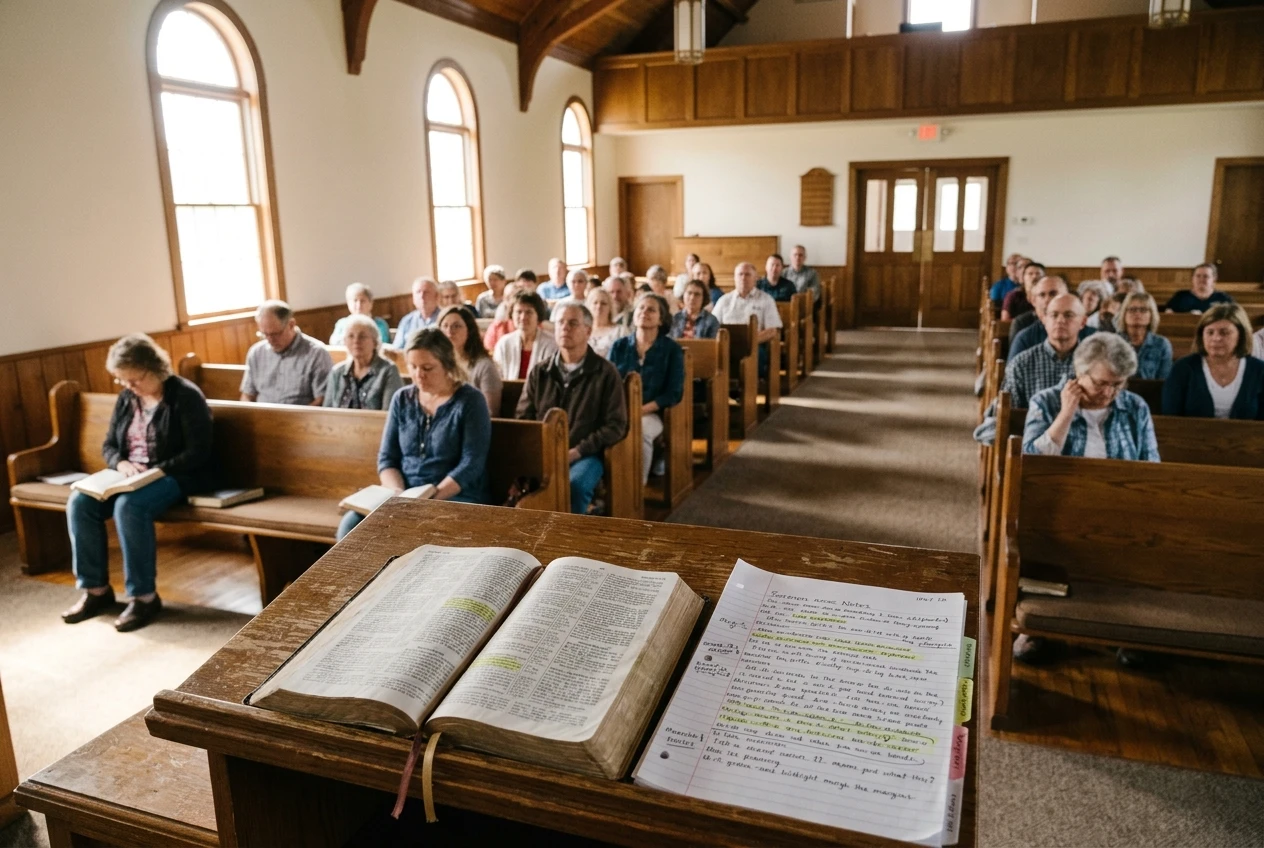
- Eyes down or on phones, shifting in seats: the energy has been flat too long. Lower your volume and slow down for the next boxed sentence, or move into the illustration you had planned for later.
- People looking up and still: you have their attention, so hold the pause a moment longer and do not hurry to fill it.
- Nods, or faces showing recognition: the point has landed. Move on to the next thought instead of re-explaining.
- Blank or puzzled expressions: slow down and restate the point in one plainer sentence before continuing.
Your marks make these adjustments safe, because you always know where you are. If you add a pause or slow a sentence on the spot, put a finger or a glance on the next mark and continue from there. If you need to move faster, skip to the next arrow, not to the next paragraph at random. The page keeps your place so that you can respond to the room.
A weekly cadence routine that fits around work and family
The work is short enough to spread across a normal week. This is one arrangement; shift the days to match your schedule.
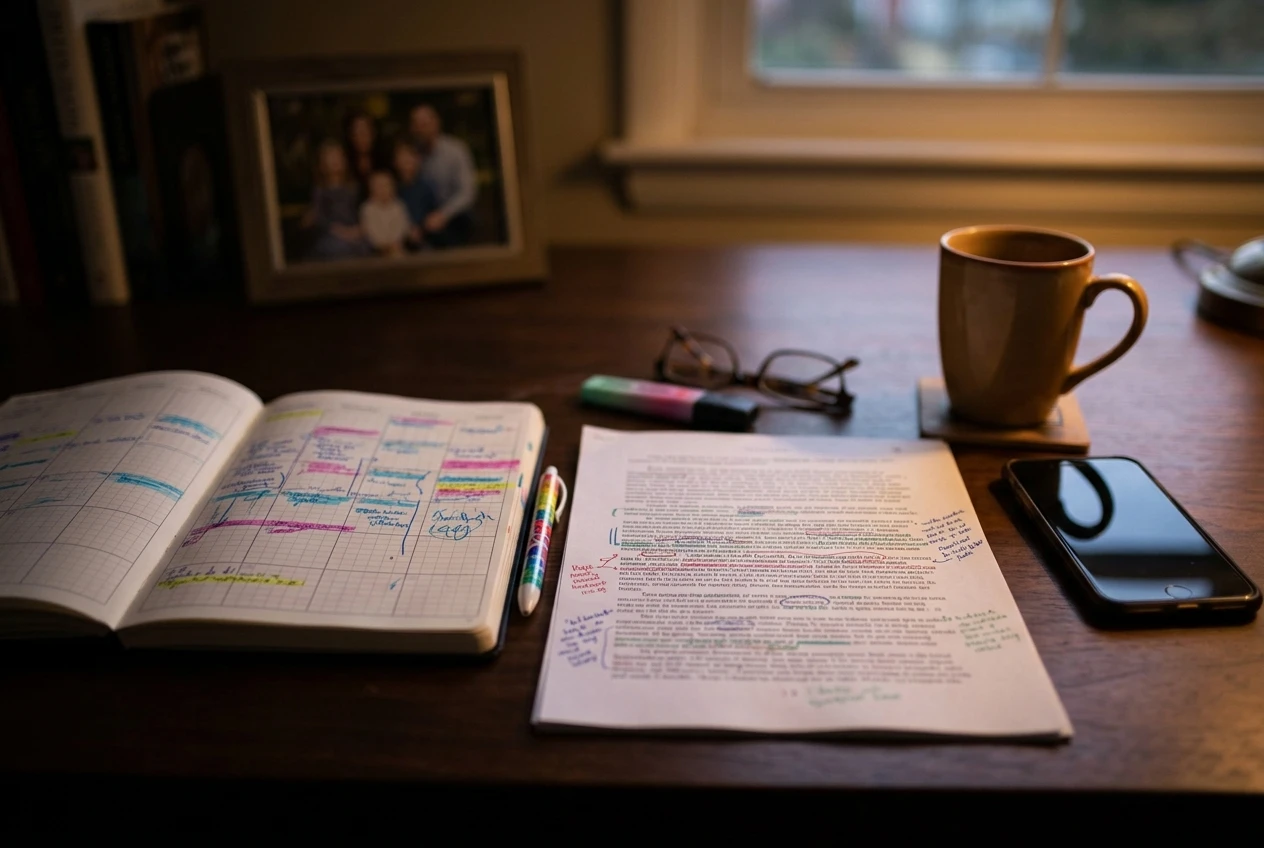
- Early in the week, evening: Finish the content draft, with the main point and the structure settled. Do not mark anything yet.
- Midweek, thirty minutes: Do the three-pass markup described above. Box, pause, then speed and energy. Print a clean copy when you finish.
- Thursday or Friday, commute or lunch: Do the partial rehearsal pass on the marked moments. Record the opening and the main point if you can.
- Saturday, ten minutes: Read the first page aloud, standing, at the pace you plan to use. Check the cut marked for time and settle which section it comes from.
- Sunday morning, before you leave: Read only the boxed sentences, in order. This is a reminder of the shape, not another rehearsal.
After the service, spend a few minutes noting which marks helped and which you ignored. Over several weeks, patterns appear: the places you always rush, the pauses you always cut, the arrows you never needed. Adjust your marking habits accordingly, and the thirty-minute markup gets quicker and more accurate.
Pacing is a preparation habit that anyone can build, whatever their schedule. If you preach without pay and prepare in the gaps of a working week, this site exists to support that; you can read more about why it was built for the unpaid preacher. A marked page, a few minutes of practice spread through the week, and a plan for the moments when nerves take over are enough to change how a sermon sounds.