
If you preach on Sundays while holding another job, you probably have limited time to prepare and no one coaching you afterward. That makes the fear of stumbling in front of the congregation feel larger than it needs to be. Knowing what to do when you make a mistake while preaching takes most of the fear out of it, because a mistake you have a plan for is a short interruption instead of a disaster.
This article covers the five most common pulpit problems: losing your place, a wrong word or verse reference, a blank mind, a technology failure, and a comment that lands badly. Each one comes with a specific sentence or move you can use, followed by a way to review your sermon afterward without picking yourself apart.
Why the congregation notices your mistake far less than you do
Your listeners do not have your notes. They do not know which illustration you meant to use next, which verse you planned to read, or the order you rehearsed. When you skip a point, they hear a sermon that does not include it. When you reach for a word and find another one, they hear a slightly different sentence.
A pause also feels different on each side of the pulpit. A few seconds of silence seems very long to the person speaking, because you are busy deciding what to do next. The listener is usually still thinking about your last sentence. Many people in the pews are also sympathetic. They know what it is like to speak in front of others, and a volunteer who stands up at all has their respect.
None of this means mistakes do not matter. A factual error or a careless remark deserves attention. But a stumble in delivery usually costs you far less than your adrenaline says it does.
The first ten seconds: pause, breathe, and keep your face kind
What you do in the first ten seconds sets the tone for the recovery. Most of the damage in a pulpit mistake comes from panic, and the listeners read panic from your face and pace faster than they read the error itself.
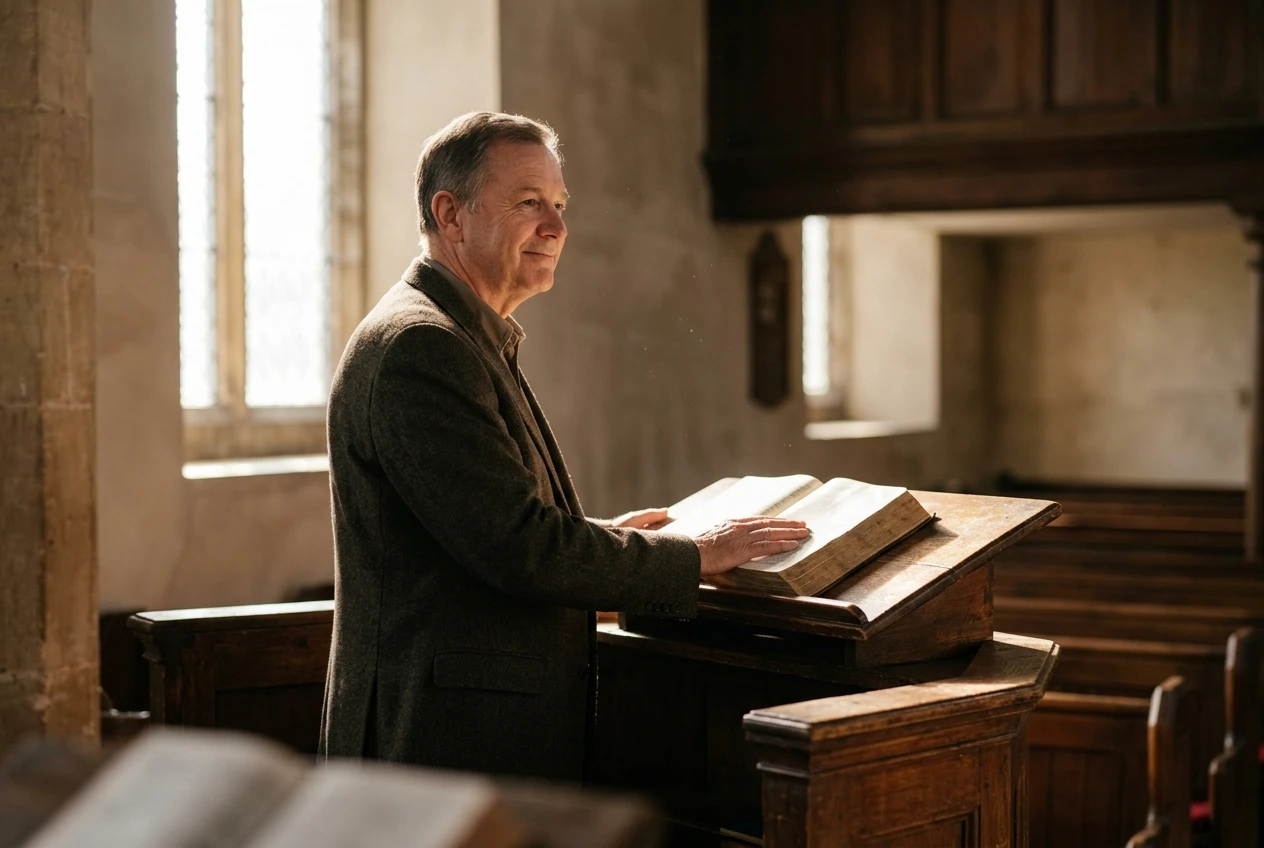
Use the same short sequence every time:
- Stop talking. Do not fill the gap with “um” or a rushed restart.
- Plant both feet and let your shoulders drop.
- Take one slow breath through your nose.
- Look at one friendly face in the congregation, then soften your expression. A small, calm smile tells the room that nothing is wrong.
- Put a finger on your page or the open Bible so you can find your place again.
Do not apologize at length. One short phrase such as “Give me just a moment” is enough, and often you need no phrase at all. Practice this sequence at home a few times so it is the first thing your body does when something goes wrong.
If you lose your place or go blank: three ways to find your footing
Losing your place and going completely blank feel different, but the same three moves work for both.
1. Repeat your last sentence. Say it again, slowly, with a little emphasis: “God does not ask us to be perfect before we come to him.” Repeating a line sounds like deliberate emphasis to listeners. For you it buys several seconds, and the next thought often arrives while you are still speaking the last one.
2. Go back to the text. Your sermon rests on a passage, and the passage will not go blank on you. Say, “Let’s look at that verse again,” and read it aloud, slowly. Reading gives your mind time to recover, and it puts the congregation’s attention on Scripture instead of on you. Then ask what the verse says, and answer in plain words. That is often enough to find your way back into the point you were making.
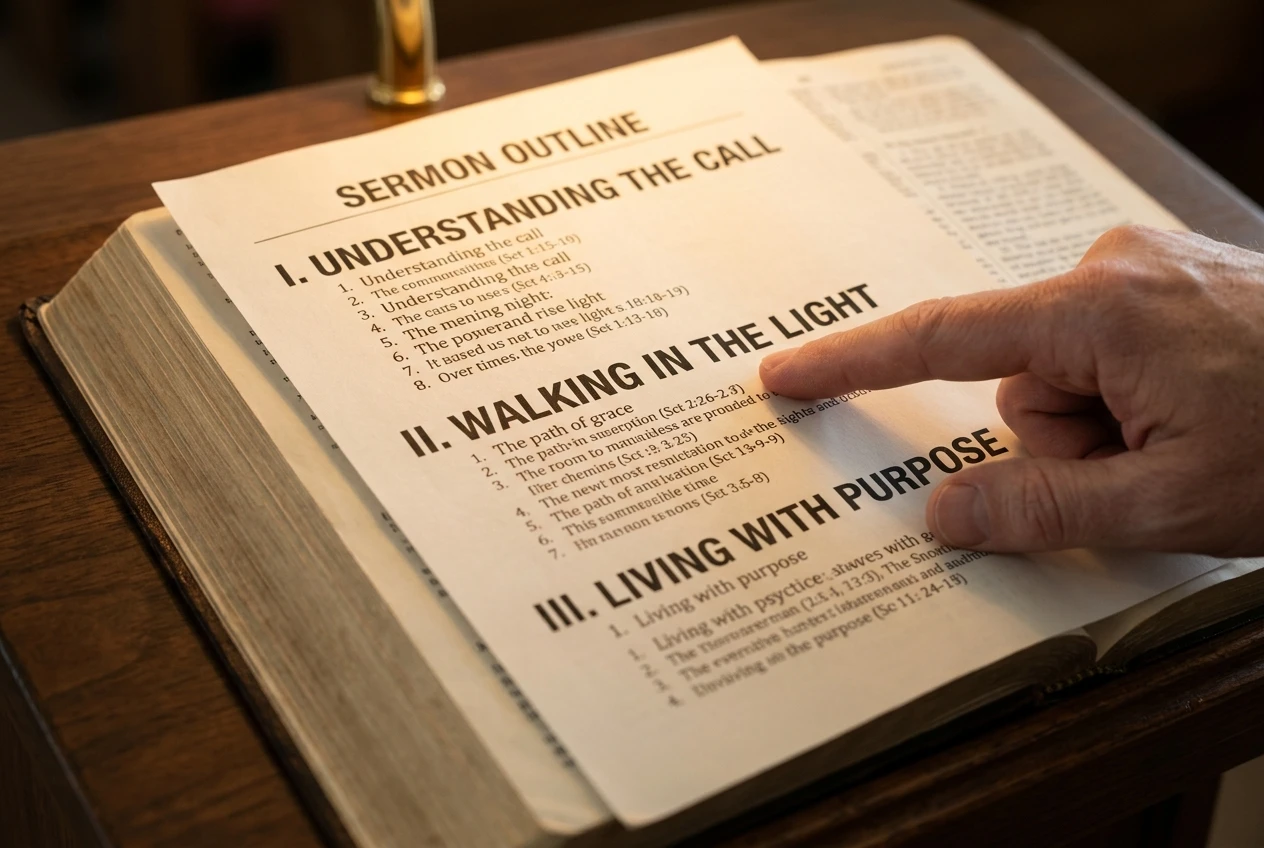
3. Use your notes openly. If you have a one-page outline, glance at it and say, “Let me check where I was going.” Listeners respect honesty, and most will not think less of a preacher who looks at notes. This move works best if your outline is easy to read at a glance: three or four large headings, not full paragraphs.
If none of these brings the thought back, skip ahead. Move to the next point on your outline, or to your closing. Nobody in the pews knows what you left out. You can pick it up in another sermon.
If you misquote a verse or get a fact wrong: correcting it without making a scene
Small slips happen in nearly every sermon. You say the wrong chapter, mix up two names, or give a number that is off. How you handle them depends on how much the error matters to your point.
For a minor slip, correct it in one sentence and keep going. “That’s Luke 15, not Luke 14.” You do not need to apologize, explain how it happened, or comment on your memory.
For an error that changes the meaning of what you are teaching, be direct and brief: “I said that poorly. What the passage actually says is this,” and then read it from the page. Having the Bible open in front of you matters here. A correction made with the text in hand carries more weight than one made from memory.
If you realize the mistake only after the service, you still have options:
- Tell your pastor or the person who coordinates the pulpit, so they are not surprised if someone asks.
- If the error was significant, correct it briefly at the start of the next time you speak, or in the church bulletin or group message if your church uses one.
- If someone corrects you from the pew, thank them and check the text yourself before answering. “Thank you, let me look at that” is a complete reply.
If the slides, microphone, or Bible app fails: carry on without it
Technology tends to fail at the moment you most want it to work, and volunteer preachers often do not have a tech team standing by. The remedy is to build a sermon that does not depend on the equipment.
If the slides stop working, continue speaking. Slides support a sermon, but the content lives in your outline. Read the key verse aloud from a printed Bible or a printed page, and describe anything the slide would have shown.
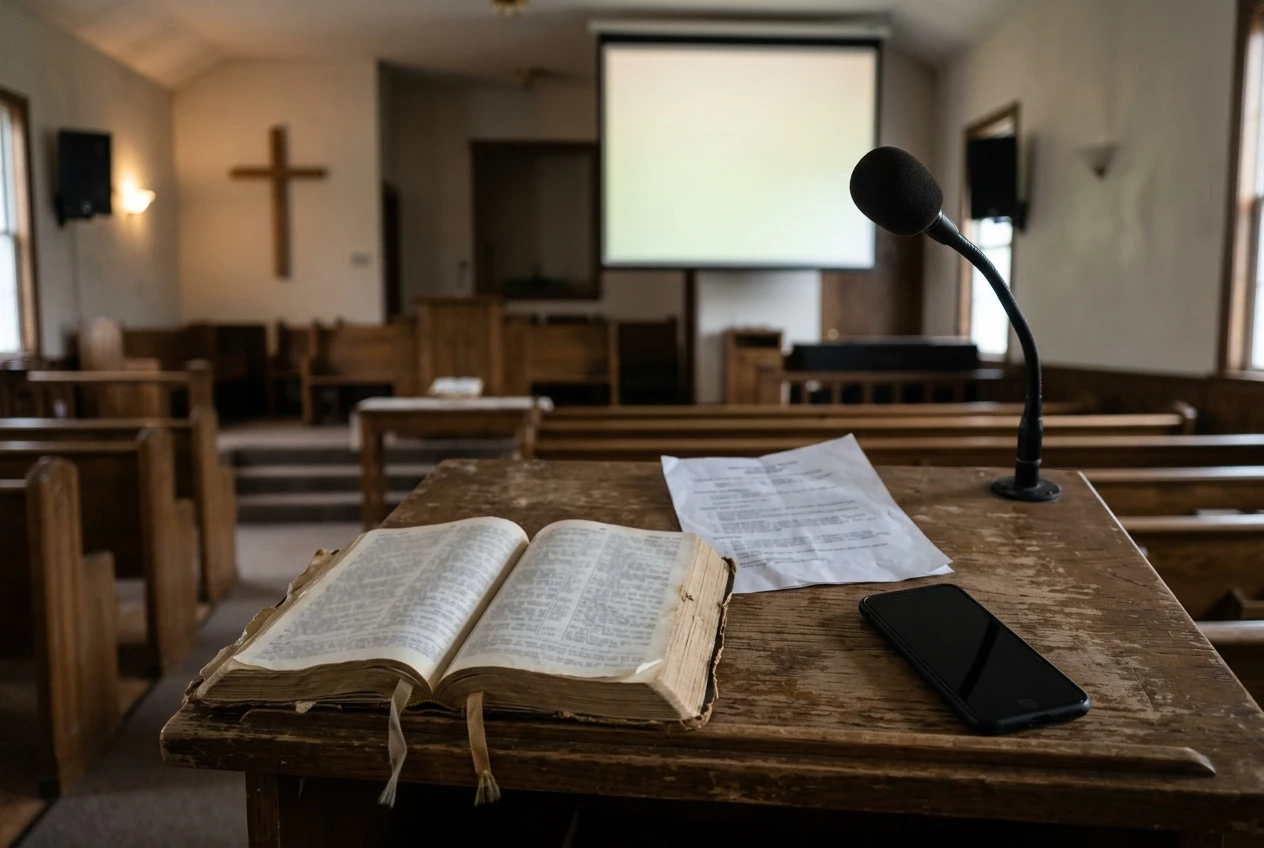
If the microphone cuts out, ask, “Can everyone hear me?” and speak up. If the room is small, you may be able to preach without it. If it is large, step closer to the front, slow down, and ask a volunteer to look at the equipment while you continue. Do not troubleshoot in front of everyone for more than a few seconds.
If your Bible app freezes or your phone dies, a paper Bible solves the problem. Carry one, even if you normally preach from a device. Print your main passage and your outline as well. A printed page does not run out of battery.
If something you said lands badly: how to repair it from the pulpit and afterward
Sometimes you hear the words leave your mouth and know they were wrong: a remark that was too sharp, a joke at someone’s expense, an example that touched a sore spot. You may notice it right away or hours later.
If you notice it while you are speaking, name it briefly and correct it: “That came out harder than I meant. What I mean is this.” Then say the point you actually intended. Do not explain at length or defend yourself, because that draws more attention to the remark.
Afterward, repair it with the person it affected, in private if you can. Keep the apology short and specific: “I’m sorry for what I said about single parents this morning. It was careless, and I’ll be more thoughtful.” Avoid “I’m sorry if anyone was offended,” because it puts the problem on the listener. Then let the person respond without trying to manage their reaction.
If you do not know who was hurt, tell your pastor or an elder what happened. They may know the situation better than you do and can advise you on whether to say something publicly.
A debrief habit for Sunday afternoon that builds confidence instead of shame
Replaying a sermon in your head all afternoon feels like a review, but it is mostly worry. A written debrief with a time limit works better.

Wait until after lunch or a rest, then spend fifteen minutes with a notebook. Write three short lists:
- What went as planned. Name at least two things. This keeps you from remembering only the stumbles.
- One thing to change. Choose the single most useful adjustment, such as a clearer outline, a printed backup passage, or a slower opening.
- One thing to ask about. This could be a question for your pastor, a verse to check, or a person to speak to.
Sort each mistake by type. An error of fact needs checking and correcting. An error of delivery needs practice. A nervous moment needs nothing more than experience, because most speakers get steadier the more often they speak.
When the fifteen minutes are up, close the notebook and stop. If you have a trusted person in the congregation, ask for one observation, not a full review. One piece of feedback is easier to use than ten.
It may help to remember that Paul described coming to the Corinthians “in weakness and in fear and in much trembling” (1 Corinthians 2:3). Nervousness in the pulpit does not disqualify anyone who is preaching faithfully.
Preparing so mistakes cost you less next time
Preparation cannot prevent every error, but a few habits reduce how much each one costs. They fit a schedule where sermon time competes with a day job.
- Keep a one-page outline with large headings and the first sentence of each section written out. These are the places where you are most likely to lose your way.
- Say the opening, the transitions, and the closing aloud at least once. If your time is short, rehearse these before anything else.
- Print your main passage and carry a paper Bible as a backup.
- Arrive early to test the microphone and any slides while the room is quiet.
- Know your last line. If you need to cut the sermon short because of a mistake or a delay, you can go straight to it.
Preaching without pay is real work, and Scripture has a good deal to say about how those who teach and serve are supported. Our article on provision for volunteer preachers in the Bible looks at what the text says, so you can prepare and preach knowing your service has a place in the larger story.