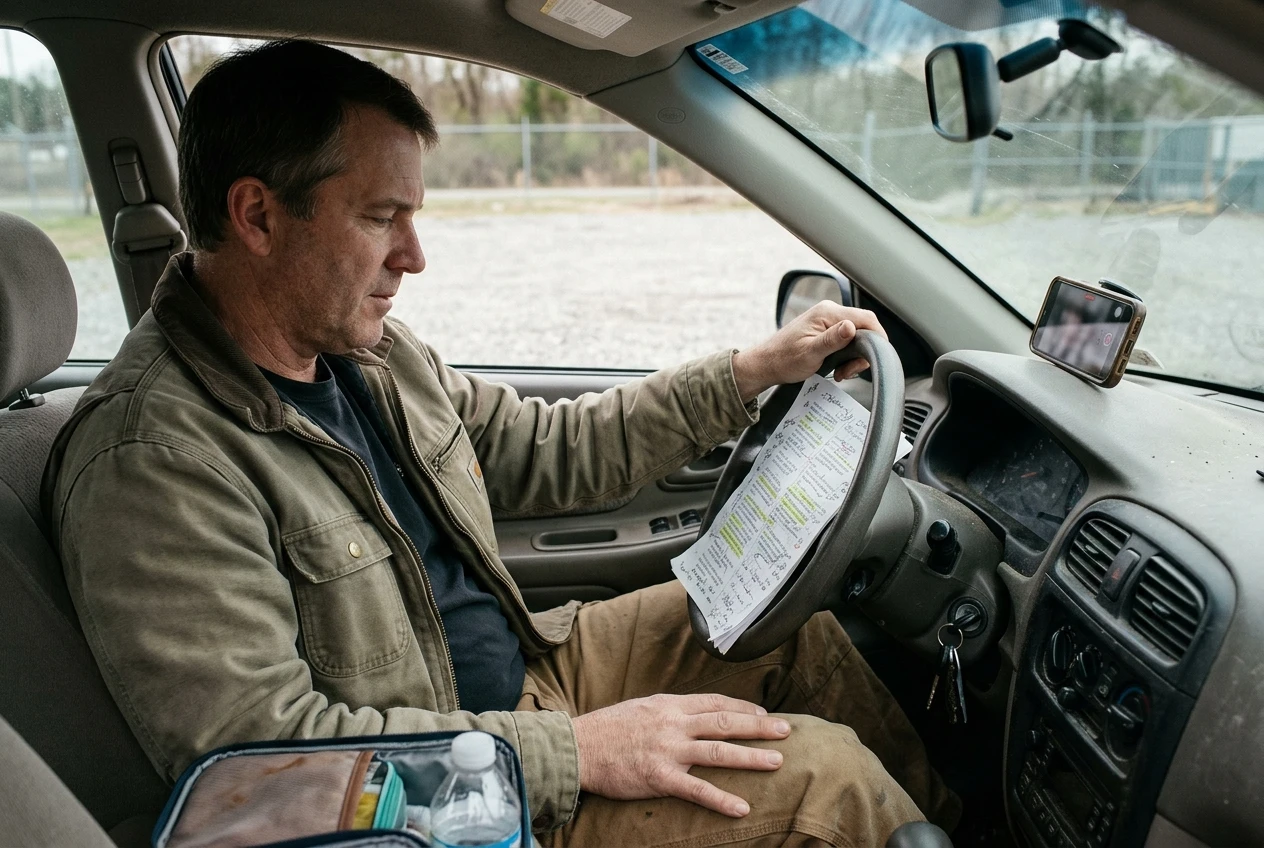
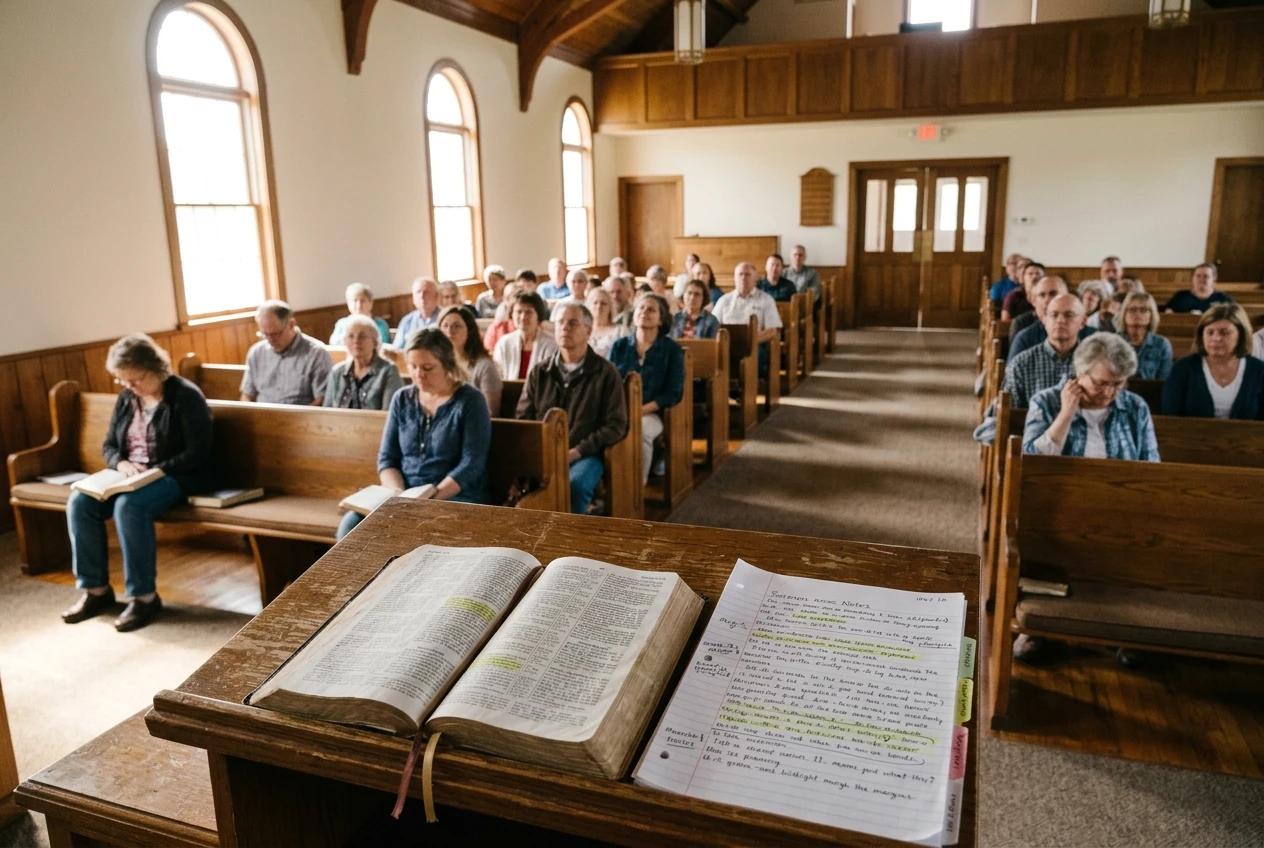
A volunteer preacher on a small pension often carries three kinds of work at once. There is the preaching and teaching of the gospel, there is the care of sick relatives, and there is the practical matter of food, school uniforms and school fees for the young ones in the household. Each of these is good work, and each can fill the whole day. This article looks at how to balance ministry and caring for sick family by taking one ordinary day at a time, as Christ taught us to pray.
For the promise itself, see the earlier study on what God actually promised the preacher. This article is about living that promise between the sickbed, the kitchen table and the pulpit.
The Prayer Christ Taught Is for Today’s Bread, Not Next Year’s
In the prayer our Lord gave His disciples, we ask: “Give us this day our daily bread” (Matthew 6:11). The request covers one day. The preacher who looks ahead to the next school term, the next hospital visit and the next season of rising prices may find that the prayer seems too small for the need.
Yet the Lord set the size of the request on purpose. In the same chapter He says, “Take therefore no thought for the morrow: for the morrow shall take thought for the things of itself. Sufficient unto the day is the evil thereof” (Matthew 6:34). Israel in the wilderness learned the same lesson with the manna. It was gathered each morning for that day, and what was hoarded spoiled (Exodus 16:19-20).

This does not forbid planning. A preacher may count the money in the house, list the medicines that must be bought and note the date the school fees fall due. The instruction is about where the weight rests. The plan is written down, and the anxiety is laid before God each morning with the day’s request. A prayer for today might be specific: bread for the evening meal, transport money for the clinic, a few quiet hours to read the passage for Sunday.
When the Sickbed and the Pulpit Call on the Same Evening
Consider an ordinary day. The preacher rises early and prays. A sick relative needs medicine, a wash and a meal. A child needs a uniform mended before school. At midday a neighbour asks for a word of counsel. In the evening the congregation expects a Bible study, and at the same hour the relative’s fever rises.

On such an evening two good duties ask for the same hour, and one of them must wait. Scripture gives no rule that says the pulpit always comes first or that the sickroom always does. It gives principles to weigh the matter by:
- Urgency. A fever that is climbing, or a person who cannot be left alone, is an emergency. A study can be moved, shortened or given to another brother. A sick person cannot be moved to tomorrow.
- Who else can serve. A congregation usually has another man who can read the Scriptures and lead prayer for one evening. A sick relative may have no other person nearby.
- Faithfulness in what was promised. If you are the only one who can open the meeting, send word early so the people are not left waiting.
Acts 6 shows the apostles facing a similar pressure. The widows needed daily food, and the Twelve said it was not right that they should leave the word of God to serve tables. They did not dismiss the need. They asked the church to choose seven men of good report to oversee it, so that both the table and the word were served (Acts 6:1-4). A preacher who shares the load with others follows the same pattern.
Two Duties Scripture Does Not Set Against Each Other
Some weary preachers carry a quiet guilt that every hour at the bedside is an hour stolen from the gospel. Others feel the opposite guilt, that every hour in the pulpit is taken from the family. Scripture does not set the two duties against each other.
Paul writes to Timothy: “But if any provide not for his own, and specially for those of his own house, he hath denied the faith, and is worse than an infidel” (1 Timothy 5:8). The context is the care of widows and relatives, and the apostle treats that care as part of faith itself. Feeding, clothing and tending a sick household is obedience, and it is not a distraction from ministry.
The same apostle writes that “the Lord ordained that they which preach the gospel should live of the gospel” (1 Corinthians 9:14). The gospel is to be preached, and the preacher is to be sustained. Neither verse cancels the other.
A preacher who cares for a sick mother, buys a child’s school shoes and then stands up to teach on Sunday is doing one work in two places. Often the care gives the preaching its credibility. The congregation listens differently to a man whose life shows the patience and compassion he teaches.
How to Ask for Help Without Shame, and How to Receive It as God’s Provision
Many preachers find it easier to give than to ask. Yet Paul told the Galatians, “Bear ye one another’s burdens, and so fulfil the law of Christ” (Galatians 6:2). A burden cannot be borne by others unless it is made known to them.
Asking can be done plainly and with dignity. Some practical ways:
- Name the need exactly. “We need a bag of maize meal and the cost of two school uniforms this month” gives people something they can act on. “We are struggling” gives them nothing to do.
- Ask the right people. Elders, fellow preachers and members of the congregation who have said they wish to help are the natural first choices.
- Give people the chance to share. A brother who is allowed to meet a need receives a blessing too. Paul thanked the Philippians for their gifts and called them “a sacrifice acceptable, wellpleasing to God” (Philippians 4:18).
- Say thank you, and pray for the giver. Gratitude acknowledges both the person and the God who moved them.
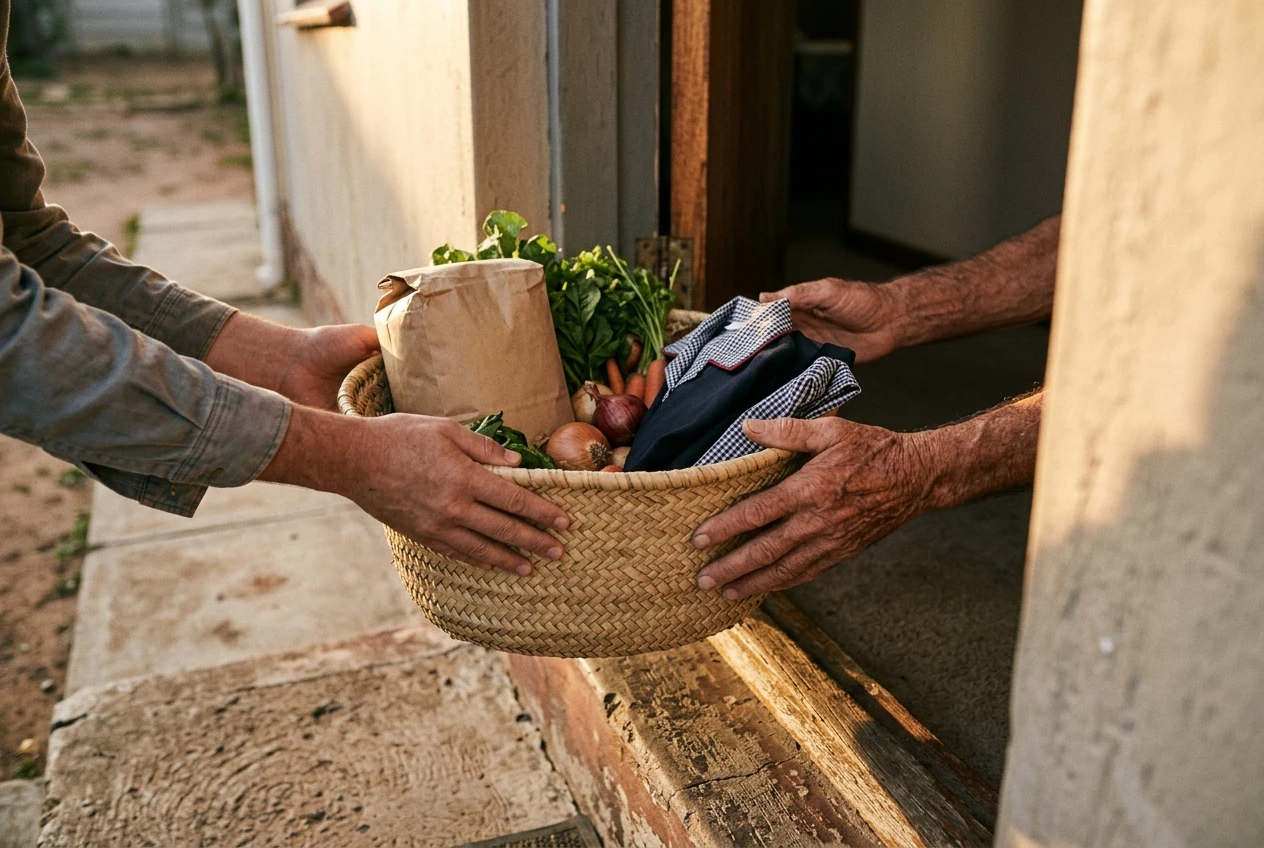
To receive help as God’s provision is to see the hand behind the hand. Paul writes, “My God shall supply all your need according to his riches in glory by Christ Jesus” (Philippians 4:19). The supply usually arrives through people: a neighbour’s gift, a relative’s contribution, a church’s collection. Receiving it with thanks honours the One who sent it.
A Simple Daily Rhythm for Prayer, Care, Preparation and Rest
A day with so many calls needs a shape. The following is a pattern, and each household will adjust it to its own hours and needs.
Early morning: prayer and the word. Before the house wakes, read a passage and pray. Ask for the day’s bread by name: the meals, the medicines, the fees, the strength. Even fifteen minutes spent here sets the order of the day.
Morning: care. The sick relative’s needs are usually greatest in the morning: washing, medicine, food, the change of bedding. Do these first and without hurry. Children’s school preparation belongs here too.

Midday: errands and rest. Handle the shopping, the clinic visits and the calls for help. Then rest for a short while. Our Lord said to His disciples, “Come ye yourselves apart into a desert place, and rest a while” (Mark 6:31), at a time when many were coming and going and they had no leisure even to eat.
Late afternoon: preparation. Set apart a fixed block, even if it is only an hour, for the next sermon or study. Keep the Bible and notes in one place so that no time is lost searching. For ways to use limited evening hours well, see the article on how to pace a sermon when you only have evenings to prepare.
Evening: the household and the congregation. Feed the family, give the evening medicine, hold family prayers, and attend the meeting if the sickroom allows it.
Night: rest. Commit the sick and the family to God before sleeping. “Cast thy burden upon the LORD, and he shall sustain thee” (Psalm 55:22). A preacher who is worn out serves no one well, and sleep is part of the day’s faithful work.
On days when the pattern breaks, as it will, return to the morning prayer for the next day’s bread and begin again.
Why the Labour Is Not in Vain: Galatians 6:9 and 1 Corinthians 15:58
There will be weeks when the fever does not break, the pension does not stretch, and the congregation seems small. The preacher may ask whether any of it counts for anything.
Scripture answers directly. “And let us not be weary in well doing: for in due season we shall reap, if we faint not” (Galatians 6:9). The harvest is promised for “due season,” which is God’s timing and not ours. The condition is that we do not faint.
And again: “Therefore, my beloved brethren, be ye stedfast, unmoveable, always abounding in the work of the Lord, forasmuch as ye know that your labour is not in vain in the Lord” (1 Corinthians 15:58). Paul writes this at the end of his great chapter on the resurrection. Because Christ is risen and we shall be raised, the work done in His name keeps its worth beyond this life. Every meal carried to a sickbed, every uniform paid for and every sermon preached to a few faithful listeners is work done “in the Lord.”
The reward is not limited to this world. The faithful servant looks to hear his Master say, “Well done, thou good and faithful servant” (Matthew 25:21), and to be with the Lord Jesus Christ for ever.
This Week
Choose one concrete need in your household or ministry: a medicine, a school uniform, a week’s food, an evening to prepare. Pray over it by name each morning this week, and then ask one person who is able to help.
When you are ready, read the study of provision for volunteer preachers in the Bible. Then share this article with another preacher who is weary, so that he too may be reminded that his labour is not in vain in the Lord.