A telephone call comes early in the morning. A sister, a son or a spouse is running a fever, cannot keep food down, or has been taken to the clinic. Your next preaching appointment is on Sunday, the host is expecting you, and the congregation has been told you are coming. You cannot be in two places.
How to handle ministry commitments when a family member is sick comes down to three practical tasks and one question of conscience. The tasks are to tell the host in time, to find someone who can stand in, and to hand over what you had prepared. The question is whether a cancelled appointment counts against you before God. This article takes the tasks first in order, and the question first in importance.
The Phone Call, the Fever, and the Appointment You Cannot Keep
Illness rarely arrives on a convenient day. It also rarely announces how long it will stay. A fever may break in two days, or it may become a month of nursing, clinic visits and sleepless nights.
For that reason, the first decision is a small one. Do not decide today whether you will preach three weeks from now. Decide only about the appointments that fall inside the next few days, and write down every appointment you have promised for the coming month. A list on one sheet of paper, with the host’s name, the date and a way to reach them, turns a vague worry into a set of tasks you can deal with one at a time.

Older preachers living on a pension often carry the added worry of travel costs and of medicine that must now be bought. Keep these practical matters on the same sheet. A clear page lets you think, and a crowded mind does not.
Why a Cancelled Sermon Is Not a Charge Against Your Faith
Many faithful preachers feel that a cancelled appointment is a small act of unfaithfulness. The feeling is strong, but it is not what Scripture teaches.
Your commitment was made to God and to the congregation, and it was made in good faith. Circumstances you did not choose now prevent you from keeping it on that day. Scripture never records that God requires a servant to leave a sick household in order to keep a date. Christ said to the Pharisees, “I will have mercy, and not sacrifice” (Matthew 12:7, KJV). He placed mercy above the careful keeping of religious duty.
Paul also writes that a man who does not provide for his own, “and specially for those of his own house,” has denied the faith (1 Timothy 5:8, KJV). The verse speaks mainly of material provision, but it shows how seriously Scripture takes the duty a believer owes to his household. If you want a fuller treatment of why that duty is itself part of your service, the article When a Relative Falls Sick, Caring for Them Is Part of Your Ministry, Not a Break From It covers it.
Guilt, then, is not a reliable guide here. Judge the matter by what Scripture says, and let the feeling follow.
What Scripture Shows About Sickness Among God’s Workers
The Bible does not hide the fact that God’s workers fall ill. Two examples in Paul’s letters are useful to a preacher facing this problem.
Epaphroditus
Paul writes to the Philippians about Epaphroditus, whom they had sent to help him. “For indeed he was sick nigh unto death: but God had mercy on him; and not on him only, but on me also, lest I should have sorrow upon sorrow” (Philippians 2:27, KJV). Epaphroditus had been sent to serve, and he fell so ill that he nearly died. Paul does not rebuke him. He asks the church to “receive him therefore in the Lord with all gladness; and hold such in reputation” (Philippians 2:29, KJV).
A worker who is stopped by illness is received with gladness and honor. Nothing in the passage suggests he was thought less faithful.
Trophimus
Paul writes near the end of his life, “Trophimus have I left at Miletum sick” (2 Timothy 4:20, KJV). Here an apostle with a great work before him leaves a fellow worker behind because of sickness. The work went on, and Trophimus is not condemned for being unable to continue.
These two examples show that sickness among God’s workers is an ordinary part of service. The first case concerns the worker who is ill; yours concerns the worker whose relative is ill. The principle is the same: the work of the gospel is larger than one man’s schedule, and God does not measure faithfulness by an unbroken record of appearances.
How to Tell the Host Early, Plainly and Without Shame
The most helpful thing you can do for the host is to give notice as early as you can. A host who learns on Saturday evening has few choices. A host who learns on Tuesday has several.
Send the message as soon as you know you may not be able to come, even if you are not certain. You can say that you will confirm within a day or two. Hosts can plan around uncertainty more easily than around silence.
A short, honest message is enough. For example:
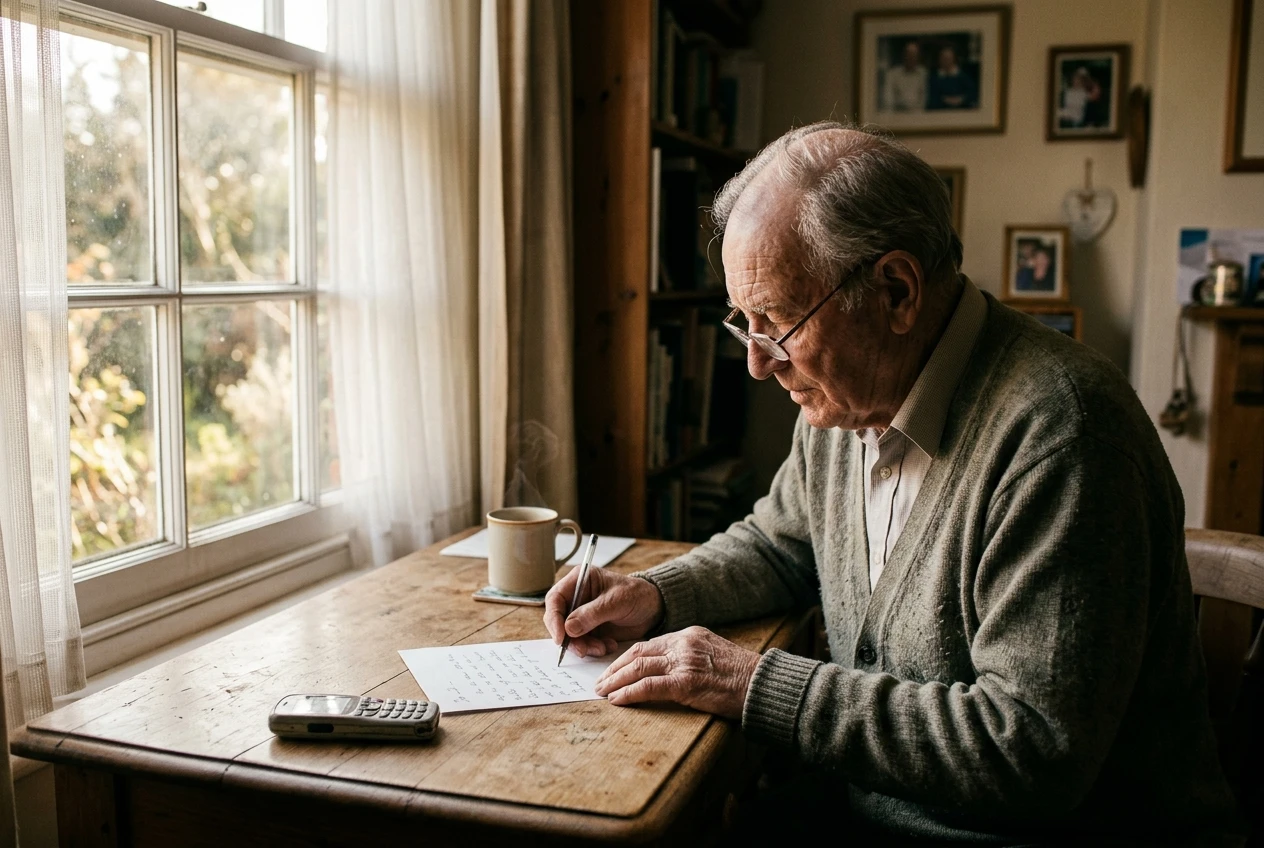
Dear Brother, I must tell you that a member of my family has become seriously ill and I need to stay at their side. I am sorry that I cannot keep my appointment with you on Sunday. I will do what I can to suggest someone who may take my place, and I will pray for the congregation that day.
Keep the message to these elements:
- The plain fact that someone in your family is ill.
- The appointment you cannot keep, named by date.
- An offer to help find a replacement.
- A word of prayer for the congregation.
You need not describe the illness in detail, and you need not apologize repeatedly. One sincere expression of regret is honest. Several begin to sound as though you are asking for a judgment, and the host is more likely to respond with sympathy than with criticism.
If a telephone call suits the host better than a written message, make the call. Many older congregations prefer to hear a voice.
Who Can Stand in Your Place, and How to Hand Over Your Notes
Paul told Timothy, “the same commit thou to faithful men, who shall be able to teach others also” (2 Timothy 2:2, KJV). Preparing others to teach is part of the work, and this is a time to do it in a small way.
Think of the fellow believers you already know who can teach: another volunteer preacher, an elder of the congregation, a deacon, or a mature brother or sister who has spoken before. Choose one or two whose handling of Scripture you trust, and ask them directly. The host may also have a preference, so offer your suggestion and let the host decide.
If you have already prepared a message, you can hand it over in a way that helps the person receiving it:
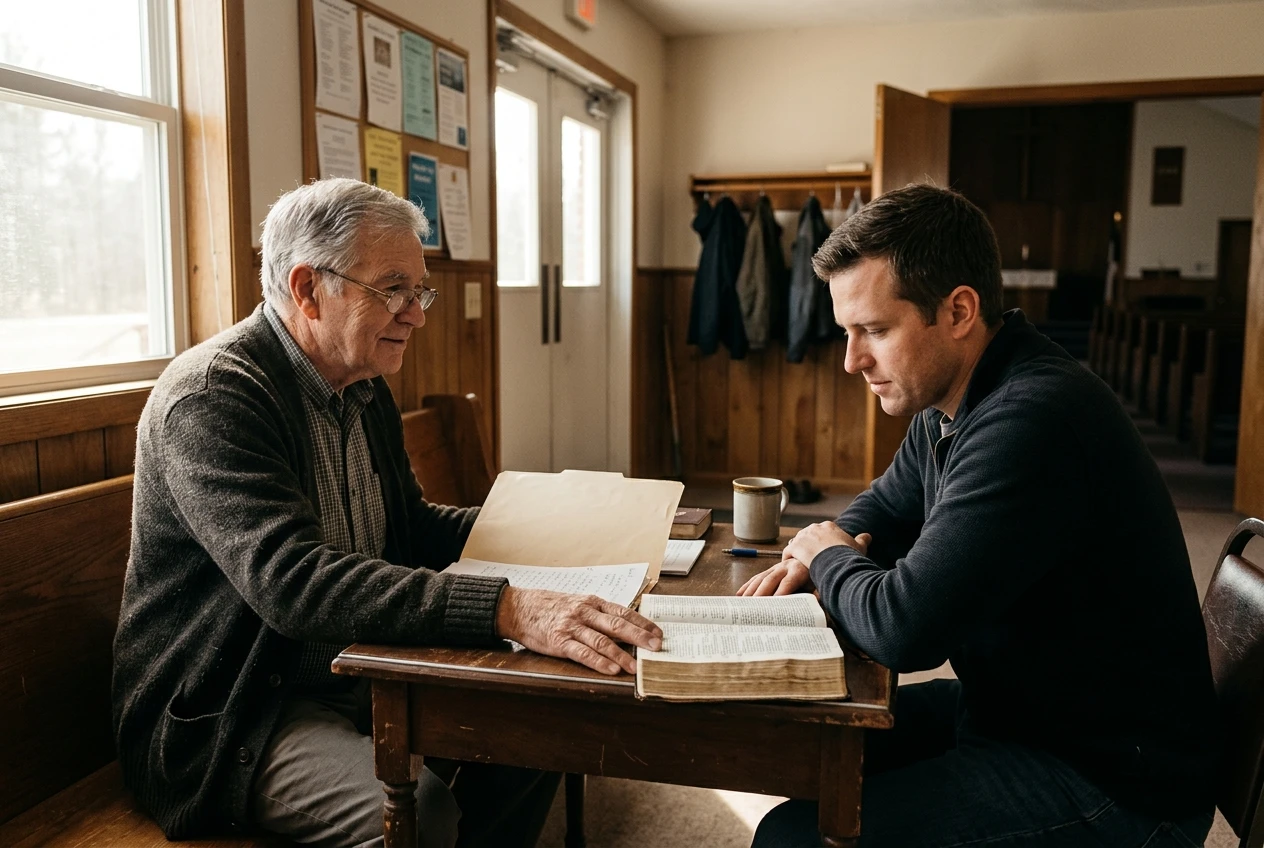
- Write out the main text and the central point in two or three sentences.
- List the supporting passages in the order you intended to use them.
- Note any illustration you planned and whether it is yours alone to tell.
- Say plainly that the person may change anything to suit his own voice.
The last point matters. A substitute who tries to preach another man’s sermon word for word often preaches poorly. Give him the material and the freedom to teach it as he understands it. If he prefers to bring his own message, let him.
Do not feel that your preparation has been wasted. The text you studied remains in your mind, and the Lord may use it at the bedside or on a later Sunday.
Keeping a Small Daily Rhythm of Prayer and Scripture at the Bedside
Caring for a sick relative fills the day with interruptions. A long, fixed hour of study may not be possible, so a short and steady rhythm serves better than an ambitious plan.

A rhythm that fits around nursing might be as simple as this:
- Morning: read one short passage aloud, perhaps a psalm, before the day’s duties begin. The sick person may listen, if he or she is able.
- Midday: pause for a brief prayer while preparing food or medicine.
- Evening: read a few verses again and pray for the family, the host you disappointed and the person who took your place.
Peter writes, “Casting all your care upon him; for he careth for you” (1 Peter 5:7, KJV). A bedside is a fitting place to do exactly that, in plain words and without ceremony. If you wish for a prayer written for this situation, the daily prayer linked below was written for a preacher who is also keeping watch at a sickbed.
Because you live on a pension, you may also be worrying about food, medicine or the cost of travel to the clinic. Name these needs to God in the same prayers. He knows them already, and the Lord’s own instruction to pray for daily bread does not exclude them.
When the Crisis Passes: Returning to the Pulpit and Receiving What God Taught You at the Sickbed
Illness at home ends in one of several ways, and not all of them are a recovery. Whatever the outcome, there will come a time when you consider returning to your appointments.
Return in stages. Contact the host who was inconvenienced, thank him for his patience, and ask whether the congregation would still welcome you. Begin with one appointment rather than the whole schedule. Strength lost in nursing returns slowly, particularly at an older age, and a gentle return protects both your health and your preaching.
Consider also what the sickbed has taught you. Most preachers who have sat for days beside someone in pain speak afterward with greater gentleness about suffering, about prayer when no answer is visible, and about the dependence of every person on God. Paul wrote of “the God of all comfort; who comforteth us in all our tribulation, that we may be able to comfort them which are in any trouble” (2 Corinthians 1:3-4, KJV). The comfort you received while caring for your relative is something you can now offer to others who are in trouble.
Do not look on the cancelled appointment as lost ground. The Lord who saw Epaphroditus in his sickness, and Trophimus left behind at Miletus, sees you at your relative’s side. The labor you give there is seen by Him, and the reward He has promised does not depend on a perfect record of dates kept.
Two Things to Do Today
Send one short, honest message to the host of your next appointment, and name one fellow believer who could stand in for you if needed. Then read the daily prayer written for a preacher who also keeps watch at a sickbed: A Daily Prayer for the Preacher Who Also Keeps Watch at a Sickbed.
Leave a Reply