
Invitations to preach rarely arrive with a long warning. A pastor in another town falls ill, a small congregation has no one for Sunday, or a village asks for a teacher of the word. A preacher who must first find a bag, wash a shirt, count his fare and search for his medicine may still say yes, but he says it with worry. A bag that is already packed lets him answer at once.
Why a bag kept ready lets you say yes when the invitation comes
When Jesus sent out the seventy, He told them to carry no purse, no bag and no sandals (Luke 10:4). Near the end of His ministry He asked the disciples whether they had lacked anything on that earlier mission, and they answered, “Nothing” (Luke 22:35). He then told them that whoever had a purse should take it, and a bag likewise (Luke 22:36). The Lord who provided for the first journeys also allowed His servants to prepare for later ones.
Preparing does not replace trust in God. A traveling kit for volunteer preachers is a way of being faithful with what God has already placed in the preacher’s hands, so that when the call comes there is nothing to hold him back except God’s own leading.
Choose one bag that you can carry yourself without strain, and keep it in the same place in the house every day. Relatives who help you prepare should know where it is. The rest of this article describes what goes inside.
The Scripture and the pen: what to keep for the preaching itself
Paul, in prison and near the end of his life, asked Timothy to bring “the books, especially the parchments” (2 Timothy 4:13). A preacher’s tools matter even when everything else is spare. Keep these in the bag at all times:
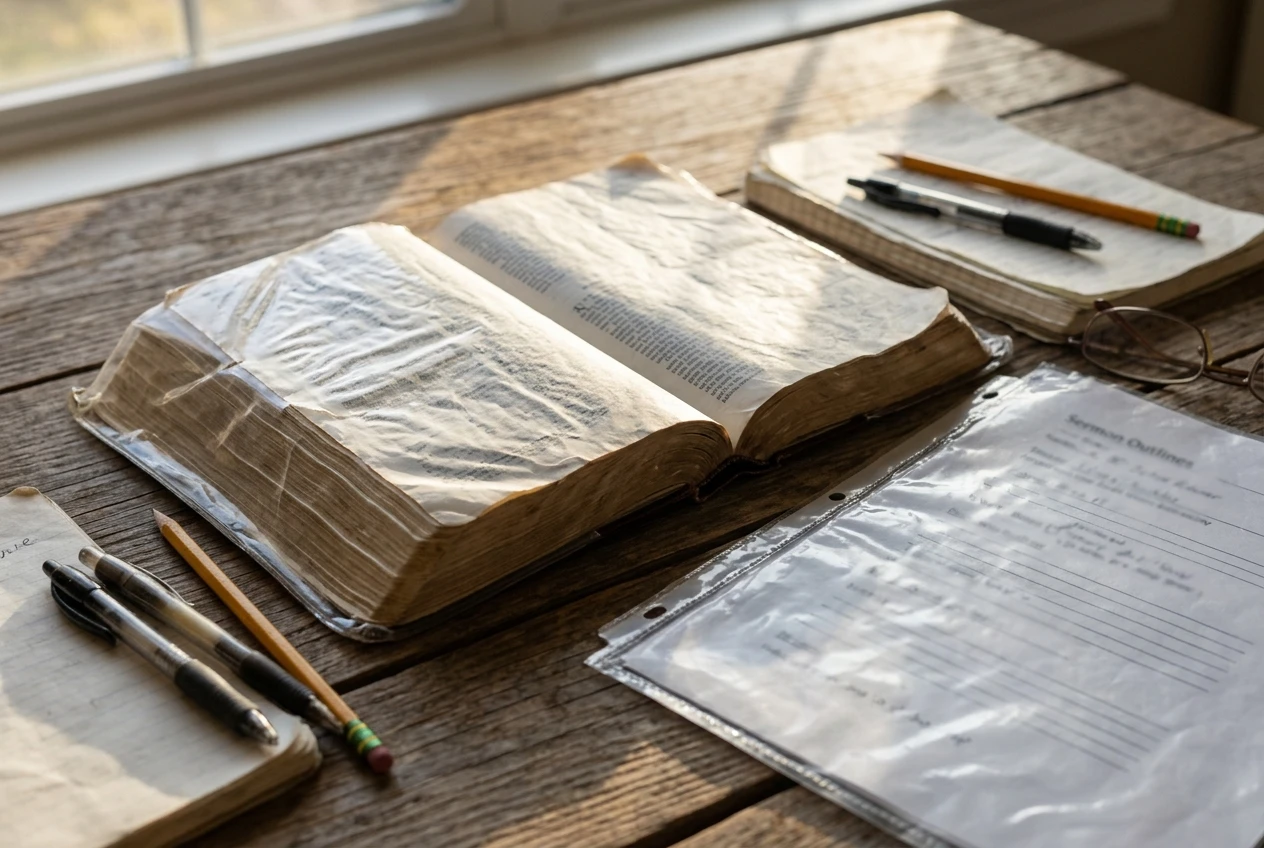
- Your own Bible, the one you know best, with a small cloth or plastic cover against rain.
- A notebook with plenty of blank pages.
- Two pens and a pencil, since a pencil still writes when a pen dries out or the weather is wet.
- A spare pair of reading glasses, if you need them to read.
- Two or three sermon outlines you know well, written out or printed, with the passages marked.
The outlines matter most. If the invitation comes with a day’s notice, you do not want to compose a sermon from nothing in a strange place. A prepared outline on a passage you have prayed over many times lets you speak plainly and with confidence. Keep these papers in a plastic sleeve so that damp does not ruin them.
Food and water for the road when no meal is promised
The Lord said that the worker is worthy of his food (Matthew 10:10), and He has often provided that food through the hospitality of believers. Hospitality is not always ready, however. A bus may be late, a host may be away, or the meeting may run long. When Elijah lay exhausted in the wilderness, God sent him bread and a jar of water, and Elijah went in the strength of that food for a long journey (1 Kings 19:6-8).
Keep a small supply of food that stays good in a closed bag:
- Plain biscuits or dry bread rolls, sealed in a tin or bag.
- Dried fruit, groundnuts or similar nuts, if your health allows them.
- A small container for rice or other cooked food, if a relative has prepared some on the morning of the journey.
- An empty water bottle with a tight lid, filled from a safe source just before you leave.
If a doctor has given you instructions about what you may or may not eat, follow them above everything written here. A preacher who falls ill on the road helps no one. Rotate the dry food each month so that it is eaten and replaced before it goes stale; the monthly check described below explains how.
One change of clothing, a cloak and a pair of sound shoes
Jesus told the twelve not to take two tunics (Luke 9:3), and the bag should reflect that spirit of simplicity. A single change of clean clothing is enough: a shirt or blouse, trousers or a skirt, and underclothes, folded flat. Its purpose is that a preacher who has traveled all day can stand before a congregation clean and respectful of the word he carries.
Paul also asked Timothy for the cloak he had left behind at Troas (2 Timothy 4:13). Nights are cold and rain comes without notice, so a coat, a warm outer cloth or a light rain cover belongs in the bag. The warmer garment may be one you already own and wear less often.

Shoes deserve the most attention. A preacher who walks to a meeting place needs shoes that are sound and already broken in. Take them to a cobbler before they are needed, and have worn soles or loose stitching mended. New shoes worn for the first time on a long journey will blister the feet. Wash and dry the clothing as soon as you return, and put it back in the bag the same day.
Travel money set aside in small portions, and how to keep it separate
Jesus said that a man planning to build a tower first sits down and counts the cost (Luke 14:28). The same sense applies to a journey. On a small pension, the money for a trip will not appear at the last hour unless it was put aside earlier.
Use envelopes, each marked in plain writing:
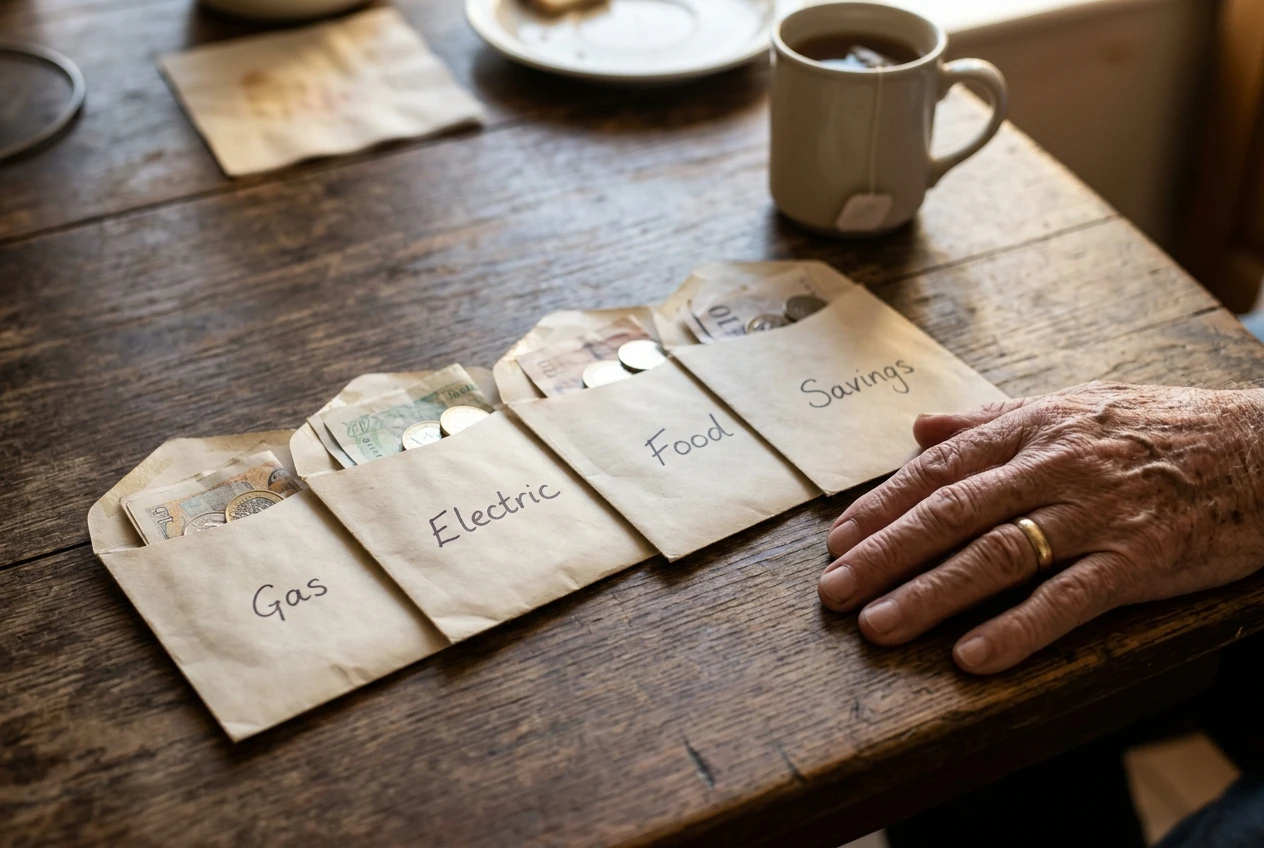
- Fare there. The cost of the usual route to the nearest places that invite you.
- Fare back. Set aside before anything else, so that you can always return home.
- Food on the road. A modest sum for water or bread if your supplies run out.
- A small reserve. For a delayed bus or a sudden change of plan.
Keep these envelopes apart from the money for the household, and never borrow from them for other needs without writing down what was taken and putting it back as soon as you can. When you travel, carry the money in two places, not all in one pocket. Add to the envelopes in small amounts whenever you can, and if a gift is placed in your hand, consider setting a portion of it here. The article What a Volunteer Preacher Should Do With the Small Gifts Placed in His Hands discusses how to treat such gifts faithfully.
Medicine, a small first-aid supply and the paper that names who to call
Paul advised Timothy to take a little wine for his stomach and his frequent illnesses (1 Timothy 5:23). Scripture does not treat care for the body as a lack of faith. If you take medicine daily, keep a few days’ extra supply in the bag, in its original labeled container, so that a delayed return does not leave you without it. Ask your doctor or pharmacist how much extra is sensible.
A small first-aid supply is enough:
- Adhesive plasters of different sizes.
- A clean cloth or bandage.
- An antiseptic wipe or cream.
- Any pain reliever that your pharmacist has confirmed is safe for you.
Then add one sheet of paper written in clear, large letters and kept in an inside pocket. It should give your full name, your home address, the name and telephone number of a relative to call, any illness you live with, any allergy, and the list of your medicines. If you become unwell among strangers, this page speaks for you. Leave a copy with your family as well, and tell them where you are going and when you expect to return.
A monthly ten-minute check: restocking without spending more than you must
A bag that is packed once and forgotten will fail you in time. Food goes stale, ink dries, medicine passes its date and clothing no longer fits. Choose one day each month, perhaps the first of the month or the first Monday, and give the bag ten minutes.
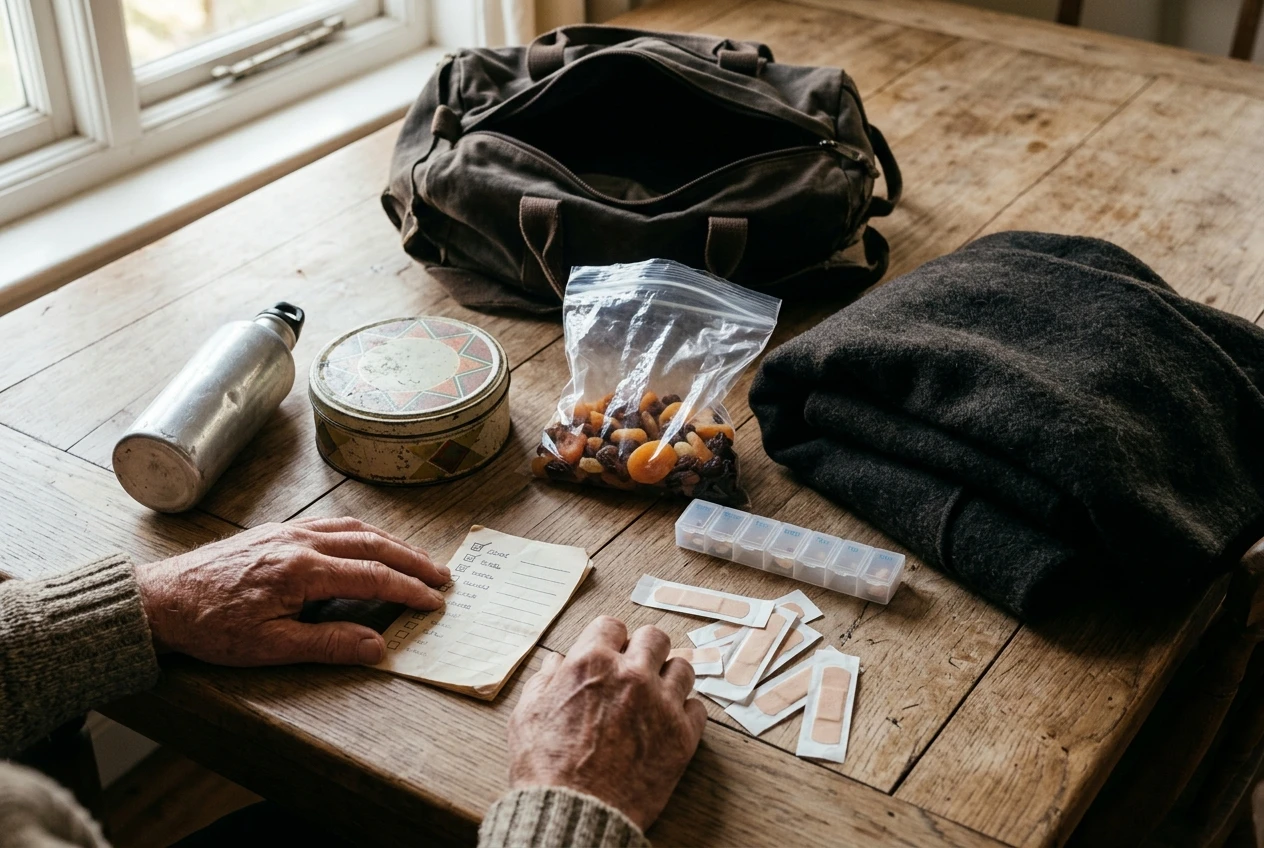
- Empty the bag onto a table.
- Read through the list you keep inside the lid or on a card.
- Check the food, and eat anything old that is still good, replacing it with fresh.
- Check medicine dates and the amount left.
- Check the pens, the notebook pages, the shoes and the clothing.
- Replace only what is used up or spoiled.
Look through what you already own before you buy anything. A spare scarf, a bottle, an old notebook or a pair of reading glasses may already be in the house. Whatever you must buy, buy the cheapest item that does the work. Since the check runs monthly, you can spread purchases across several months and keep the cost small. The piece on how to stretch a pension while serving in ministry may help you plan these small costs inside the month’s budget.
Letting family and congregation help fill the bag, and thanking God for what is given
Many relatives and fellow believers would gladly help but do not know what to give. A general offer to help is hard to answer, while a particular need is easy to meet. Show your family the checklist and say, “This is what is still missing.” One person may supply a water bottle, another a warm cloth, another a packet of dried fruit. Children and grandchildren can copy the checklist in large letters and tick the items as they are added.
Paul wrote to the Philippians that their gift was “a sweet-smelling aroma, an acceptable sacrifice, well pleasing to God,” and promised that his God would supply all their need according to His riches in glory by Christ Jesus (Philippians 4:18-19). A gift given for the preacher’s journey is received by God as given to Him. Thank the giver by name, and tell them when the bag was used, so that they know their part in the preaching.
Each month, as you restock the bag, thank God for every item in it, even the smallest. What was supplied came from His hand, through the hands of others.
Take one bag this week
This week, take one bag and a sheet of paper. Write down every item from the checklist above that you already own, and put those items in the bag. Then write a second list of what is still missing, and pray over each item by name, trusting God to supply it as He has supplied His servants before. When something arrives, cross it off and thank Him.
For the biblical foundation of this work, read Bread, Cloak, Rest and Road: The Bodily Needs of the Preacher in Scripture. It shows from the word of God why the preacher’s body, and the bag that serves it, are not a small matter in His sight.