
Some preachers teach for twenty years and can name only a few people who ever told them the word had reached them. The pulpit is filled, the lesson is given, the people greet him at the door, and then he goes home not knowing whether anything he said was taken in. If you are in that situation, Scripture speaks to it directly. It also tells you how to stay faithful in ministry when you see no results.
This article is written for the volunteer preacher who receives no wage and little report, and for the relatives who stand beside him and wonder whether his labor counts for anything.
Why God Allows Some Labor to Stay Hidden From the One Who Does It
Scripture does not promise that the worker will see the harvest. Jesus said to His disciples, “One soweth, and another reapeth” (John 4:37), and He told them they had entered into the labors of others. Some of the men who sowed before them never saw what grew.
The prophet Isaiah gives words to the feeling that many preachers carry quietly. In Isaiah 49:4 the servant says that he has labored in vain and spent his strength for nothing. He does not stop there. He continues: “yet surely my judgment is with the LORD, and my work with my God.” He hands the verdict on his work to God, who alone can give it.
There are several reasons the labor may be hidden, and Scripture gives us some of them:

- The word often works slowly, as seed does under the soil before anything shows above it (Mark 4:26 to 28).
- The hearer may take the word home and act on it years later, in a place the preacher will never visit.
- God keeps the final accounting for Himself, so that the preacher serves for the Lord’s sake and not for the praise of men.
A preacher who never hears the result is not, for that reason, a preacher whose work has failed. He is working under the same arrangement as the prophets and apostles.
The Sower’s Task: What Scripture Asks of You and What It Keeps for God
The parable of the sower in Mark 4 describes four kinds of ground. Seed fell on the path and the birds took it. It fell on stony ground and withered under the sun. It fell among thorns and was choked. Only on good ground did it bear fruit. In the parable the sower is not blamed for the three failures. His work is to sow, and the condition of the soil is not in his hands.

Paul says the same thing to the Corinthians. “I have planted, Apollos watered; but God gave the increase” (1 Corinthians 3:6). He continues that neither the one who plants nor the one who waters is anything, but God who gives the increase. Then he adds a sentence that every unpaid preacher should keep: “every man shall receive his own reward according to his own labour” (verse 8). The reward is set according to the labor, and not according to the increase.
Isaiah 55:11 completes the picture. God says of His word that it will not return to Him empty, but will accomplish what He pleases and prosper in the thing for which He sent it. The promise concerns the word, and the word is God’s. The preacher who has spoken what Scripture says has put into the world something that God has pledged to use.
The division of work is plain:
- Yours: to prepare, to speak the word truthfully, to pray, to love the hearers, and to come again.
- God’s: to open the heart, to give growth, to decide the time of harvest, and to know who has truly heard.
When a preacher takes up God’s part, he becomes anxious. When he does his own part and leaves the rest, he can work with a quiet mind.
Measuring the Week by Faithfulness
Without any sign from the hearers, a preacher needs another measure for his week. Scripture supplies one: “it is required in stewards, that a man be found faithful” (1 Corinthians 4:2). A steward is judged by whether he managed what was entrusted to him. He is not judged by how the master’s other servants responded.
Paul also charged Timothy to “preach the word; be instant in season, out of season” (2 Timothy 4:2). The charge names the duty, and it does not name an outcome. At the end of a week you may ask yourself plain questions drawn from these texts:
- Did I read the passage carefully and teach what it says, and not what I wished it said?
- Did I pray for the people who would hear me, by name where I could?
- Did I speak with patience and love, even to those who seemed inattentive?
- Did I keep the appointment I had made, in spite of weariness, weather or the cost of travel?
- Did I leave the outcome with God?
If the answers are yes, the week was faithful, and a faithful week is a complete week in the sight of God. Attendance, comments and visible change are still worth noticing with thanks when they come. They are not the standard by which the week is judged.
This measure suits the older preacher especially. Strength and travel may be limited and the congregation may be small, but faithfulness can be done at any age and on any income. Those who want to read more on this may turn to the retired preacher on a pension, who still has a pulpit.
When Silence Feels Like Failure: Answering Discouraging Thoughts With God’s Word
Silence from the hearers produces thoughts that sound reasonable. They say that nobody is listening, that the years have been wasted, that a better-trained man would have done more. It is wise to answer such thoughts with Scripture, one verse at a time, as Jesus answered the tempter in the wilderness.
The thought: “I am growing tired and nothing has come of it.” Paul writes in Galatians 6:9, “let us not be weary in well doing: for in due season we shall reap, if we faint not.” The harvest has a season, and the season is God’s. Weariness is acknowledged in the verse itself, and the remedy it gives is to continue.
The thought: “My work has made no difference.” Paul closes his great chapter on the resurrection with this charge: “be ye stedfast, unmoveable, always abounding in the work of the Lord, forasmuch as ye know that your labour is not in vain in the Lord” (1 Corinthians 15:58). The phrase “in the Lord” matters. The labor is secure because of whom it is done for, whatever may be seen of it.
The thought: “Perhaps I should stop.” Ecclesiastes 11:6 says, “In the morning sow thy seed, and in the evening withhold not thine hand: for thou knowest not whether shall prosper either this or that, or whether they both shall be alike good.” Ignorance of which seed will grow is given as the reason to keep sowing, and not as a reason to stop.

It helps to write these verses on a card and keep it with your Bible. A thought of failure that arrives on a hard evening can then be met with the exact words of Scripture, which are steadier than memory.
God Sees What No Congregation Records
No congregation keeps a full record of what a preacher has done: the evenings of preparation, the walks to distant villages, the meals given up, the prayers said for people who never knew. God keeps that record. Hebrews 6:10 says, “God is not unrighteous to forget your work and labour of love, which ye have shewed toward his name, in that ye have ministered to the saints, and do minister.”
The verse names God’s righteousness as the ground of the promise. For God to forget such labor would be unjust, and God cannot be unjust. The preacher’s hope therefore rests on God’s character, and does not depend on the memory or gratitude of men.
Jesus gave the same assurance about the Father who “seeth in secret” and “shall reward thee openly” (Matthew 6:4). The reward, as the Bible describes it, is kept by God, and it includes the eternal life promised to those who endure in faithful service. The post on what the Bible means by eternal reward when no one pays the preacher treats that promise in full.
A word to the relatives who support him: when you bring a meal, pay for a journey, or simply listen to him after he has preached, you share in this labor. Hebrews 6:10 speaks of ministering to the saints, and that is the work you are doing. It is not forgotten either.
A Short Evening Practice for the Preacher Who Needs Reminding
This practice takes about ten minutes and can be done at the end of any day on which you taught, prepared, or visited. It needs only your Bible and a quiet place.
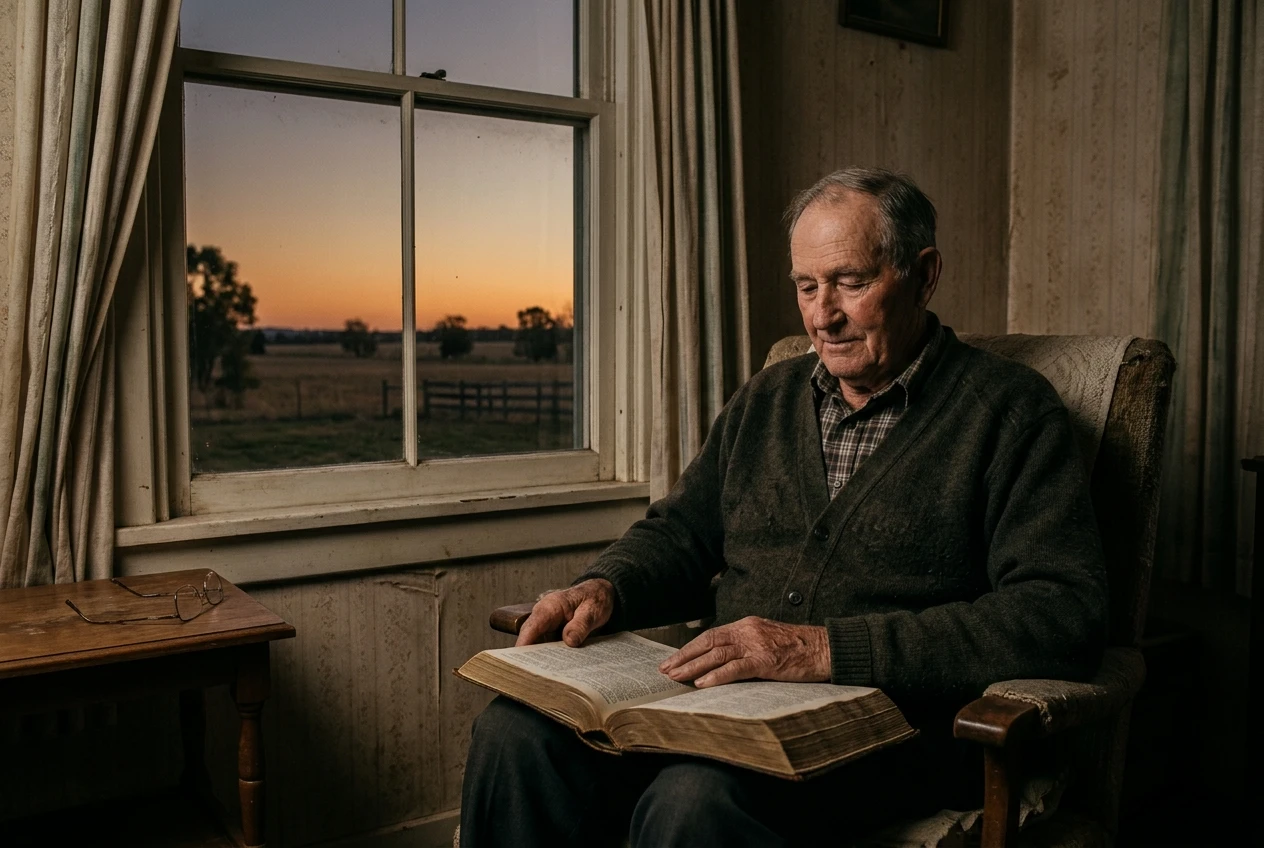
- Read one verse aloud. Choose from 1 Corinthians 15:58, Galatians 6:9 or Hebrews 6:10. Read it slowly, twice. Let it be God’s word spoken to you, whatever the day has been like.
- Name the day’s faithful acts. Say to yourself what you did: the passage you studied, the person you greeted, the prayer you offered. Use the five questions above if they help.
- Name the people. Pray for those who heard you, by name where you can. Ask God to give the growth, as Paul says He alone can.
- Give back what is not yours. Say plainly to God that the result belongs to Him. Thank Him that His word will not return empty.
- Give thanks and rest. Thank Him for the day’s bread and for the strength to serve. Then sleep, since the field is the Lord’s and He does not sleep.
Done each evening, this practice sets a different measure in your mind from the one that silence tries to impose. After some weeks you may find that the question “Did anyone respond?” has given way to “Was I faithful today?”, and that the second question can always be answered.
Keep Sowing
The preacher who sows without seeing the harvest is in the company of the prophets, the apostles and the Lord Himself, who sowed the word among people who often did not receive it. Their labor was not in vain, and neither is yours. God has said so, and He does not forget.
If this encouraged you, read next “What the Bible Means by Eternal Reward When No One Pays the Preacher” and share this word with another preacher who is growing weary.