A preacher protects the vulnerable in his own home by treating their safety, daily bread, dignity and schooling as part of his calling. Scripture says a man who does not provide for his own household has denied the faith (1 Timothy 5:8), and that his home is the first proof of his fitness to serve (1 Timothy 3:4-5).
This article sets out how a preacher can protect the vulnerable in his own home, according to Scripture. It is written for the volunteer preacher, often an older father or grandfather on a pension, who has sick relatives, children or grandchildren in his care and wishes to serve God faithfully both at home and abroad.
What does Scripture say a preacher owes the vulnerable in his own home?
Scripture says he owes them provision, protection and honour, and it places these duties inside his service to God. Paul writes, “But if any provide not for his own, and specially for those of his own house, he hath denied the faith, and is worse than an infidel” (1 Timothy 5:8, KJV). The words are severe because the duty is plain.
James names the same care as the mark of true devotion: “Pure religion and undefiled before God and the Father is this, To visit the fatherless and widows in their affliction” (James 1:27). The fatherless and the widow are the weak members of a household and a congregation alike. A preacher who visits strangers in their affliction and overlooks the weak person at his own table has reversed the order James gives.
Why does God count the household as the first place of a preacher’s ministry?
God counts the household first because it is where a preacher’s teaching is tested daily by those who know him best. Paul requires an overseer to be one “that ruleth well his own house, having his children in subjection with all gravity,” and asks, “how shall he take care of the church of God?” (1 Timothy 3:4-5). The home is the proving ground for the pulpit.
Christ’s rebuke in Mark 7:10-13 shows the danger of reversing this. The Pharisees taught that a man could declare his goods “Corban,” a gift to God, and so excuse himself from supporting his father and mother. Jesus said this made “the word of God of none effect through your tradition.” Devotion to God’s work can never become a reason to neglect the people God placed in a man’s care.
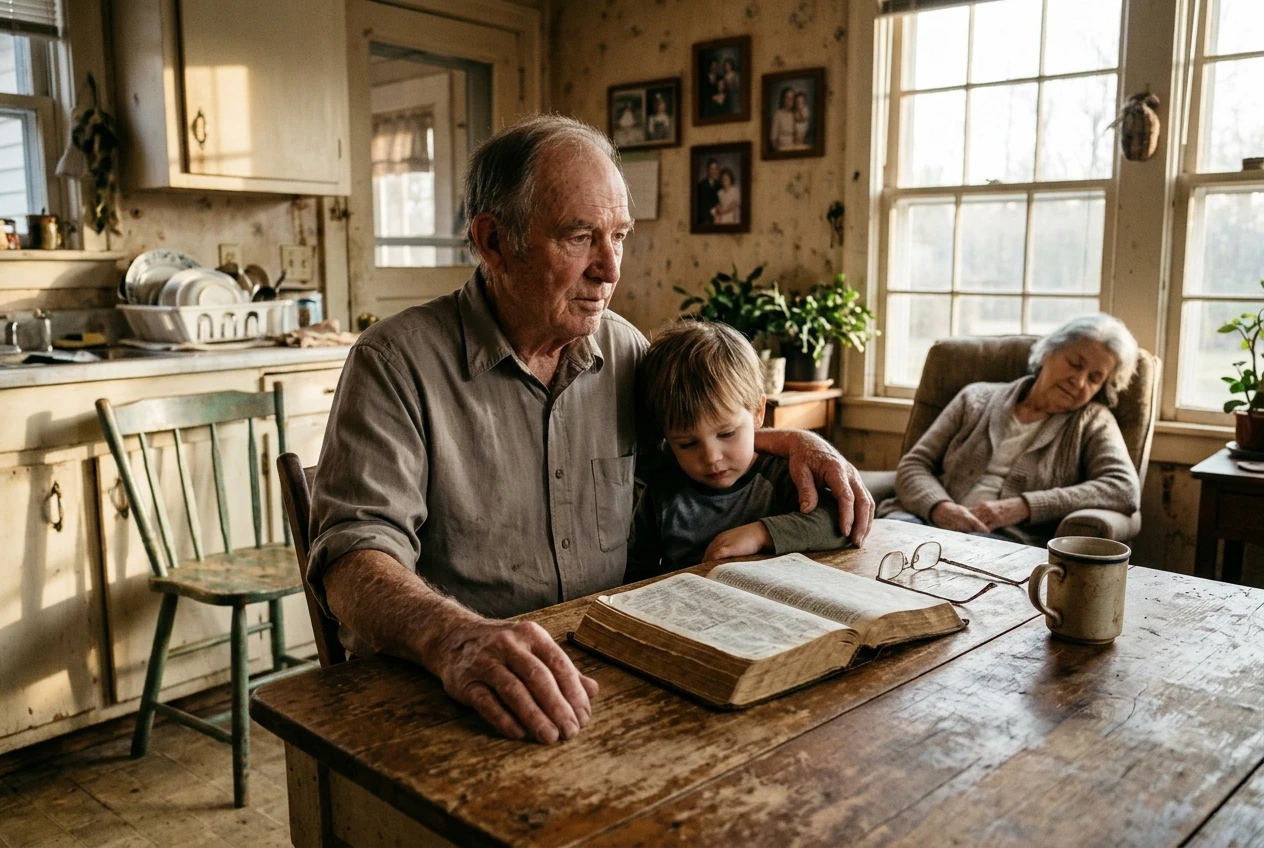
The same principle applies to a volunteer preacher who gives his time, travel and strength freely. His giving is honourable, but it must not draw away what a sick parent, a child or a grandchild needs from him.
Who are the vulnerable in your home, and what does protecting each one look like?
The vulnerable are the sick, the young and the elderly under your roof, and protecting each one means attending to four things: safety, daily bread, dignity and schooling. A simple assessment, made person by person, shows where each one needs help. Sit down with a pen and ask the same four questions about every name.
- Safety: Is this person safe in the house, on the road to school, and when left alone while you are away?
- Daily bread: Does this person eat regularly, and are any needed medicines or treatment being taken?
- Dignity: Is this person spoken to with respect, included at the table and in prayer, and spared humiliation?
- Schooling: Is this child able to attend, with the uniform, fees and lunch the school requires, and does someone ask about the lessons?
The table below shows how these questions apply to different members of a household.
Person What to look at What protection looks like The sick relative Care, medicine, rest, company Someone is present, treatment is followed, and the person is still asked to pray and give counsel The elderly parent or relative Meals, mobility, loneliness Regular meals, a safe walk to the bed and the table, and honour in the family’s speech The child or grandchild School, food, supervision, teaching Attendance, a prepared lunch, known whereabouts, and daily instruction in God’s word
Paul speaks directly of widows and their families: “let them learn first to shew piety at home, and to requite their parents” (1 Timothy 5:4). Care for the aged is described there as piety, which is worship expressed in practice. The work of nursing a relative is itself shepherding, as the piece No One Sees the Basin and the Towel, Yet the Preacher at the Sickbed Is Still Shepherding explains.
How can a preacher guard his family’s food, health and schooling while relying on God’s provision?
He guards them by doing what lies within his reach and asking God to supply what does not. Relying on God does not remove the duty of 1 Timothy 5:8. It directs the preacher to work, plan and give honestly, and then to pray, trusting the promise of Philippians 4:19: “But my God shall supply all your need according to his riches in glory by Christ Jesus.”
Christ taught the same order: “But seek ye first the kingdom of God, and his righteousness; and all these things shall be added unto you” (Matthew 6:33). The things in question are food, drink and clothing, the very needs a household has each day. Seeking the kingdom first means the household is not neglected, since the kingdom Christ describes includes care for the least.
In practice, the preacher can:
- List the real needs of each person: meals, medicine, uniform, fees, lunch.
- Mark which needs he can meet from what he has, and meet them first.
- Pray for the remaining needs by name, specifically and in the household’s hearing.
- Tell relatives and the congregation plainly what is lacking, so that others have the opportunity to give.
- Review the list weekly and thank God aloud for each need that was met.
Asking is not a failure of faith. Scripture shows God supplying through people, and the believer who tells his need honestly gives others the opportunity to obey. The piece Tell Your Relatives Plainly What You Can Give, and Let God Supply the Rest treats this in more detail.
Teaching is part of protection as well. “Ye fathers, provoke not your children to wrath: but bring them up in the nurture and admonition of the Lord” (Ephesians 6:4). Moses told Israel to teach God’s words “diligently unto thy children” at home, on the way, at bedtime and on rising (Deuteronomy 6:6-7). A grandfather who prays with the child at the table, hears the day’s lessons and corrects with gentleness is guarding that child’s mind as well as his body.
How do you balance preaching appointments with the needs of those at home?
You balance them by deciding each appointment in the light of who at home needs you that day, and by accepting that care for the household is sometimes the right answer to an invitation. Scripture does not set preaching against family duty, but it does set an order, and 1 Timothy 3:4-5 places the household first as the test of fitness to serve.
When an invitation arrives, work through these questions in sequence:
- Is anyone at home gravely ill, or newly dependent on me this week?
- Can another believer, relative or neighbour be present in my place, and have I asked them plainly?
- Will the people at home have food, medicine and safe supervision while I am away?
- Have I prayed about the invitation and told the household where I am going and when I will return?
- If the answer to the first three questions is doubtful, should I decline or postpone and tell the inviter honestly?
Declining for a sound reason is not disobedience. The Lord who said “I will have mercy, and not sacrifice” (Matthew 9:13) does not require a preacher to leave a sick person unattended to keep an appointment. A fuller treatment is in When Sickness at Home Cancels Your Preaching Appointment, You Have Not Failed God.
Where the household is stable, go and preach with a clear conscience, and leave arrangements in place before you travel. The preacher who has prepared those at home has made his journey lawful and his absence bearable.
What does God promise the preacher who guards his household faithfully?
God promises that he does not forget the labour of love shown toward his people. The letter to the Hebrews says, “For God is not unrighteous to forget your work and labour of love, which ye have shewed toward his name, in that ye have ministered to the saints, and do minister” (Hebrews 6:10). Feeding a sick relative, walking a child to school and sitting up with an aged parent are ministry in this sense.
Paul adds an encouragement to the weary: “And let us not be weary in well doing: for in due season we shall reap, if we faint not” (Galatians 6:9). The reward is not described as immediate or always visible. Christ taught that service done in secret is seen and repaid by the Father (Matthew 6:4), and Paul wrote at the end of his own course of “a crown of righteousness” laid up for all who love Christ’s appearing (2 Timothy 4:8).
For the preacher whose purpose is to remain faithful until he is with the Lord, this matters. The hours given to the weak members of his household are not taken from his preaching reward. They are counted within it.
How can you begin protecting your household this week?
You can begin with one list and one prayer. Write the name of each sick, young or elderly person in your care, and beside each name write the four headings: safety, daily bread, dignity and schooling. Mark the heading where the need is greatest, and decide what you can do about it before the week ends.
Then take these actions:
- Arrange for another person to be with a sick or aged relative before you accept your next invitation to travel.
- Ask each child what is lacking for school, and write it down.
- Speak respectfully to every person in the house, and include the weak in family prayer.
- Tell one trusted believer or relative the needs you cannot meet yourself.
Choose one person in your household who is sick, young or weak, and pray for that person’s needs by name today. If school needs are pressing, read Pray for the Uniform, the Fees and the Lunch by Name, and Wait on God to Supply Them.
Leave a Reply