
A retired preacher living on a pension often feels that two things have been taken from him at once: the strength to stand and speak, and the income that once made the work easier to carry. A smaller purse and a weaker body can make a man wonder whether he is still of any use. Scripture answers that question directly, and the answer is that he is.
This article is written for the preacher in that season, and for the family and church members who look after him.
What the Levites Teach Us About Retiring From the Work and Keeping the Charge
The Lord gave Moses a rule for the Levites in Numbers 8:23-26. A Levite entered the service of the tent of meeting at twenty-five years of age. At fifty he retired from the work of that service and served no more in its labor.
The next words matter more than the age. The retired Levite “shall minister with his brethren in the tabernacle of meeting, to keep the charge, but he shall do no work.” He kept the charge, and he laid down the heavy labor. He stayed among his brothers, in the same place, under the same God.

Retirement in this passage changes the kind of service. It does not remove the man from the people of God or from his calling. A retired preacher may no longer travel to distant congregations or stand through a long service. He still keeps the charge: he guards the faith, watches over the flock in the ways open to him, and remains a brother among brothers.
Receiving the Pension as Bread From God’s Hand
Many retired preachers feel an uneasy shame about a pension, especially a small one. They preached for years without a salary, and a monthly payment can feel like something they have not earned. That feeling deserves a gentle correction.
Scripture teaches that every good gift comes from above (James 1:17). The Lord has many ways of feeding His servants. He fed Elijah by ravens at the brook and later by a widow’s jar of flour. A pension is one more way, arranged through ordinary people and ordinary systems, and it is still His provision.

A man who thanks God before he eats the bread his pension buys is not taking what he did not earn. He is receiving what his Father has given him. Gratitude is the right response, and shame has no place in it. If the amount is small, he can still say with Paul that he has learned to be content in whatever state he is in (Philippians 4:11).
Psalm 92:14: Why Fruit in Old Age Is Not a Lesser Fruit
The psalmist writes of the righteous that “they shall still bear fruit in old age; they shall be fresh and flourishing.” The word “still” tells us that the Lord expects fruit in the later years, and that He is pleased to give it.

Fruit in old age comes from a different kind of growth than fruit in youth. A younger preacher may bring energy, speed and a full calendar. An older preacher brings years of walking with the Lord, many hours in the Scriptures, and a sorrow and joy that only time provides. Those things shape how he prays, how he listens and what he says.
The fruit may be fewer sermons and more depth. It may be one conversation instead of one hundred. God does not weigh fruit by how much noise it made, and a quiet harvest is a full one in His sight.
Five Ministries That Need No Pulpit
A retired preacher living on a pension can serve in several ways that ask little money and no platform. Each of these is a real work of ministry.

- Prayer. Paul asked the churches to pray for him, and Epaphras is remembered for laboring fervently in prayer for the Colossians (Colossians 4:12). A retired preacher has the time to pray by name for the sick, for the young preachers, for the leaders and for the families of his congregation. This work does not depend on his strength.
- Visiting the sick. James tells the sick to call for the elders of the church (James 5:14). A short visit, a reading of a psalm and a prayer by the bed comfort a person in a way a sermon cannot. If he cannot travel, the elders of a church can arrange for someone to bring him, or he can speak by telephone.
- Counsel. People bring their troubles to someone who has lived long and kept the faith. A retired preacher can sit with a troubled marriage, a grieving widow or a discouraged young believer and give advice grounded in Scripture. Counsel of this kind is described in Proverbs as a source of life.
- Teaching the young. Paul told Titus that the older men and women should teach what is good (Titus 2:2-5). A few children gathered on a weekday, or one young man who wants to learn to preach, can receive from him what no book supplies.
- Writing letters. Much of the New Testament is letters, written by men who were often in prison, in poor health or far from those they loved. A retired preacher can write to a struggling believer, to a congregation far away or to his own grandchildren. A letter can be read again and again, and it keeps teaching after the writer has gone to rest.
When the Body Is Weak and the Purse Is Thin: Asking for Help With Humility
There will be times when a pension does not cover the cost of medicine, a journey to the clinic, school fees for a grandchild or a repair to the roof. The preacher then faces a second difficulty: asking.
Scripture treats asking for help as a normal part of life among believers. The early church shared what it had so that none lacked (Acts 4:34-35). Paul wrote to the Galatians that they should bear one another’s burdens (Galatians 6:2). Someone who allows others to carry a burden is giving them a chance to obey that command.
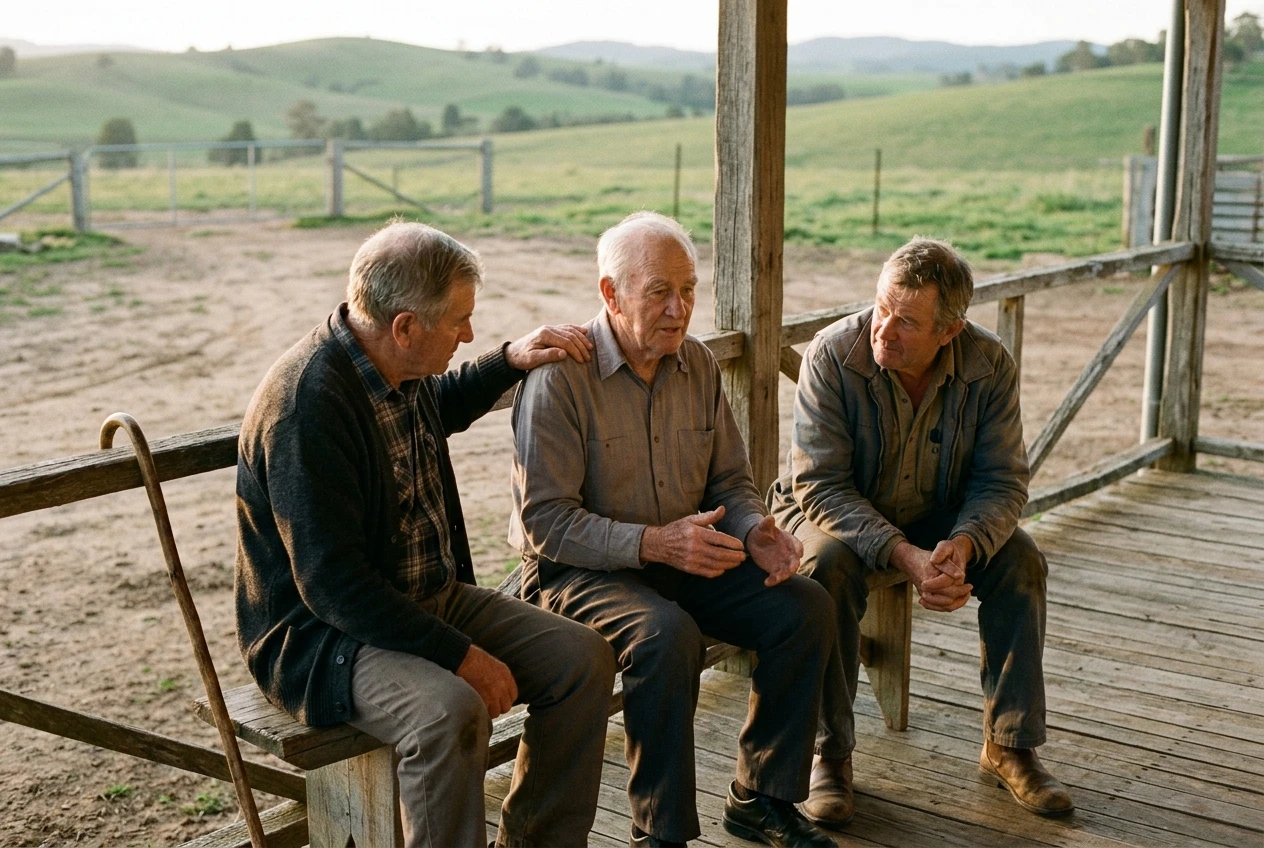
A humble request is plain and specific. He can tell the elders or a trusted brother exactly what the need is, thank them for whatever they can do, and leave the rest with God. He should avoid hinting or waiting in silence. Families and church members who care for him can help by asking him regularly how he is managing, because many proud and gentle men will not volunteer that they are in need.
Hebrews 6:10 and 2 Timothy 4:7-8: The Reward No Pension Can Measure
The writer to the Hebrews says that God is not unjust to forget your work and the love you showed for His name, in that you have ministered to the saints and still minister. God does not misplace a record. Every sermon prepared in the evening, every journey made on a poor road and every sick person visited remains known to Him.
The verse also says “still minister.” The writer assumes that the service continues in some form, and that God sees the continuing as well as the beginning.
Paul, near the end of his life, wrote: “I have fought the good fight, I have finished the race, I have kept the faith. Finally, there is laid up for me the crown of righteousness, which the Lord, the righteous Judge, will give to me on that Day, and not to me only but also to all who have loved His appearing” (2 Timothy 4:7-8). The crown is promised to all who have loved His appearing, which includes every preacher who has kept the faith, whether his pension was large or small.
No monthly payment measures that reward. It is eternal life with the Lord Jesus Christ, and the retired preacher is closer to it today than he was when he first began to preach.
An Evening Prayer for the Retired Preacher
Lord, my Father, I thank You for this day and for the bread You gave me in it. I thank You for the years in which You let me speak Your word, and for the strength You still give me, though it is less than it was.
Teach me to receive my pension as a gift from Your hand, and to give thanks without shame. Show me the work You have set before me in this season: someone to pray for, someone to visit, someone to teach. Give me humility to ask when I am in need, and give Your people generous hearts to answer.
Keep me in the faith to the end, and remember my labor as You have promised. In the name of the Lord Jesus Christ I pray. Amen.
If you need further encouragement that your service has not been wasted, read When the Ministry Takes All Your Time and Leaves Nothing Extra, Your Labor Is Still Not in Vain.
Send This to a Retired Preacher You Know
Think of one retired preacher in your church or family who may be wondering whether God has forgotten him. Send him this article today, with a few words of your own. Then read next God Has Promised to Provide for the Preacher. Here Is What He Actually Promised.