
Scripture gives no manual on how to mentor a young preacher, but it records three pairs who show the pattern: Elijah and Elisha, Paul and Timothy, Priscilla and Aquila with Apollos. A man who has preached without pay for decades knows how bread, travel and strength have actually come to him over the years. That knowledge is lost when he lays down the pulpit unless he hands it over deliberately. This article asks what the elder should pass on, and how.
Elijah Did Not Choose Elisha for His Gifts: What Scripture Shows About Calling a Successor
The Lord told Elijah whom to anoint. “Elisha the son of Shaphat of Abelmeholah shalt thou anoint to be prophet in thy room” (1 Kings 19:16). Elijah did not hold an examination or look for the most talented young man in Israel. He found Elisha plowing with twelve yoke of oxen, and he cast his mantle upon him (1 Kings 19:19).
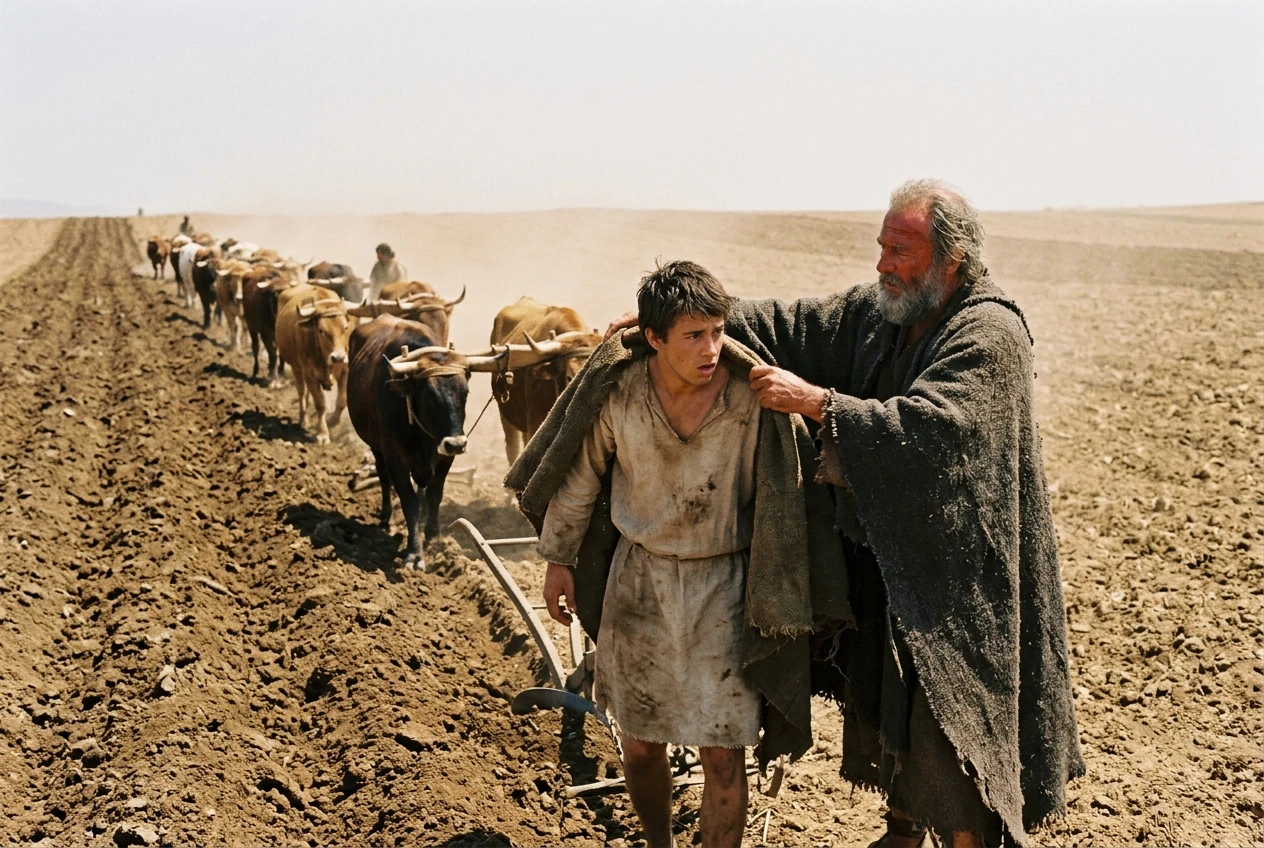
Elisha’s answer cost him his livelihood. He killed the oxen, boiled their flesh using the plowing equipment as fuel, gave it to the people, and followed Elijah (1 Kings 19:21). Whatever else he was, he was a man willing to leave his old means of living behind. That willingness mattered more to the work ahead than any skill in speaking.
His first office was service. Later he is described as the one “which poured water on the hands of Elijah” (2 Kings 3:11). An older preacher who is looking for a younger man should therefore watch for willingness to serve and to trust God, and should not be impressed by fluency alone. The Lord names the successor, and the elder’s part is to receive him and teach him.
Paul Told Timothy to Entrust the Word to Faithful Men: What Is Actually Worth Handing Down
“The things that thou hast heard of me among many witnesses, the same commit thou to faithful men, who shall be able to teach others also” (2 Timothy 2:2). The verse covers four generations: Paul, Timothy, the faithful men, and those they will teach. The elder is one link in a chain that Scripture expects to continue.
Paul reminded Timothy of more than doctrine. “Thou hast fully known my doctrine, manner of life, purpose, faith, longsuffering, charity, patience, persecutions, afflictions” (2 Timothy 3:10-11). Doctrine stands first in that list, and the manner of life stands beside it. A young preacher can learn the sermon outline from a book. He can learn the following from a living example only:
- how to pray for daily needs and wait for the answer without anxiety;
- how to receive a small gift with thanks and a large refusal with patience;
- how to keep preaching when the congregation is small or absent;
- how to keep a household in order while giving time to the work.
Paul said of himself, “I have learned, in whatsoever state I am, therewith to be content” (Philippians 4:11). Contentment was learned, and it can be taught to the next man by someone who has already learned it.
Teach the Young Preacher Where His Bread Comes From, Before the First Lean Month Arrives
A young preacher who has never gone short will be tempted to quit or to complain when the first shortage comes. The elder should speak of it beforehand, plainly and from Scripture. Our Lord asked the disciples, “When I sent you without purse, and scrip, and shoes, lacked ye any thing? And they said, Nothing” (Luke 22:35). He also taught them to pray, “Give us this day our daily bread” (Matthew 6:11). The promise is for daily bread, and the young man should expect to receive it daily and not in a stockpile.
The precise limits of what God has promised are set out in what He actually promised the preacher, and a younger man should read that carefully so that he neither claims too much nor fears too much.
Beyond the promise, the elder can supply his own record. Tell the young man the actual occasions in your years of service when a need was met, and in what manner. Include the ways that were unexpected, since God fed Elijah by ravens at the brook and later by a widow’s barrel of meal (1 Kings 17:6, 13-16). A young preacher who has heard such accounts from a trusted man will find it easier to wait when his own turn comes.
Let Him Travel With You: Lessons That Only the Road, the Waiting and the Small Offerings Can Teach
Timothy was taken along. Paul found him at Lystra, well reported of by the brethren, and “would have him go forth with him” (Acts 16:1-3). Later Paul wrote to the Philippians that Timothy “as a son with the father, he hath served with me in the gospel” (Philippians 2:22). Years of company taught Timothy what instruction at a distance could not.
The road shows a young preacher things an elder can only point at: how long a journey takes when there is no vehicle of one’s own, how to wait at a roadside, how to accept a night’s lodging graciously, and what to do when a promised appointment is cancelled. He will see how his elder thanks a host who gives only a little, and how he speaks to a listener who turns away.

Let him carry the bag, and show him how it is packed. The article on keeping a traveling kit ready on a small budget can serve as a starting list for the two of you. Questions will come on the road that would never occur to him in a classroom, and the elder should answer them as they arise.
Correct Him as Priscilla and Aquila Corrected Apollos: Privately, Gently and With the Scripture Open
Apollos was “an eloquent man, and mighty in the scriptures,” yet he knew only the baptism of John. Priscilla and Aquila heard him speak boldly in the synagogue. The text then says that “they took him unto them, and expounded unto him the way of God more perfectly” (Acts 18:24-26). They did not interrupt him before the congregation. They brought him into their own company and opened the Word to him.
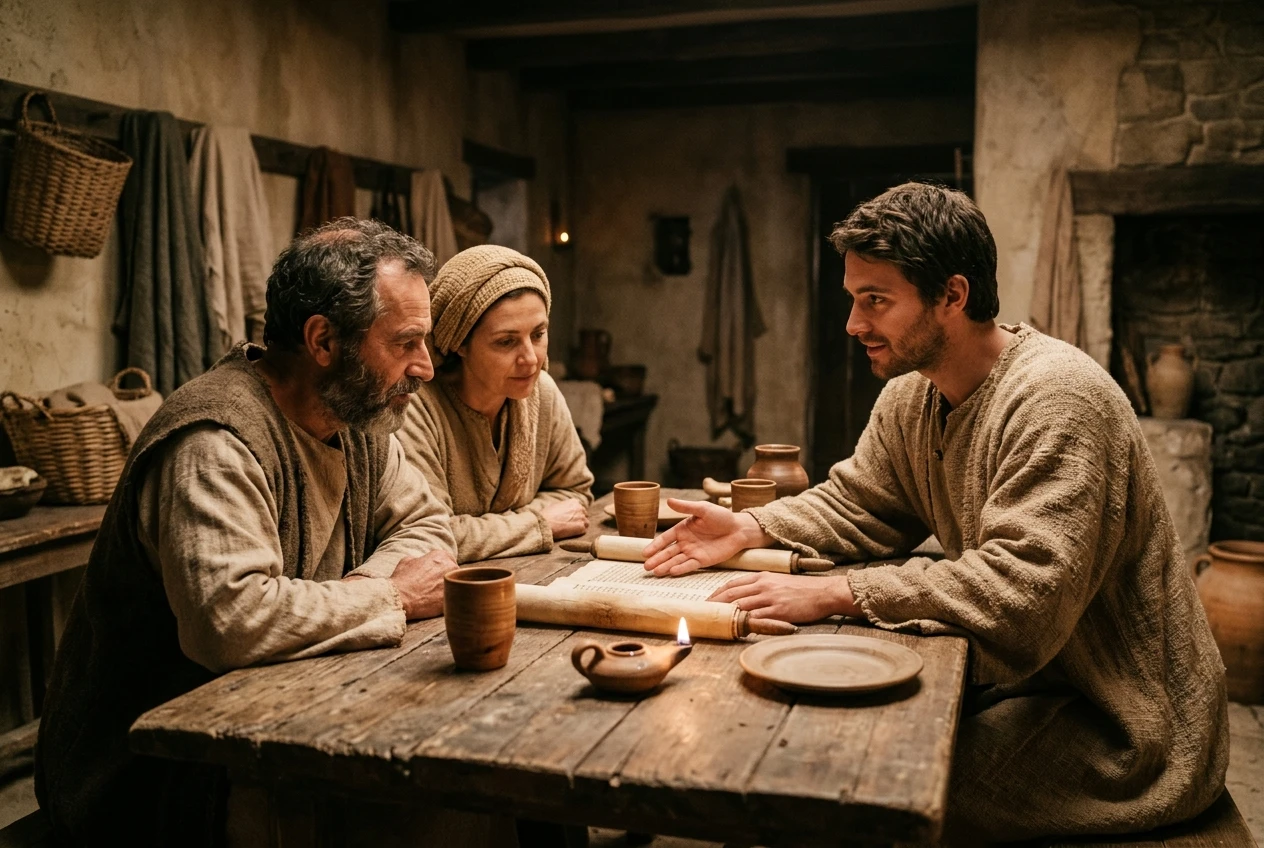
The result is recorded. The brethren wrote to receive him, and when he arrived in Achaia he “helped them much which had believed through grace” (Acts 18:27). A correction made kindly produced a stronger preacher.
An elder who wants to follow this pattern can do these things:
- Wait until the meeting is over and speak to the young man alone.
- Begin with what was true and well said in his preaching.
- Open the Bible and show the passage, so that the correction rests on Scripture and not on your preference.
- Treat errors of doctrine and faults of conduct as separate matters, and take each at its own time.
A young preacher who is corrected this way will return to be corrected again.
Write Down What You Have Learned in Plain Words: A Simple Way to Record a Lifetime of Service
The Lord told Habakkuk, “Write the vision, and make it plain upon tables, that he may run that readeth it” (Habakkuk 2:2). Paul, near the end of his life, asked Timothy to bring “the books, but especially the parchments” (2 Timothy 4:13). Written words outlast a man’s memory and his strength, and they reach people he will never meet.
The method can be simple. Take an ordinary notebook and give each entry a few lines:

- the need that arose;
- what happened, as exactly as you remember it;
- the verse of Scripture that held you during that time;
- what you would tell a younger man about it.
Writing may be hard for some. A grandchild or a younger believer can sit with you and write what you say, and the account will still be yours. Aim for fifteen or twenty entries, then give the pages to the young preacher you are teaching. A short, honest record of real experiences will serve him better than a long document of general advice.
Prepare Him for the Years When No Fruit Is Seen
A young preacher will want results, and some years there will be none he can see. The elder should say so before it happens. Elijah himself said, “I, even I only, am left,” and the Lord answered that seven thousand in Israel had not bowed to Baal (1 Kings 19:10, 18). The work had borne fruit that the prophet could not see.
Paul gave the principle in plain terms: “I have planted, Apollos watered; but God gave the increase… every man shall receive his own reward according to his own labour” (1 Corinthians 3:6-8). The reward follows the labor and does not depend on the count of converts. The longer treatment of this in keeping on sowing when you never see the fruit is worth placing in the young man’s hands.
Tell him also that his own elder went through such years. Then he will read the barren season as a normal part of the work, and he will have a text for it: “Your labour is not in vain in the Lord” (1 Corinthians 15:58).
Release Him Without Bitterness: Why Passing the Mantle Is Not the End of Your Own Reward
Elijah did not hold Elisha back at the end. Elisha asked for a double portion of his spirit, and Elijah answered, “Thou hast asked a hard thing: nevertheless, if thou see me when I am taken from thee, it shall be so unto thee” (2 Kings 2:9-10). Elisha saw him go, took up the fallen mantle, and asked, “Where is the LORD God of Elijah?” (2 Kings 2:14). The work continued, and Elijah’s reward was not reduced by it.
Paul spoke of his departure without regret: “I am now ready to be offered… Henceforth there is laid up for me a crown of righteousness… and not to me only, but unto all them also that love his appearing” (2 Timothy 4:6-8). The crown is not divided among the faithful in a way that leaves any of them with less. The elder and the younger man each receive according to his own labor, and “he that planteth and he that watereth are one” (1 Corinthians 3:8).
An elder who feels the loss of his pulpit can take comfort from the crown that awaits a whole life of unpaid preaching. Let the young man preach in your place, praise him where he does well, and pray for him by name. What you gave is not lost, and the Lord has not forgotten it.
Choose one younger believer this week, pray for him by name, and invite him to travel with you to your next preaching appointment, so that what God has taught you begins to be passed on.