
Weariness in ministry is not a sign of weak faith. A preacher who gives his evenings, his travel money and his strength to the gospel, and who receives no salary for it, will feel the cost. Scripture says so openly, and it does not ask anyone to pretend otherwise.
This article is written for the volunteer preacher who is tired, and for the family and friends who watch him go out to preach while the household needs are still waiting. It speaks from Scripture, and it makes no promise of wealth. The aim is to help you read your sacrifice the way the Bible reads it, so that you can stay in the work. That is the practical answer to how to stay motivated in ministry without pay.
Why the Weariness Is Real and Why Scripture Does Not Hide It
The apostle Paul described his own ministry without softening it. He wrote of “toil and hardship, often without sleep, in hunger and thirst, often without food, in cold and nakedness” (2 Corinthians 11:27). He did not list these things to complain. He listed them because they were the plain facts of the work, and the churches needed to know them.
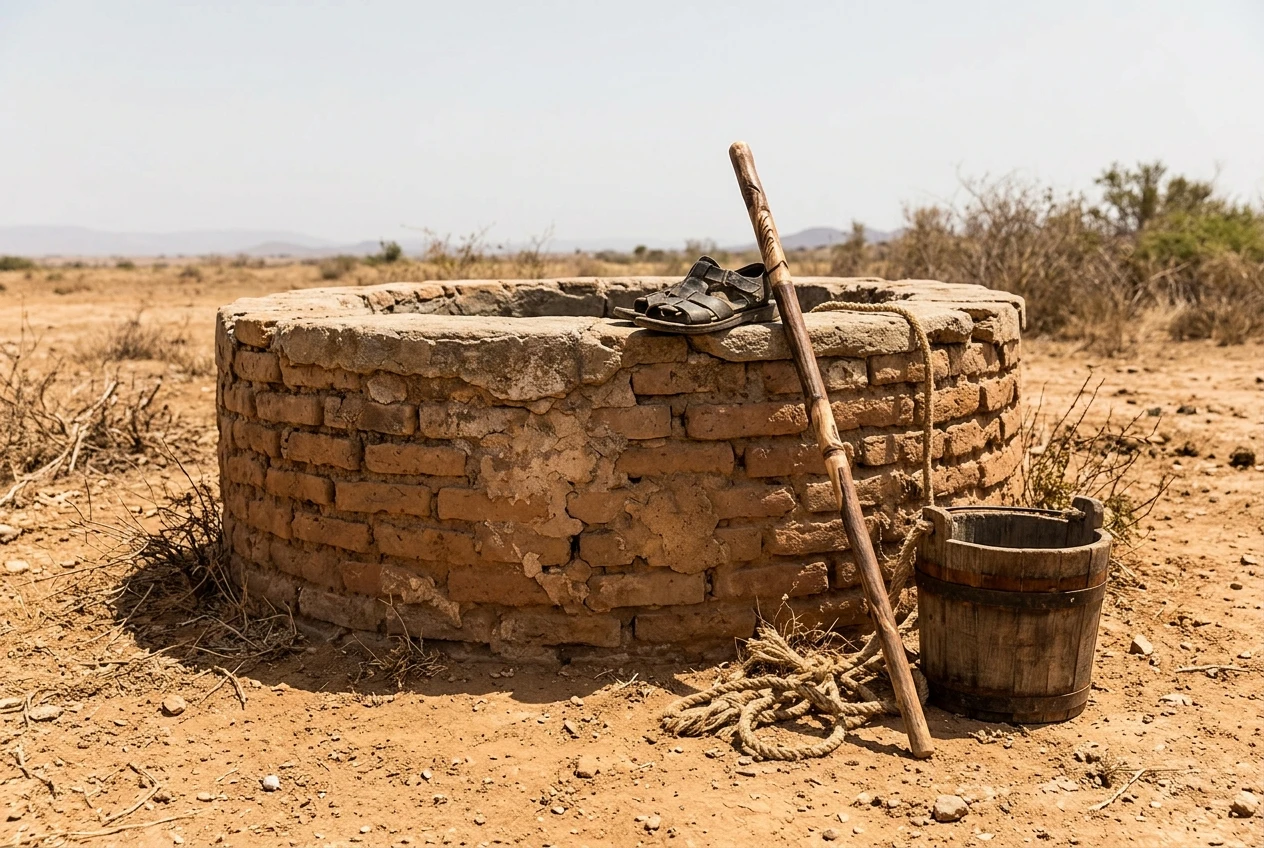
Elijah reached a point where he asked to die, and the Lord’s first response was to let him sleep and then feed him (1 Kings 19:4-8). Our Lord Himself sat down at a well “wearied from His journey” (John 4:6). Weariness appears in the lives of the faithful throughout Scripture, and God does not rebuke them for it.
This matters for a volunteer preacher because discouragement often arrives with a second burden, which is guilt. A man thinks, “If my faith were stronger, this would not trouble me.” Scripture gives no ground for that thought. The Bible treats tiredness, hunger and lack as real conditions that the Lord sees. Paul’s counsel is that we “not grow weary while doing good” (Galatians 6:9), and a command like that would be unnecessary if weariness never came.
Where the Bible has written about the preacher’s bodily needs, it has done so honestly. If you want to see those passages gathered together, Bread, Cloak, Rest and Road: The Bodily Needs of the Preacher in Scripture sets them out.
What “Your Labor Is Not in the Lord in Vain” Actually Says
The verse is 1 Corinthians 15:58: “Therefore, my beloved brethren, be steadfast, immovable, always abounding in the work of the Lord, knowing that your labor is not in vain in the Lord.” (Quotations in this article are from the New King James Version.)
Two details are easy to miss. First, Paul wrote this to the whole church at Corinth, to ordinary believers as well as to preachers. It is the closing sentence of a long chapter on the resurrection of Christ and the resurrection of the dead. The word “therefore” ties the promise to that teaching. Because Christ is risen and the dead will be raised, the labor done in His name is not wasted.
Second, the promise is placed “in the Lord.” The labor is secure because of whose work it is and who receives it. Paul did not say that the labor will always be rewarded with comfort, with money or with visible results. The ground of the promise is the resurrection, so its fulfilment is also in the resurrection.
The writer to the Hebrews says something similar: “For God is not unjust to forget your work and labor of love which you have shown toward His name” (Hebrews 6:10). God does not forget. A preacher who feels forgotten by his congregation, by his neighbors or by his own bank balance can still hold to this: nothing done for the name of Christ falls outside His memory.
The Difference Between God’s Provision for Today and His Reward in Eternity
Scripture speaks of two things that are often mixed together, and mixing them causes much discouragement.
The first is provision. Our Lord taught us to pray, “Give us this day our daily bread” (Matthew 6:11), and He said that the Father knows what we need (Matthew 6:32). Provision is for the present life: food, clothing, a way to travel, a roof. Paul wrote to the Philippians, who had supported him, “my God shall supply all your need according to His riches in glory by Christ Jesus” (Philippians 4:19). Provision is a real promise, and the member’s other pages deal with exactly what was promised and what was not.
The second is reward, and Scripture places it in the age to come. “For our light affliction, which is but for a moment, is working for us a far more exceeding and eternal weight of glory” (2 Corinthians 4:17). Paul, near the end of his life, wrote that there was laid up for him “a crown of righteousness, which the Lord, the righteous Judge, will give to me on that Day, and not only to me but also to all who have loved His appearing” (2 Timothy 4:8).
Trouble begins when a preacher expects the reward to arrive as present wealth. He then reads every lean month as a sign that God is displeased or that the work is wasted. Scripture does not teach that. Jesus told His followers that those who leave houses, family or lands for His sake will receive a hundredfold now in this time, “with persecutions,” and in the age to come, eternal life (Mark 10:29-30). Eternal life is named as the reward that remains.
So the honest reading is this. God will provide what the preacher needs to continue, and the preacher’s reward is to be with the Lord Jesus Christ forever. A needy week does not cancel either promise. To read the first promise in detail, see God Has Promised to Provide for the Preacher. Here Is What He Actually Promised.
Paul’s Tentmaking and His Rights as a Preacher: When to Work and When to Receive
Paul’s own practice answers a question every unpaid preacher asks: should I be working with my hands, or should I be receiving support?
Paul affirmed the right of the preacher to be supported. “Even so the Lord has commanded that those who preach the gospel should live from the gospel” (1 Corinthians 9:14). He taught that “the laborer is worthy of his wages” (1 Timothy 5:18) and that elders who labor in the word and doctrine are worthy of double honor (1 Timothy 5:17). The right is real and it comes from the Lord’s own command.
Yet Paul often chose not to use it. In Corinth he worked at tentmaking with Aquila and Priscilla (Acts 18:3). To the elders of Ephesus he said, “these hands have provided for my necessities, and for those who were with me” (Acts 20:34). Of his reason he wrote, “What is my reward then? That when I preach the gospel, I may present the gospel of Christ without charge” (1 Corinthians 9:18). In Thessalonica he worked night and day so as not to burden anyone, and also to leave the believers an example to follow (2 Thessalonians 3:8-9).

He also received gifts when they came. He told the Corinthians that other churches had supplied what he lacked while he served them (2 Corinthians 11:8-9), and he thanked the Philippians for sending to his need more than once (Philippians 4:15-16).
Three conclusions follow from Paul’s example:
- Receiving support is not shameful, and it is the Lord’s own order.
- Working with one’s hands is not a failure of ministry. Paul did it by choice and for the sake of the hearers.
- The deciding question was what would best serve the gospel in that place and at that time, and Paul did not settle it by what was owed to him.
A volunteer preacher who has little time for paid work may find that Paul’s example fits some seasons and not others. Where hours are taken by caring for sick relatives, see Finding Daily Bread When Your Hands Are Full of God’s Work.
Three Daily Practices That Keep a Tired Preacher Steady in the Mission
Motivation that depends on feeling rested will fail. Steadiness comes from habits that point the mind back to what is true. These three are drawn from Scripture and fit into a day that is already full.

1. Begin with the resurrection
Read a short passage each morning that anchors the work in Christ’s victory. The last verses of 1 Corinthians 15 take about two minutes. Since Paul rests the promise of “not in vain” on the resurrection, the preacher should begin where Paul begins.
2. Ask for today’s bread and give thanks for what has come
Pray Matthew 6:11 by name, listing the day’s actual needs: food, fare, the school costs of a relative. In the evening, give thanks for what was received, however small. This keeps provision, which belongs to today, separate in the mind from reward, which belongs to eternity. It also trains the eye to notice what the Lord has done, which Psalm 103:2 commands: “forget not all His benefits.”
3. Commit the work to the Lord and rest
At the close of the day, name the people you taught or prayed for and hand them to God. The result of preaching is not in the preacher’s power: “I planted, Apollos watered, but God gave the increase” (1 Corinthians 3:6). Then sleep. “It is vain for you to rise up early, to sit up late… for so He gives His beloved sleep” (Psalm 127:2). Rest is itself an act of trust.
None of these practices needs money, and none takes more than a few minutes. They keep the preacher turned toward the Lord when the day offers many reasons to look elsewhere.
When Your Sacrifice Is Seen Only by God: How to Serve Without Applause or Pay
Much of a volunteer preacher’s cost is invisible. The congregation sees a sermon. It does not see the walk home in the dark, the meal skipped to pay for transport, or the evening given to sermon preparation instead of rest. Family members may see more, and they carry part of the cost too.

Jesus spoke to this directly. Of giving, praying and fasting, He said that what is done in secret will be repaid by the Father: “your Father who sees in secret will Himself reward you openly” (Matthew 6:4). The word is plain. The Father sees. A sacrifice that no one thanks is not unseen, and it is not lost.
Paul gave the same direction to servants: “Whatever you do, do it heartily, as to the Lord and not to men, knowing that from the Lord you will receive the reward of the inheritance; for you serve the Lord Christ” (Colossians 3:23-24). The one served is Christ, and He is the one who pays.
For the families and friends who support a preacher, this carries a duty as well. Scripture calls the church to share in the work: “Let him who is taught the word share in all good things with him who teaches” (Galatians 6:6). A kind word, a meal, a contribution toward fare, or help with a household task is a share in the preaching. Those who give such help are included in the promise that God does not forget a work of love.
The preacher who continues without wages is not doing something the Bible regards as small. He is doing what Paul called the work of the Lord, and the Lord who commanded it will not leave it unpaid. The reward is to be with Christ, and Scripture says it is worth more than every present loss.
Return to What the Lord Actually Promised
When weariness comes, go back to the words themselves and read what the Lord said, not what others have added to it. Read God Has Promised to Provide for the Preacher. Here Is What He Actually Promised.