
The question of what the Bible says about caring for a preacher’s physical needs is answered across both Testaments, in narrative, in letters, and in the words of Christ Himself. Scripture speaks of the preacher’s food, his coat, his bed, his health and his travel, and for each it names who is expected to supply it. It also records the occasions on which the preacher worked with his own hands.
This article goes through those needs one at a time. It builds on two earlier pieces: what God actually promised to the preacher and the wider survey of provision for volunteer preachers in the Bible. Here the attention is on the body of the one who preaches.
Why the Lord counts the body of His servant as worth caring for
God made the body, and Scripture never treats its needs as beneath His notice. Christ said of food, drink and clothing, “your heavenly Father knoweth that ye have need of all these things” (Matthew 6:32). He fed the crowd that had followed Him for three days, saying, “I have compassion on the multitude… they have nothing to eat” (Matthew 15:32). He Himself sat down at Jacob’s well “wearied with his journey” (John 4:6).
The apostles lived with these needs as well. Paul wrote to the Corinthians of “weariness and painfulness… hunger and thirst… fastings often, in cold and nakedness” (2 Corinthians 11:27). He did not hide these facts or treat them as signs of failure. They are part of the record of faithful service.
The Lord also keeps an account of what is done for His servants. “God is not unrighteous to forget your work and labour of love” (Hebrews 6:10). The sections below show how that care is meant to reach the preacher in practice.
Food and drink: the laborer and his worthiness
When Christ sent out the seventy, He gave a direction about the table: “And in the same house remain, eating and drinking such things as they give: for the labourer is worthy of his hire” (Luke 10:7). To the twelve He said, “the workman is worthy of his meat” (Matthew 10:10). The word “meat” in that verse means food. The preacher is to receive what is set before him, and he is told not to move from house to house looking for a better table.
Paul argues the same principle at length in 1 Corinthians 9:7-14. He asks three questions drawn from ordinary life: who goes to war at his own cost, who plants a vineyard and eats none of its fruit, who feeds a flock and takes no milk from it. He then turns to the law of Moses, “Thou shalt not muzzle the mouth of the ox that treadeth out the corn” (Deuteronomy 25:4), and asks whether God’s concern there was for oxen alone. His answer is that it was written “altogether for our sakes,” because “he that ploweth should plow in hope” of a share in the harvest.
He ends with a plain statement: “Even so hath the Lord ordained that they which preach the gospel should live of the gospel” (1 Corinthians 9:14). The burden of supply falls on those who receive the teaching. The preacher is not asked to find his own bread while he labors for them.
Scripture also shows food reaching a servant by direct provision. At the brook Cherith, ravens brought Elijah “bread and flesh in the morning, and bread and flesh in the evening” (1 Kings 17:6). God has used both channels, His people and His own hand.
Clothing and a place to rest the head
On clothing, the sent disciples were told to carry little. Christ forbade them “two coats” and told them to take no extra provision (Matthew 10:9-10; Mark 6:8-9). The instruction assumed that hosts along the way would supply what was lacking. It was a calling to depend on others, and it did not treat the body as unimportant.
Paul shows the same need in his own life. Near the end of his ministry he wrote from prison to Timothy: “The cloak that I left at Troas with Carpus, when thou comest, bring with thee, and the books, but especially the parchments” (2 Timothy 4:13). He asked again, “Do thy diligence to come before winter” (2 Timothy 4:21). An apostle felt the cold and said so to a fellow worker without embarrassment.
Shelter appears throughout the record. The widow of Zarephath fed Elijah from her last meal and oil, and he stayed in her house, where he lodged in an upper room (1 Kings 17:9-19). A woman of Shunem, seeing that Elisha passed by often, said to her husband, “Let us make a little chamber, I pray thee, on the wall; and let us set for him there a bed, and a table, and a stool, and a candlestick” (2 Kings 4:10). Her provision was exact: a place to sleep, to eat, to sit and to read by lamplight.

The New Testament continues the pattern. Lydia constrained Paul and his company to stay at her house (Acts 16:15). Paul wrote to Philemon, “prepare me also a lodging” (Philemon 22). Gaius is called “mine host, and of the whole church” (Romans 16:23). In each case a believer’s home served the preacher, and the preacher received it with thanks.
Rest and health
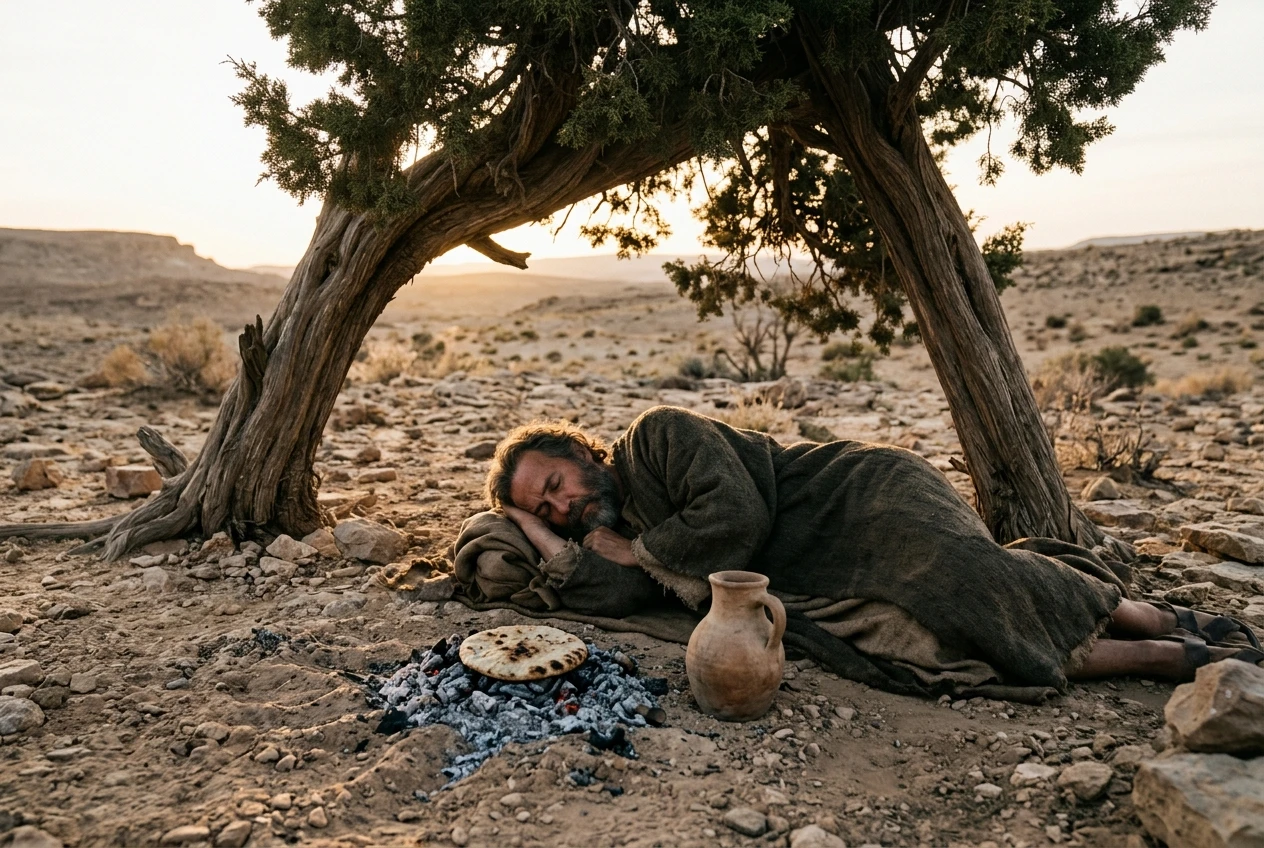
After the contest on Mount Carmel, Elijah fled into the wilderness, sat under a juniper tree and asked that he might die. God did not rebuke him with a sermon. An angel touched him and said, “Arise and eat.” He found a cake baked on coals and a jar of water, ate, and lay down again. The angel came a second time and said, “Arise and eat; because the journey is too great for thee” (1 Kings 19:5-7). Food and sleep came before any further instruction. In the strength of that meal he went forty days to Horeb.
Christ made the same provision for the apostles. When they returned from preaching, and “there were many coming and going, and they had no leisure so much as to eat,” He said, “Come ye yourselves apart into a desert place, and rest a while” (Mark 6:31). The Lord Himself called for rest in the midst of fruitful work.
Health is addressed directly in the letters. Paul wrote to Timothy, “Drink no longer water, but use a little wine for thy stomach’s sake and thine often infirmities” (1 Timothy 5:23). Timothy was a faithful minister who suffered frequent illness, and the apostle’s counsel concerned his body. Elsewhere Paul mentions that he “left Trophimus at Miletum sick” (2 Timothy 4:20), and he writes of Epaphroditus, who “was sick nigh unto death: but God had mercy on him” (Philippians 2:27). Sickness in a servant of God is recorded as a trial to be met with prayer and care. Scripture does not read it as a sign that his work was in vain.
A preacher who also looks after a sick relative carries both burdens at once. A separate piece, finding daily bread when your hands are full of God’s work, takes up that situation.
The road
The early church sent its preachers on their journeys and paid for the sending. Paul wrote to the Romans of his plan to travel to Spain, “to be brought on my way thitherward by you” (Romans 15:24). He asked the Corinthians for the same help: “that ye may bring me on my journey whithersoever I go” (1 Corinthians 16:6). Of Timothy he said, “conduct him forth in peace” (1 Corinthians 16:11).

Titus received a similar charge: “Bring Zenas the lawyer and Apollos on their journey diligently, that nothing be wanting unto them” (Titus 3:13). The phrase “that nothing be wanting” shows that the sending church was responsible for the whole outfit of the journey. The fare, the provisions and the companions were all included.
John writes most fully on the matter in his third letter. He praises Gaius for his care of traveling brethren, “whom if thou bring forward on their journey after a godly sort, thou shalt do well: because that for his name’s sake they went forth, taking nothing of the Gentiles. We therefore ought to receive such, that we might be fellowhelpers to the truth” (3 John 5-8). Two points stand out. The preachers took nothing from unbelievers, so their support had to come from the church. And John says “we ought,” which makes the duty one of obligation. Helping them is a share in the work of the truth itself.
When the preacher works with his own hands
Scripture does not say that every preacher must live on the gifts of others. Paul, who defended the right of the preacher to be supported, often laid that right down. At Corinth he found Aquila and Priscilla, “and because he was of the same craft, he abode with them, and wrought: for by their occupation they were tentmakers” (Acts 18:3). To the elders of Ephesus he said, “these hands have ministered unto my necessities, and to them that were with me” (Acts 20:34), and he reminded them of the Lord’s words, “It is more blessed to give than to receive” (Acts 20:35).

He gives his reasons in several places. To the Corinthians: “we suffer all things, lest we should hinder the gospel of Christ” (1 Corinthians 9:12). To the Thessalonians: “labouring night and day, because we would not be chargeable unto any of you” (1 Thessalonians 2:9). And again, “Not because we have not power, but to make ourselves an ensample unto you to follow us” (2 Thessalonians 3:9). He worked where taking support might have given offence or become a stumbling block to new believers.
His example has limits worth noting. Paul did not refuse help everywhere. He wrote to the Philippians that they sent to his need “once and again” while he was at Thessalonica (Philippians 4:16), and he told the Corinthians that brethren from Macedonia “supplied” what was lacking (2 Corinthians 11:9). Tentmaking was a liberty he used when it served the gospel. It was not a rule laid on all preachers, and it did not excuse the churches from their part.
The saying “if any would not work, neither should he eat” (2 Thessalonians 3:10) is addressed to the idle, those who “walk disorderly” and do nothing. It does not describe the preacher who labors in the word. A preacher who earns his own living, or lives on his own means, follows Paul’s pattern by choice. The flock’s duty to the laborer remains.
What the flock owes and what the preacher may ask
Paul states the obligation of the taught in one sentence: “Let him that is taught in the word communicate unto him that teacheth in all good things” (Galatians 6:6). “Communicate” means to share, and “all good things” is broad. The verse is a charge to the congregation, and it carries no condition about whether the teacher has asked.
In 1 Timothy 5:17-18 Paul writes, “Let the elders that rule well be counted worthy of double honour, especially they who labour in the word and doctrine. For the scripture saith, Thou shalt not muzzle the ox that treadeth out the corn. And, The labourer is worthy of his reward.” The next verse supports the word “honour” with the law of the ox and the saying of Christ about the laborer, so material support is plainly in view. The same chapter teaches that believers must first care for their own relatives (verse 8). Duties to family and duties to the preacher stand together, and neither cancels the other.
What may the preacher ask? Paul shows the proportion. He made his needs known quietly: a cloak and books, a lodging, a hand on the way to Spain. He also wrote, “Not because I desire a gift: but I desire fruit that may abound to your account” (Philippians 4:17). Peter charges elders to feed the flock “not for filthy lucre, but of a ready mind” (1 Peter 5:2). A preacher may state a need to those able to meet it, and he may thank them. He may not preach for gain, and he may not make demands.
Where the preacher’s trust rests when the need is not yet met
Paul wrote Philippians 4:19 to a church that had given. “But my God shall supply all your need according to his riches in glory by Christ Jesus.” The promise follows his thanks for their gift and his statement that he had “learned, in whatsoever state I am, therewith to be content” (Philippians 4:11). He knew both abundance and hunger (4:12). The verse carries its full weight in that setting: God provides, often through the hands of believers, and the preacher is taught to remain steady while he waits.
Elijah’s history shows how provision can change. The brook Cherith “dried up” (1 Kings 17:7), and the Lord then sent him to a widow in Zarephath. The ending of one supply was followed by direction to the next. God did not forget him during the interval.
The work itself is not lost. “Be ye stedfast, unmoveable, always abounding in the work of the Lord, forasmuch as ye know that your labour is not in vain in the Lord” (1 Corinthians 15:58). Christ said that even “a cup of cold water” given to a disciple will not lose its reward (Matthew 10:42), and He counts food given to the hungry and care given to the sick as done to Himself (Matthew 25:35-40). Paul looked ahead to the “crown of righteousness” the Lord would give on that day (2 Timothy 4:8). The volunteer preacher who goes without pay can rest on those promises, and the believers who stand beside him may take the same words as their assurance.