
A pension pays the same amount each month, while the needs of a preacher’s household change. A relative falls sick, a school term begins, or an invitation comes from a congregation two villages away. How to stretch a pension while serving in ministry is a question of arithmetic and daily habit, and Scripture speaks to both. This article sets out a monthly order of spending, ways to lower the cost of preaching, and room for others to share the load.
What Scripture Teaches About Counting the Cost Before You Build
Our Lord spoke plainly about planning: “For which of you, intending to build a tower, sitteth not down first, and counteth the cost, whether he have sufficient to finish it?” (Luke 14:28). He gave this teaching about discipleship itself, and he did not treat counting as a lack of faith. He treated it as sense.
Solomon says the same in practical terms: “Be thou diligent to know the state of thy flocks, and look well to thy herds” (Proverbs 27:23). A shepherd who does not know how many sheep he has cannot feed them. A preacher who does not know where his pension goes cannot say whether he can afford the next journey or the next school fee.
The plans of the diligent lead surely to plenty, but everyone who is hasty comes only to poverty (Proverbs 21:5). The practices below follow that instruction. Each rests on a verse, and each can be done with a pencil and a sheet of paper.
Write Down the Month: Where the Pension Actually Goes
Begin on the day the pension is received. Write the full amount at the top of a page. Beneath it, list every payment already owed that month: rent or housing costs, water, lighting fuel, medicine, and any debt. These come out first because they cannot be postponed.
Then record what was spent last month, as far as memory and receipts allow. Many households find that small, frequent purchases account for more than expected. A page kept beside the cooking place or the Bible, with each spending written the same day, is enough. No special book or tool is needed.

At the end of the month, add up each kind of spending: food, medicine, school costs, travel, and the rest. Compare it with what you thought you were spending. The difference shows where adjustment is possible.
This is the work of Proverbs 27:23. The aim is to know the state of the household accurately, so that decisions about ministry and family are made on facts and not on worry.
Set the Order: Food, the Sick in Your Household, Schooling, Then Travel
Once the month is written down, give each part of the pension a fixed place in the order of payment. The order proposed here is food first, then the needs of the sick and dependent relatives, then schooling, then travel, then everything else.
Food comes first because the body must be fed before anything else can be done. Our Lord taught us to ask for daily bread (Matthew 6:11), and the Israelites were told to gather manna each day according to their need (Exodus 16:16). Set aside the money for staple food before any other spending is considered.
Care for the sick and dependent follows. Paul writes that anyone who does not provide for his relatives, especially those of his own household, has denied the faith (1 Timothy 5:8). Medicine, transport to a clinic, and food suited to an invalid belong in this second portion. The article When a Relative Falls Sick, Caring for Them Is Part of Your Ministry, Not a Break From It explains why this care is itself service to God.
Schooling comes third: uniforms, books, and fees. Travel for preaching is fourth. This placement can feel hard, so be clear about what it means. It does not lower the importance of preaching. It means the money for the journey is what remains after the household is fed, treated, and schooled, and the journey is planned to fit that amount.
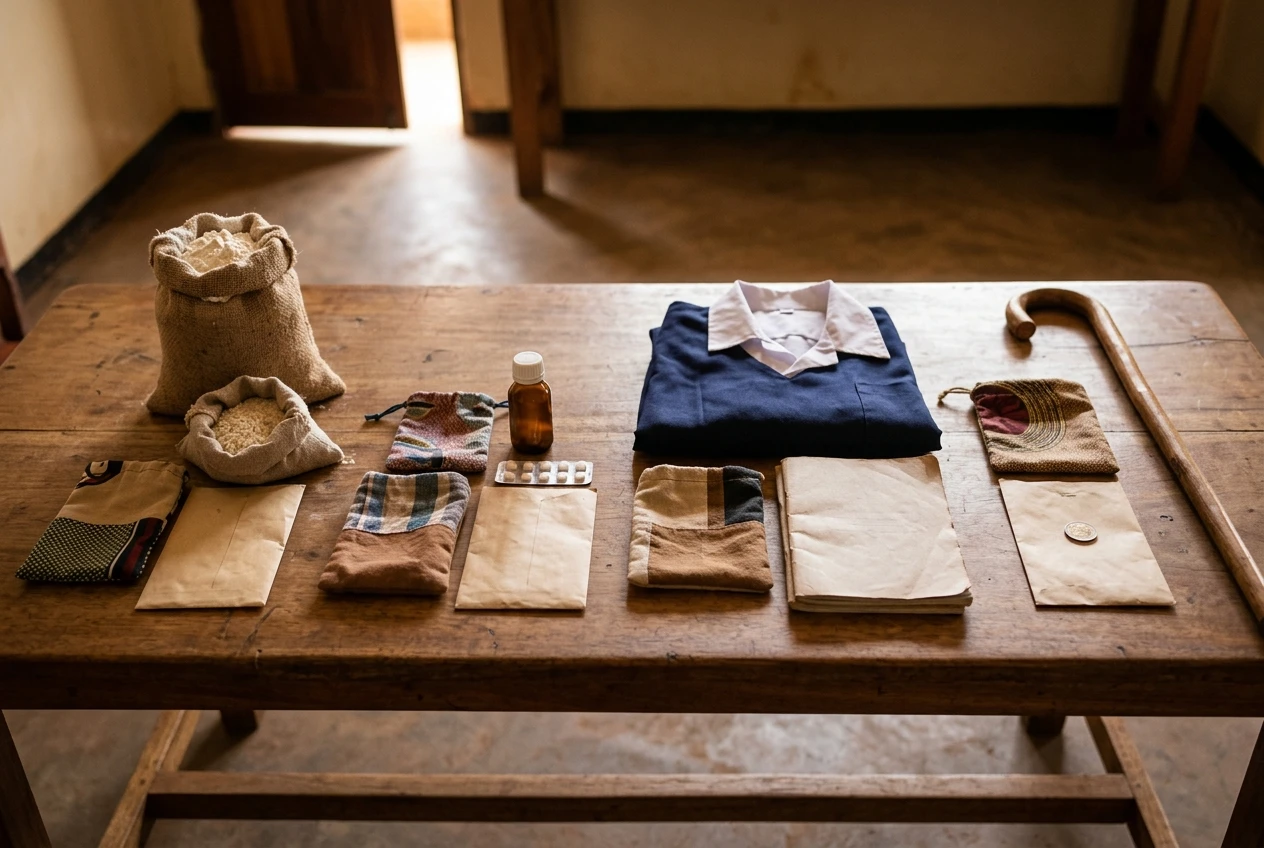
Pay in this order on the day the pension arrives, by putting each portion in a separate envelope or cloth. Money that is visibly set aside for food is much harder to spend on something else.
Lower the Cost of Preaching Without Lowering Its Worth
The worth of a sermon lies in the word of God that it carries, and that costs nothing to obtain. Many of the costs surrounding preaching can be reduced without touching the message.
Consider where money is going now:
- Printed material. Handouts and copied notes add up. Preach from your own handwritten outline, and invite listeners to open their own Bibles and write down the verses.
- Books. Borrow commentaries from a congregation, a fellow preacher, or a library before buying. A Bible, a concordance, and the habit of reading a passage many times will serve most sermons.
- Clothing for the pulpit. Clean, mended clothing honors the work. New garments are not required.
- Refreshments and hospitality on the road. Carry water and simple food from home so that a journey does not require buying meals.
- Meeting places. A home, a shaded yard, or a room in a church that already exists costs nothing to use. A new venue is a new expense.
Paul reminds the Corinthians that the treasure is held in earthen vessels (2 Corinthians 4:7). The vessel may be plain. What is poured into it is the gospel.
Plan Your Preaching Trips Around the Cheapest Road and the Nearest Pulpit
Travel is usually the largest cost that a preacher chooses, so it deserves the most careful planning. Before accepting an invitation, work out the whole cost of the journey, including the return, and compare it with the portion set aside for travel this month.

Several practices reduce that cost:
- Preach first where you can walk or where the fare is smallest. A congregation near home needs the word as much as a distant one.
- Combine visits. If two congregations lie along the same road, arrange to preach at both on one trip rather than making two journeys.
- Travel with others who are going the same way, and share the fare or the ride.
- Choose the days and the roads that cost least, and agree the dates with the congregation in advance so the money is ready.
- Where a distant place invites you and the portion does not allow it, say so honestly. Ask whether a closer preacher can go, or whether the visit can wait until the following month.
Our Lord sent the twelve with little for the road (Mark 6:8), and Luke 10:7 shows that the workman may accept food and lodging from those who receive him. A prudent plan keeps the road short and leaves the rest to those who welcome the preacher.
Let Others Share the Load: Gifts of Food, Rides and Uniforms
The early churches shared in the work of the gospel through gifts. Women provided for Jesus and his disciples out of their own means (Luke 8:3). The Philippians sent aid to Paul more than once, and he called it a fruit that increases to their account (Philippians 4:15-17). John commended Gaius for sending the brethren forward on their journey “after a godly sort” (3 John 5-8).
Provision therefore often arrives through people, and it can only arrive if there is room for it. A preacher who spends the whole pension and conceals every need gives others no opportunity to take part. Acts 20:35 says it is more blessed to give than to receive, so when a preacher refuses all help, he may be denying someone that blessing.

In practice, this means saying clearly and without shame what is needed: a ride on a certain day, a bag of staple food, a school uniform for a child. The article Asking Your Community for Help Is Not Greed: How a Volunteer Preacher Can Ask Honestly gives guidance on how to ask. Gifts received should be written in the monthly record too, because they reduce the spending the pension must cover and show how the month was supplied.
Keep Faith and Prudence Together: The Ant, the Widow’s Flour and the Daily Bread
Some preachers fear that planning shows distrust of God. Scripture shows both together. Solomon sends the idle man to the ant, which prepares its food in summer and gathers its supplies in harvest (Proverbs 6:6-8). The ant keeps working while the supply is there.
The widow of Zarephath had only a handful of flour and a little oil, and she was about to cook the last meal for herself and her son. Elijah asked her to feed him first, and she obeyed. The flour and oil did not run out until the rain returned (1 Kings 17:8-16). She counted what she had, knew it exactly, and trusted God with it.
The manna teaches daily dependence: the Israelites gathered what each household needed, and what was kept beyond need spoiled (Exodus 16:19-20). Our Lord also told the disciples to gather the fragments so that nothing would be lost (John 6:12). Frugality and trust go together in these passages.
So plan the month carefully, pay in order, and keep a small portion unspent where possible for the unexpected. Then pray for the day’s bread, knowing that God is the one who gives the increase.
Next Step
Read God Has Promised to Provide for the Preacher. Here Is What He Actually Promised, so that your planning rests on what Scripture really says. Then, before the next Sunday, write down this month’s pension plan: the amount received, the fixed payments, and the portions for food, the sick, schooling, and travel, in that order.