
Most people who hear a volunteer preacher speak see the sermon. The household sees everything around it: the evenings spent in preparation, the bus fare that has to be found, the meal shared with a visitor, the new shoes that wait another month. Spouses, children and grandchildren pay a share of the cost of an unpaid ministry, and they usually pay it without having been asked.
This article sets out a plan for how to get your family to support your ministry in a way that comes from their own hearts. It rests on Scripture and on plain conversation, and it needs no money.
Why the household feels the cost of ministry before anyone else does
A congregation sees the preacher for an hour. The household lives with him all week. When the pension is small and the ministry is unpaid, the limits of that arrangement fall first on the people at the table. A child hears that there is no money for an outing. A grandchild notices that grandfather is away again on a Saturday. A spouse carries the quiet work of the home while the preacher prepares or travels.

None of this makes the family unspiritual if they feel it. It makes them honest. A person who has never been told why the sacrifice is made will, sooner or later, explain it to himself in his own way, and the explanation is often that the ministry matters more to father than they do.
The preacher’s task, then, is to bring the household inside the ministry before resentment fills the silence. That is a work of teaching, and Scripture already describes how it is done.
What Scripture says about a preacher’s own house
Three passages set the pattern.
Deuteronomy 6:6-7. The words of the commandment are to be on the heart, and the father is to teach them diligently to his children, “when thou sittest in thine house, and when thou walkest by the way, and when thou liest down, and when thou risest up.” The command does not place the teaching in a pulpit. It places it at the table, on the road and at the beginning and end of the day, which are the places a ministry household already occupies.
Joshua 24:15. “As for me and my house, we will serve the LORD.” Joshua speaks for his house, but he does so after setting the choice plainly before the people. A household that serves together has been told what is being served and why.
1 Timothy 3:4-5. An overseer is to rule his own house well, with his children in respectful obedience, and the reason is given as a question: if a man does not know how to manage his own household, how will he care for the church of God? The household is the first place where a preacher’s teaching is tested. The verses describe patient, orderly leadership in the home, and they do not describe a man who talks about God abroad and gives his family only what time is left over.
Together these passages say that the home is a place of teaching, that serving God is a decision made with the household, and that the way a preacher leads his family is part of his qualification to lead others.
Tell them the truth: speaking plainly with your family about provision and why you serve
Children and grandchildren can carry a hard truth better than a vague one. A preacher who relies on a pension and on God’s provision for food and travel can say so in plain words, adjusted to the age of the listener.
A useful conversation covers three things:
- Why you serve. Say what you believe about the gospel and what you have been given to do. Speak of the calling as obedience to Christ, and avoid defending yourself against complaints nobody has made.
- How the ministry is provided for. Explain that you receive no salary, that the pension covers certain needs, and that for food and travel you depend on God, who works through the kindness of others and through your own careful management. Do not hide the limits, and do not exaggerate them.
- What it costs them. Name it. “When I am away on a Saturday, you are carrying more at home. I see that.” A spouse who hears her labor acknowledged is far more willing to share the work than one who has been left to guess whether it is noticed.
Avoid promising what you cannot see. God has promised to provide for those who seek his kingdom (Matthew 6:33), and the household can be taught to trust that promise without being told that every want will be met. The article on what God actually promised the preacher sets out the difference carefully and is worth reading with your spouse.
Give each member a real part: prayer, travel, preparing food, welcoming guests, reading aloud
People treasure what they have a hand in. A ministry that only the preacher performs will always belong to him alone. Scripture shows others sharing in the work of those who teach. Women of means provided for Jesus and his disciples (Luke 8:3). A woman of Shunem prepared a small room so that the prophet Elisha would have a place to rest whenever he passed through (2 Kings 4:8-10). Their part was ordinary, and it was counted as part of the work.
Here are parts a household can take, matched to ability and age:
- Prayer. Each person can be given one thing to pray for by name: a congregation, a sick member, a journey. A grandchild who prays for a particular person on Sunday morning has a stake in what happens that day.
- Travel. A spouse can help plan the route and the fare ahead of time. An older child or grandchild can carry the Bible and notes, or go along when the journey is safe and the setting suitable.
- Preparing food. When the preacher is to be away for the day, someone prepares simple food for the road. When visitors are expected, someone prepares food for the table. The work is small and it is a real contribution.
- Welcoming guests. Hospitality is commanded of believers (Romans 12:13). A child can greet visitors at the door, bring water and sit with them. Such children learn that the ministry brings people into their home as friends.
- Reading aloud. A younger family member who reads can read the passage for the coming sermon at the evening meal. The household then hears the text before the congregation does, and the reader remembers it.
Give the assignment as a request and an honor, and thank the person afterward. A duty handed down with a frown will be carried with one.

Let them see God’s provision answered: keeping a family record of bread received and prayers heard
When Israel crossed the Jordan, Joshua had twelve stones set up as a memorial, so that when children later asked what the stones meant, their fathers could tell them how the Lord had brought the people over (Joshua 4:6-7, 21-22). The stones were a record made so the next generation would ask and be answered.
A household can keep the same kind of record on paper. Use a plain notebook kept where the family eats. Write in it two kinds of entries:

- Prayers offered. The need, the date and the person who prayed.
- Bread received. What arrived, when, and how: a meal given by a neighbor, a fare covered, a need met in a way nobody had arranged.
Once a week, or once a month, read the earlier entries aloud. Psalm 103:2 says, “forget not all his benefits,” and a written record guards against forgetting. A child who reads that a prayer made in the dry weeks was answered by a gift from a friend learns something no sermon could teach as well.
Record answers as they happened and no more. If a prayer has not yet been answered, leave it open and keep praying. Honest entries teach patience and do not teach the household to expect a certain result. For help with the prayers themselves, see how a preacher can pray when the bread is running short.
When a child or spouse is weary or resentful: answering with patience and not with rebuke
Some day a child will say that other families go away together on weekends, or a spouse will say she is tired. The response matters more than anything said in the pulpit that week.
Scripture speaks directly to the preacher here. Fathers are told not to provoke their children to anger (Ephesians 6:4) and not to embitter them, lest they lose heart (Colossians 3:21). The servant of the Lord must not quarrel but be gentle to everyone and patient when wronged (2 Timothy 2:24). A preacher who answers a complaint by quoting a verse as a rebuke has used Scripture as a weapon in his own house.
A better response follows a short order:
- Listen to the whole complaint before answering any of it.
- Name what is true in it. If the weariness is real, say so.
- Ask what would help, and do whatever of it is possible. Sometimes it is a shared meal, an afternoon at home, or one Saturday kept free.
- Return to the matter later, when the feeling has settled, and speak again of why you serve.
Complaint from a weary household member is information about the load they carry. Take it to God in prayer, and let patience persuade where a rebuke would only silence. Where illness in the home is part of the weariness, the article on caring for a sick relative as part of your ministry addresses that load directly.
Keeping the table and the altar together: simple weekly habits for a ministry household
A household’s heart toward the ministry is formed by repeated small habits. These need no money and little time:
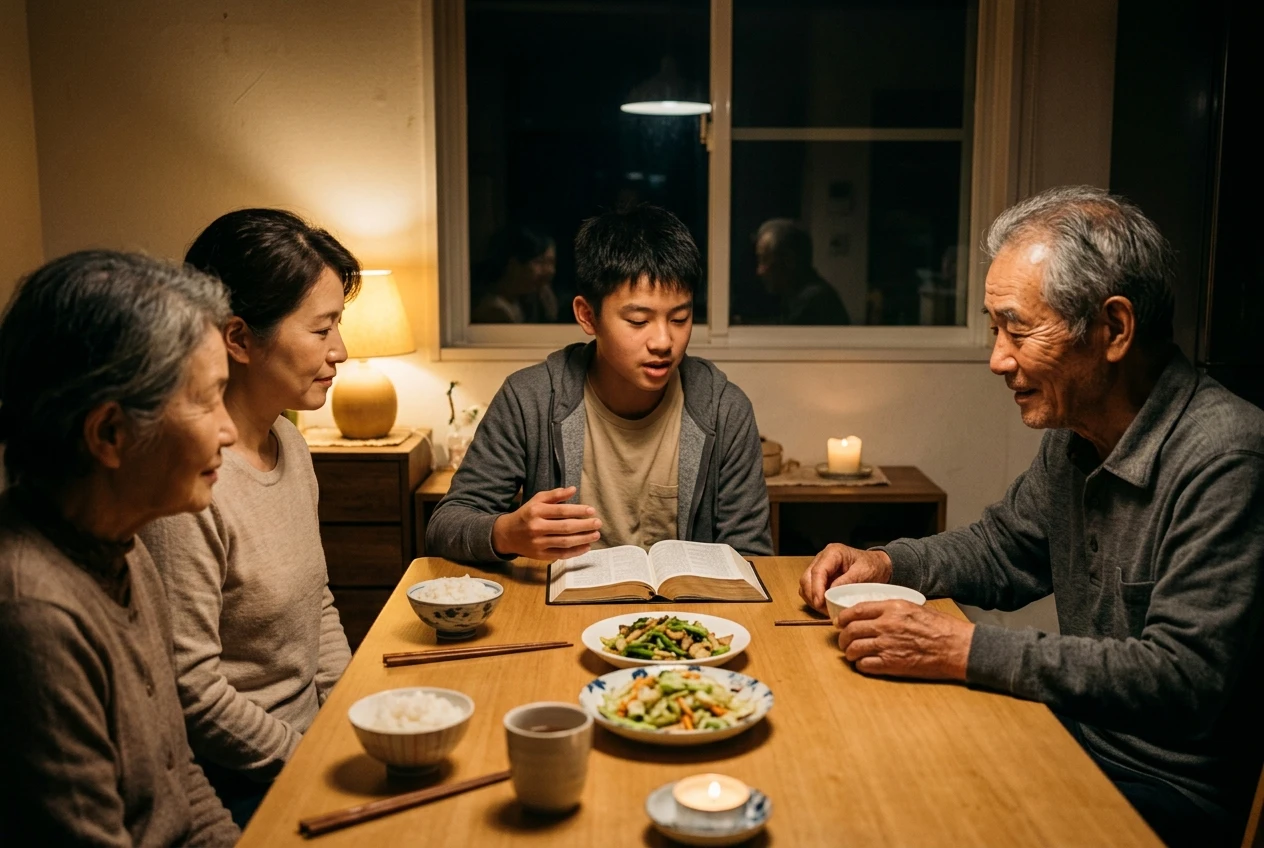
- A daily reading. A few verses at the evening meal, read by a different person each night, with one question afterward.
- A weekly meal with a purpose. Once a week, speak about the week’s ministry at the table: who was visited, what was taught, what is coming.
- A blessing for the journey. Before the preacher leaves, the household prays for him by name. When he returns, he tells them what happened.
- A fixed time for the record. Keep the notebook of prayers and provision and read from it on the same evening each week.
- One protected hour. Set aside an hour in the week that belongs to the household and is not given to preparation. Keeping it teaches them that they are not competing with the ministry for your attention.
The Deuteronomy 6 pattern asks for exactly this: the word of God spoken at home, on the way, at night and in the morning, until the children cannot remember a time when it was not spoken.
A first step for this week
This week, gather your household once, tell them plainly why you serve, and read Deuteronomy 6:4-9 together. Then ask each person what part of the ministry they would like to share with you.