Category: Uncategorized

  • Your Family Did Not Choose the Pulpit, So Teach Them to Treasure What You Do There

    Your Family Did Not Choose the Pulpit, So Teach Them to Treasure What You Do There

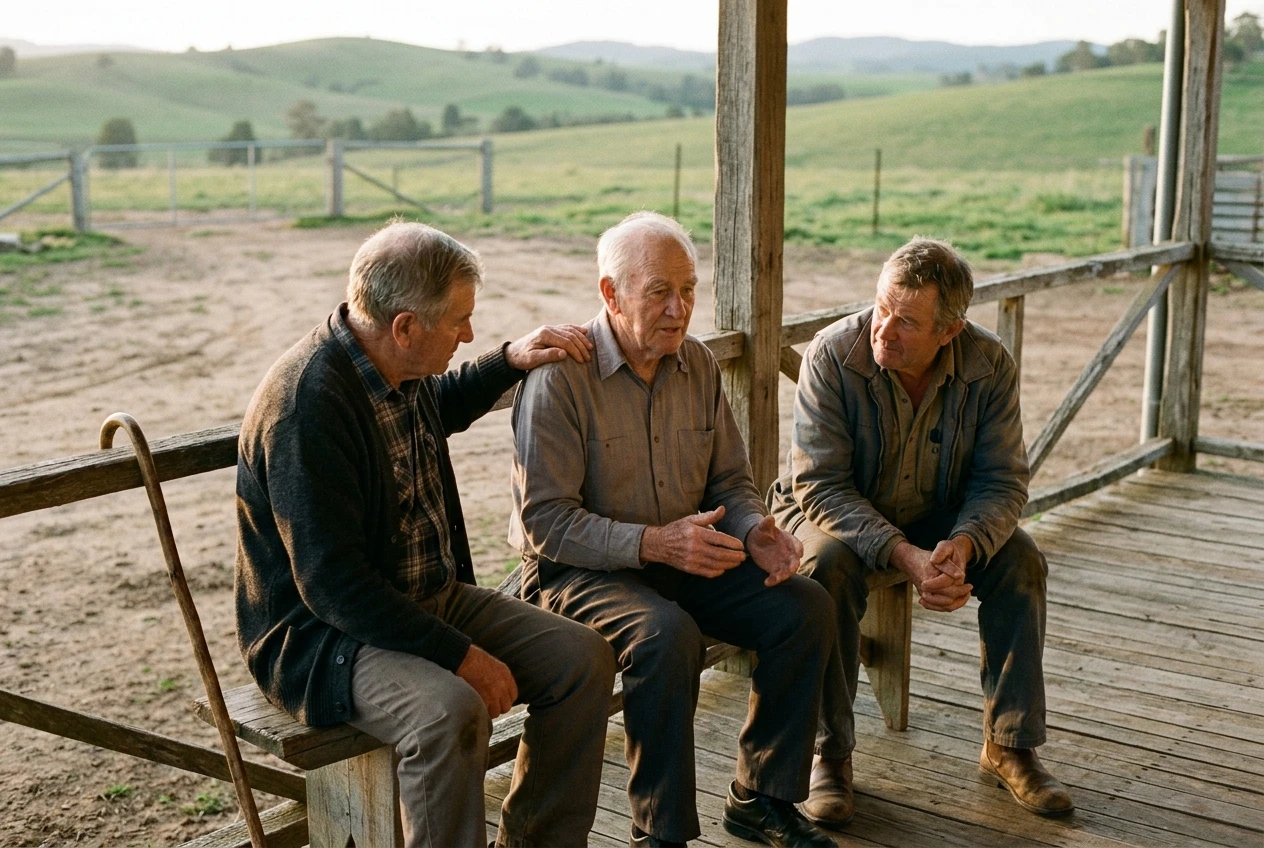
    Most people who hear a volunteer preacher speak see the sermon. The household sees everything around it: the evenings spent in preparation, the bus fare that has to be found, the meal shared with a visitor, the new shoes that wait another month. Spouses, children and grandchildren pay a share of the cost of an unpaid ministry, and they usually pay it without having been asked.

    This article sets out a plan for how to get your family to support your ministry in a way that comes from their own hearts. It rests on Scripture and on plain conversation, and it needs no money.

    Why the household feels the cost of ministry before anyone else does

    A congregation sees the preacher for an hour. The household lives with him all week. When the pension is small and the ministry is unpaid, the limits of that arrangement fall first on the people at the table. A child hears that there is no money for an outing. A grandchild notices that grandfather is away again on a Saturday. A spouse carries the quiet work of the home while the preacher prepares or travels.

    Inside a modest home at dusk, an older man's worn Bible and handwritten notes lie on one end of a plain wooden table, while at the other end a grandchild's scuffed school shoes sit by the door beside a folded bus ticket; warm lamplight, muted browns and soft yellows.

    None of this makes the family unspiritual if they feel it. It makes them honest. A person who has never been told why the sacrifice is made will, sooner or later, explain it to himself in his own way, and the explanation is often that the ministry matters more to father than they do.

    The preacher’s task, then, is to bring the household inside the ministry before resentment fills the silence. That is a work of teaching, and Scripture already describes how it is done.

    What Scripture says about a preacher’s own house

    Three passages set the pattern.

    Deuteronomy 6:6-7. The words of the commandment are to be on the heart, and the father is to teach them diligently to his children, “when thou sittest in thine house, and when thou walkest by the way, and when thou liest down, and when thou risest up.” The command does not place the teaching in a pulpit. It places it at the table, on the road and at the beginning and end of the day, which are the places a ministry household already occupies.

    Joshua 24:15. “As for me and my house, we will serve the LORD.” Joshua speaks for his house, but he does so after setting the choice plainly before the people. A household that serves together has been told what is being served and why.

    1 Timothy 3:4-5. An overseer is to rule his own house well, with his children in respectful obedience, and the reason is given as a question: if a man does not know how to manage his own household, how will he care for the church of God? The household is the first place where a preacher’s teaching is tested. The verses describe patient, orderly leadership in the home, and they do not describe a man who talks about God abroad and gives his family only what time is left over.

    Together these passages say that the home is a place of teaching, that serving God is a decision made with the household, and that the way a preacher leads his family is part of his qualification to lead others.

    Tell them the truth: speaking plainly with your family about provision and why you serve

    Children and grandchildren can carry a hard truth better than a vague one. A preacher who relies on a pension and on God’s provision for food and travel can say so in plain words, adjusted to the age of the listener.

    A useful conversation covers three things:

    • Why you serve. Say what you believe about the gospel and what you have been given to do. Speak of the calling as obedience to Christ, and avoid defending yourself against complaints nobody has made.
    • How the ministry is provided for. Explain that you receive no salary, that the pension covers certain needs, and that for food and travel you depend on God, who works through the kindness of others and through your own careful management. Do not hide the limits, and do not exaggerate them.
    • What it costs them. Name it. “When I am away on a Saturday, you are carrying more at home. I see that.” A spouse who hears her labor acknowledged is far more willing to share the work than one who has been left to guess whether it is noticed.

    Avoid promising what you cannot see. God has promised to provide for those who seek his kingdom (Matthew 6:33), and the household can be taught to trust that promise without being told that every want will be met. The article on what God actually promised the preacher sets out the difference carefully and is worth reading with your spouse.

    Give each member a real part: prayer, travel, preparing food, welcoming guests, reading aloud

    People treasure what they have a hand in. A ministry that only the preacher performs will always belong to him alone. Scripture shows others sharing in the work of those who teach. Women of means provided for Jesus and his disciples (Luke 8:3). A woman of Shunem prepared a small room so that the prophet Elisha would have a place to rest whenever he passed through (2 Kings 4:8-10). Their part was ordinary, and it was counted as part of the work.

    Here are parts a household can take, matched to ability and age:

    • Prayer. Each person can be given one thing to pray for by name: a congregation, a sick member, a journey. A grandchild who prays for a particular person on Sunday morning has a stake in what happens that day.
    • Travel. A spouse can help plan the route and the fare ahead of time. An older child or grandchild can carry the Bible and notes, or go along when the journey is safe and the setting suitable.
    • Preparing food. When the preacher is to be away for the day, someone prepares simple food for the road. When visitors are expected, someone prepares food for the table. The work is small and it is a real contribution.
    • Welcoming guests. Hospitality is commanded of believers (Romans 12:13). A child can greet visitors at the door, bring water and sit with them. Such children learn that the ministry brings people into their home as friends.
    • Reading aloud. A younger family member who reads can read the passage for the coming sermon at the evening meal. The household then hears the text before the congregation does, and the reader remembers it.

    Give the assignment as a request and an honor, and thank the person afterward. A duty handed down with a frown will be carried with one.

    A kitchen in morning light where a grandmother wraps flatbread and fruit in a cloth for a journey while a young child beside her holds out a worn leather Bible and a small satchel, a pot steaming on the stove behind them.

    Let them see God’s provision answered: keeping a family record of bread received and prayers heard

    When Israel crossed the Jordan, Joshua had twelve stones set up as a memorial, so that when children later asked what the stones meant, their fathers could tell them how the Lord had brought the people over (Joshua 4:6-7, 21-22). The stones were a record made so the next generation would ask and be answered.

    A household can keep the same kind of record on paper. Use a plain notebook kept where the family eats. Write in it two kinds of entries:

    A family's open hand-lined notebook with handwritten entries lies on a dinner table beside a loaf of bread and a jar of preserves from a neighbor, a child's finger resting on a line, evening light from a window.
    1. Prayers offered. The need, the date and the person who prayed.
    2. Bread received. What arrived, when, and how: a meal given by a neighbor, a fare covered, a need met in a way nobody had arranged.

    Once a week, or once a month, read the earlier entries aloud. Psalm 103:2 says, “forget not all his benefits,” and a written record guards against forgetting. A child who reads that a prayer made in the dry weeks was answered by a gift from a friend learns something no sermon could teach as well.

    Record answers as they happened and no more. If a prayer has not yet been answered, leave it open and keep praying. Honest entries teach patience and do not teach the household to expect a certain result. For help with the prayers themselves, see how a preacher can pray when the bread is running short.

    When a child or spouse is weary or resentful: answering with patience and not with rebuke

    Some day a child will say that other families go away together on weekends, or a spouse will say she is tired. The response matters more than anything said in the pulpit that week.

    Scripture speaks directly to the preacher here. Fathers are told not to provoke their children to anger (Ephesians 6:4) and not to embitter them, lest they lose heart (Colossians 3:21). The servant of the Lord must not quarrel but be gentle to everyone and patient when wronged (2 Timothy 2:24). A preacher who answers a complaint by quoting a verse as a rebuke has used Scripture as a weapon in his own house.

    A better response follows a short order:

    • Listen to the whole complaint before answering any of it.
    • Name what is true in it. If the weariness is real, say so.
    • Ask what would help, and do whatever of it is possible. Sometimes it is a shared meal, an afternoon at home, or one Saturday kept free.
    • Return to the matter later, when the feeling has settled, and speak again of why you serve.

    Complaint from a weary household member is information about the load they carry. Take it to God in prayer, and let patience persuade where a rebuke would only silence. Where illness in the home is part of the weariness, the article on caring for a sick relative as part of your ministry addresses that load directly.

    Keeping the table and the altar together: simple weekly habits for a ministry household

    A household’s heart toward the ministry is formed by repeated small habits. These need no money and little time:
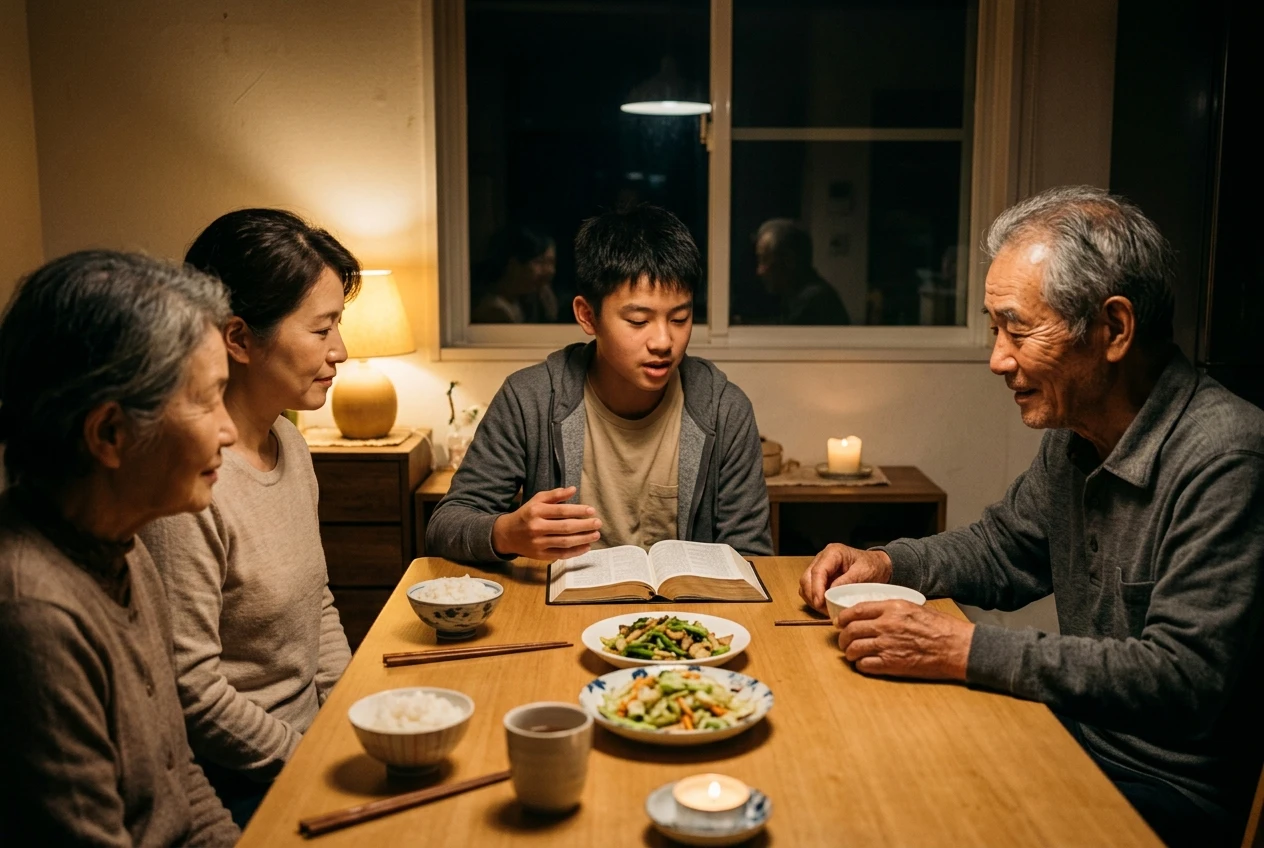
    Three generations seated around a simple supper table at night, bowls of rice and vegetables between them, a teenager reading aloud from an open Bible while the grandfather listens with a small smile, candle and lamp glow on their faces.
    • A daily reading. A few verses at the evening meal, read by a different person each night, with one question afterward.
    • A weekly meal with a purpose. Once a week, speak about the week’s ministry at the table: who was visited, what was taught, what is coming.
    • A blessing for the journey. Before the preacher leaves, the household prays for him by name. When he returns, he tells them what happened.
    • A fixed time for the record. Keep the notebook of prayers and provision and read from it on the same evening each week.
    • One protected hour. Set aside an hour in the week that belongs to the household and is not given to preparation. Keeping it teaches them that they are not competing with the ministry for your attention.

    The Deuteronomy 6 pattern asks for exactly this: the word of God spoken at home, on the way, at night and in the morning, until the children cannot remember a time when it was not spoken.

    A first step for this week

    This week, gather your household once, tell them plainly why you serve, and read Deuteronomy 6:4-9 together. Then ask each person what part of the ministry they would like to share with you.


  • Making a Fixed Pension Last the Month Without Dropping Your Ministry

    Making a Fixed Pension Last the Month Without Dropping Your Ministry

    A pension pays the same amount each month, while the needs of a preacher’s household change. A relative falls sick, a school term begins, or an invitation comes from a congregation two villages away. How to stretch a pension while serving in ministry is a question of arithmetic and daily habit, and Scripture speaks to both. This article sets out a monthly order of spending, ways to lower the cost of preaching, and room for others to share the load.

    What Scripture Teaches About Counting the Cost Before You Build

    Our Lord spoke plainly about planning: “For which of you, intending to build a tower, sitteth not down first, and counteth the cost, whether he have sufficient to finish it?” (Luke 14:28). He gave this teaching about discipleship itself, and he did not treat counting as a lack of faith. He treated it as sense.

    Solomon says the same in practical terms: “Be thou diligent to know the state of thy flocks, and look well to thy herds” (Proverbs 27:23). A shepherd who does not know how many sheep he has cannot feed them. A preacher who does not know where his pension goes cannot say whether he can afford the next journey or the next school fee.

    The plans of the diligent lead surely to plenty, but everyone who is hasty comes only to poverty (Proverbs 21:5). The practices below follow that instruction. Each rests on a verse, and each can be done with a pencil and a sheet of paper.

    Write Down the Month: Where the Pension Actually Goes

    Begin on the day the pension is received. Write the full amount at the top of a page. Beneath it, list every payment already owed that month: rent or housing costs, water, lighting fuel, medicine, and any debt. These come out first because they cannot be postponed.

    Then record what was spent last month, as far as memory and receipts allow. Many households find that small, frequent purchases account for more than expected. A page kept beside the cooking place or the Bible, with each spending written the same day, is enough. No special book or tool is needed.

    A worn notebook page open on a wooden table beside a small Bible and a stub of pencil, with a few folded banknotes and handwritten receipts, lit by soft morning light from a nearby window in a modest home kitchen.

    At the end of the month, add up each kind of spending: food, medicine, school costs, travel, and the rest. Compare it with what you thought you were spending. The difference shows where adjustment is possible.

    This is the work of Proverbs 27:23. The aim is to know the state of the household accurately, so that decisions about ministry and family are made on facts and not on worry.

    Set the Order: Food, the Sick in Your Household, Schooling, Then Travel

    Once the month is written down, give each part of the pension a fixed place in the order of payment. The order proposed here is food first, then the needs of the sick and dependent relatives, then schooling, then travel, then everything else.

    Food comes first because the body must be fed before anything else can be done. Our Lord taught us to ask for daily bread (Matthew 6:11), and the Israelites were told to gather manna each day according to their need (Exodus 16:16). Set aside the money for staple food before any other spending is considered.

    Care for the sick and dependent follows. Paul writes that anyone who does not provide for his relatives, especially those of his own household, has denied the faith (1 Timothy 5:8). Medicine, transport to a clinic, and food suited to an invalid belong in this second portion. The article When a Relative Falls Sick, Caring for Them Is Part of Your Ministry, Not a Break From It explains why this care is itself service to God.

    Schooling comes third: uniforms, books, and fees. Travel for preaching is fourth. This placement can feel hard, so be clear about what it means. It does not lower the importance of preaching. It means the money for the journey is what remains after the household is fed, treated, and schooled, and the journey is planned to fit that amount.

    Pay in this order on the day the pension arrives, by putting each portion in a separate envelope or cloth. Money that is visibly set aside for food is much harder to spend on something else.

    Four separate cloth pouches and envelopes lined up on a plain table, one beside a sack of maize flour and rice, one beside a bottle of medicine, one beside a folded school uniform and exercise books, one beside a bus fare coin and a walking stick, warm indoor light.

    Lower the Cost of Preaching Without Lowering Its Worth

    The worth of a sermon lies in the word of God that it carries, and that costs nothing to obtain. Many of the costs surrounding preaching can be reduced without touching the message.

    Consider where money is going now:

    • Printed material. Handouts and copied notes add up. Preach from your own handwritten outline, and invite listeners to open their own Bibles and write down the verses.
    • Books. Borrow commentaries from a congregation, a fellow preacher, or a library before buying. A Bible, a concordance, and the habit of reading a passage many times will serve most sermons.
    • Clothing for the pulpit. Clean, mended clothing honors the work. New garments are not required.
    • Refreshments and hospitality on the road. Carry water and simple food from home so that a journey does not require buying meals.
    • Meeting places. A home, a shaded yard, or a room in a church that already exists costs nothing to use. A new venue is a new expense.

    Paul reminds the Corinthians that the treasure is held in earthen vessels (2 Corinthians 4:7). The vessel may be plain. What is poured into it is the gospel.

    Plan Your Preaching Trips Around the Cheapest Road and the Nearest Pulpit

    Travel is usually the largest cost that a preacher chooses, so it deserves the most careful planning. Before accepting an invitation, work out the whole cost of the journey, including the return, and compare it with the portion set aside for travel this month.

    An elderly preacher in a mended but clean jacket walking a dusty rural road at early morning with a worn Bible under his arm, a small bundle of food and a water bottle in hand, a village church with a tin roof visible ahead, golden low sun.

    Several practices reduce that cost:

    • Preach first where you can walk or where the fare is smallest. A congregation near home needs the word as much as a distant one.
    • Combine visits. If two congregations lie along the same road, arrange to preach at both on one trip rather than making two journeys.
    • Travel with others who are going the same way, and share the fare or the ride.
    • Choose the days and the roads that cost least, and agree the dates with the congregation in advance so the money is ready.
    • Where a distant place invites you and the portion does not allow it, say so honestly. Ask whether a closer preacher can go, or whether the visit can wait until the following month.

    Our Lord sent the twelve with little for the road (Mark 6:8), and Luke 10:7 shows that the workman may accept food and lodging from those who receive him. A prudent plan keeps the road short and leaves the rest to those who welcome the preacher.

    Let Others Share the Load: Gifts of Food, Rides and Uniforms

    The early churches shared in the work of the gospel through gifts. Women provided for Jesus and his disciples out of their own means (Luke 8:3). The Philippians sent aid to Paul more than once, and he called it a fruit that increases to their account (Philippians 4:15-17). John commended Gaius for sending the brethren forward on their journey “after a godly sort” (3 John 5-8).

    Provision therefore often arrives through people, and it can only arrive if there is room for it. A preacher who spends the whole pension and conceals every need gives others no opportunity to take part. Acts 20:35 says it is more blessed to give than to receive, so when a preacher refuses all help, he may be denying someone that blessing.

    A neighbor at a front doorway handing an older man a woven basket of vegetables and a folded school uniform, with a child standing nearby, in the warm light of late afternoon outside a modest house with a swept dirt yard.

    In practice, this means saying clearly and without shame what is needed: a ride on a certain day, a bag of staple food, a school uniform for a child. The article Asking Your Community for Help Is Not Greed: How a Volunteer Preacher Can Ask Honestly gives guidance on how to ask. Gifts received should be written in the monthly record too, because they reduce the spending the pension must cover and show how the month was supplied.

    Keep Faith and Prudence Together: The Ant, the Widow’s Flour and the Daily Bread

    Some preachers fear that planning shows distrust of God. Scripture shows both together. Solomon sends the idle man to the ant, which prepares its food in summer and gathers its supplies in harvest (Proverbs 6:6-8). The ant keeps working while the supply is there.

    The widow of Zarephath had only a handful of flour and a little oil, and she was about to cook the last meal for herself and her son. Elijah asked her to feed him first, and she obeyed. The flour and oil did not run out until the rain returned (1 Kings 17:8-16). She counted what she had, knew it exactly, and trusted God with it.

    The manna teaches daily dependence: the Israelites gathered what each household needed, and what was kept beyond need spoiled (Exodus 16:19-20). Our Lord also told the disciples to gather the fragments so that nothing would be lost (John 6:12). Frugality and trust go together in these passages.

    So plan the month carefully, pay in order, and keep a small portion unspent where possible for the unexpected. Then pray for the day’s bread, knowing that God is the one who gives the increase.

    Next Step

    Read God Has Promised to Provide for the Preacher. Here Is What He Actually Promised, so that your planning rests on what Scripture really says. Then, before the next Sunday, write down this month’s pension plan: the amount received, the fixed payments, and the portions for food, the sick, schooling, and travel, in that order.

  • How a Small Community Can Gather Uniforms and School Supplies for Children Who Have None

    How a Small Community Can Gather Uniforms and School Supplies for Children Who Have None

    Many households near a church have a child who stays home because there is no uniform, or who sits in class without a notebook or a pen. A retired pensioner, a volunteer preacher or an ordinary church member often cannot pay for this alone. Many neighbours giving a little can. This article explains how to organize a small school fundraiser for your community: whom to count, what to collect, how to keep honest records, and how to thank the people who give.

    Start With the Children You Know by Name

    Begin with a short list of real children, not with a general wish to help. Choose two or three from your family, your congregation or your street. A small number is something you can finish, and a finished work encourages everyone who took part.

    For each child, write down:

    A retired man's weathered hands resting on an open notebook on a wooden table, a handwritten list of children's names and sizes beside a pencil, a folded white school shirt and a tape measure, soft window light in a modest home with warm browns and whites.
    • The child’s name, age, school and class.
    • The name of the parent or guardian, who should agree before you write anything about the child.
    • What the child lacks: shirt, trousers or skirt, shoes, a bag, exercise books, pens, a school fee, or a school meal contribution.
    • The child’s size. Children grow quickly, so confirm sizes again shortly before you buy.

    Ask the school what it requires. A school’s list shows what is compulsory, so you do not collect things that cannot be used. Then visit a shopkeeper or tailor and ask what each item would cost. Write the figures in your notebook, add them up, and you have a total. You now know what you are asking for, and you can say it plainly to anyone who asks.

    What Scripture Says About Gathering Gifts for Others

    The Bible describes the gathering of gifts for people in need more than once. Paul directed the churches to set aside a gift on the first day of the week, so that the collection would be ready and not hurried together when he arrived (1 Corinthians 16:1-2). In the early church, distribution was made to each one as he had need (Acts 4:34-35).

    Scripture also says how a gift is to be given. Paul writes that “God loveth a cheerful giver” (2 Corinthians 9:7), which means no one should be pressed or shamed into giving. Proverbs 19:17 says, “He that hath pity upon the poor lendeth unto the LORD; and that which he hath given will he pay him again.” The one who gives to a poor child has God as his debtor, and a person who believes this does not need to be pushed.

    The same chapters require openness. When Paul arranged the collection for the saints, he appointed trusted brethren to carry it, because he wished to avoid blame in how the gift was handled. He gave his reason: “providing for honest things, not only in the sight of the Lord, but also in the sight of men” (2 Corinthians 8:21). In Acts 6, the daily distribution was placed in the hands of men of good report, chosen before the congregation.

    Jesus teaches that a giver should not make a show of his giving (Matthew 6:3). That instruction is for the giver’s heart. The person who gathers gifts for others carries a different duty: to be able to show where every gift went. A giver may give quietly, and the organizer still keeps an open account.

    Choose One Simple Plan

    Three plans suit a small community, and each costs little to run. Choose one. Combining all three adds work that a small group of volunteers may not be able to carry.

    A collection of goods. Neighbours bring what they already have or can buy cheaply: school shirts that are clean and mended, shoes in good condition, unused exercise books, pens, a school bag. This suits households with little cash, since a family can give something that was set aside in a cupboard.

    A table set up at a small village church doorway, piled with neatly folded white and blue school shirts, a pair of polished black shoes, a stack of new exercise books and pens, and a school bag, with a notebook lying open at the end, in warm morning sunlight.

    A shared meal. The congregation or street gathers, each household brings a dish, and a freewill offering for the children is received openly at the end. The meal also gives people time to hear the children’s needs and to meet one another. It needs a place, a few helpers and someone to count the offering in front of others.

    A household pledge. Each household promises one item, or a small amount, to be brought by a date a few weeks away. Pledges let people plan from their own income, and they spread the cost across many hands. Write each pledge in the notebook, and remind people gently when the date is near.

    If you are a pensioner with limited strength, the collection of goods asks the least of you. A table at the church door and a notebook are enough.

    Invite Neighbours, Church Members and Shopkeepers Without Pressure

    Speak to people personally where you can. A visit or a quiet word after a service is better than a loud announcement, because the person can say yes or no without an audience. When you speak to a group, do it once, state the need clearly and leave it there.

    Say what is needed in terms of items: “two school shirts, one pair of black shoes in size four, six exercise books.” People give more readily when they can picture the thing they are buying or finding. Use the children’s first names only if the parents agreed, and do not describe a family’s poverty in more detail than the need requires. A child should be able to walk into school later without being known as the one who was collected for.

    Offer more than one way to take part:

    • Giving an item or a small sum.
    • Giving time: sewing, mending, carrying goods, writing the record.
    • Praying for the children and for the givers.

    Local shopkeepers and tailors may be willing to sell at a fair price, to give an unsold item or to cut cloth for a uniform. Ask politely, say what the money or goods are for, and accept a refusal courteously. Do not promise anything in return that you cannot deliver. If someone gives nothing, greet them as warmly as before.

    Keep Honest Records So Every Gift Can Be Accounted For

    Buy one exercise book for this work alone. On each page, write the date, the giver’s name (or “anonymous” if the giver asks for that), and what was given. Record goods and money in the same way. When you give someone’s gift away, note that as well.

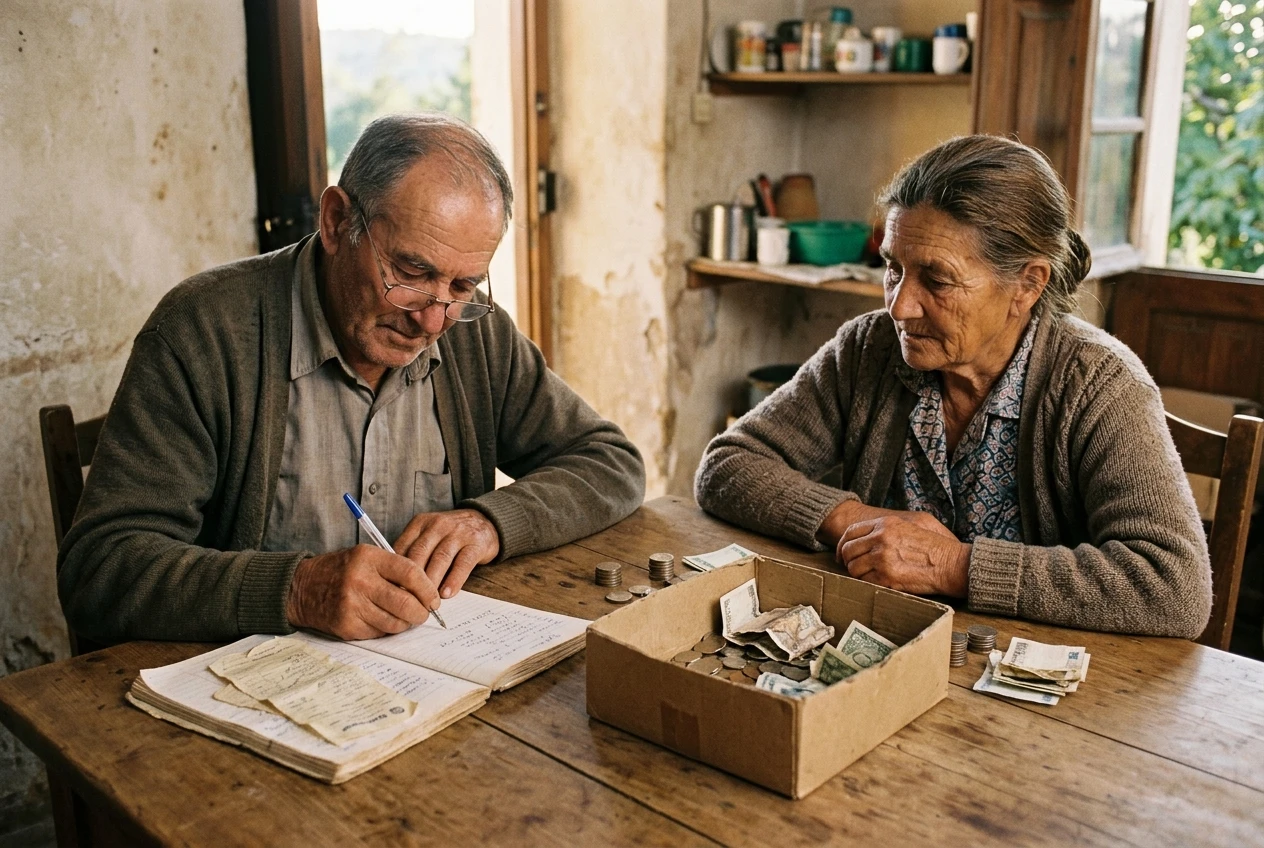
    Two older villagers seated side by side at a plain table counting coins and notes from a single cardboard box, one writing the amount in a ledger while the other watches, shop receipts taped onto the notebook pages, calm afternoon light.

    A few habits keep the account trustworthy:

    1. Two people handle money together. One counts, the other watches and signs the line. Cash is never carried home by one person without being written down first.
    2. Money stays in one place. Use one envelope or one box, kept by an agreed person, and not mixed with personal money.
    3. Keep every receipt. When you buy a uniform or books, ask the seller for a receipt or write the amount and shop name yourself, and tape the paper into the notebook.
    4. Decide in advance what happens to any surplus. For example, it may go toward the next child’s needs or toward a school fee. Say so when you invite gifts, so no one is surprised later.
    5. Report back. After the purchases, read the totals aloud to those who gave: what came in, what was bought, what remains.

    This is the practical side of the accountability Paul describes. A neighbour who sees a clear account will trust the next collection, and the one after. If you also need to ask for help for yourself or for a family member, the article on asking your community for help honestly explains how to do so without shame, and the same openness applies there.

    Hand Over the Gifts, Thank Every Giver and Pray for the Children

    When the uniforms and supplies are ready, give them to the parent or guardian, and let the child be present if the family wishes. A quiet visit at home protects a child’s dignity more than a public presentation does. Let the family decide whether others should be there.

    In the doorway of a modest home, a gray-haired volunteer hands a bundle of folded school uniform and exercise books to a mother while her young son in a new white shirt looks on shyly, golden evening light and earthy tones.

    Thank every giver personally. Say it in person where you can, or write a few lines on paper for those you cannot visit. Say what their gift became: “your shirt is now on Daniel’s back; the exercise books went to his sister.” Specific thanks tell people that their gift arrived and was used, which is also why they will give again. Give them the final report from your notebook.

    Then pray. Pray for each child by name: for health, for attention in class, for a teacher who is patient. Pray for each giver, including those who gave very little. A short prayer with the families when the goods are handed over is appropriate, if they welcome it. A preacher who has no money to give can still offer this, and it counts.

    When the Gifts Are Small

    A collection may end with one pair of shoes, a few books and a single shirt. That is still a real gift to a real child. Jesus watched a widow put two small coins into the temple treasury and said she had given more than all the rest, because she gave all she had (Luke 21:1-4). The size of a gift is not what God weighs first.

    Scripture also speaks to the tiredness of the organizer: “And let us not be weary in well doing: for in due season we shall reap, if we faint not” (Galatians 6:9). And Hebrews 6:10 says, “For God is not unjust to forget your work and labour of love, which ye have shewed toward his name, in that ye have ministered to the saints, and do minister.” Your labor over a notebook, a table and a list of names is seen. If you feel that your hours of service leave little to show, the article on when the ministry takes all your time and leaves nothing extra speaks to that directly.

    Begin small, keep the account open, and leave the result with God.

    This week, write down the names of two or three children in your family or neighbourhood who need a uniform or supplies, pray over the list, and speak with one neighbour about helping.

  • What the Bible Means by Eternal Reward When No One Pays the Preacher

    What the Bible Means by Eternal Reward When No One Pays the Preacher

    A volunteer preacher who receives no salary, and who depends on God for food and for the fare to reach the next congregation, will sooner or later ask whether the labor counts for anything. The question deserves a direct answer from Scripture. So what does the Bible say about heavenly rewards for serving God? It says there is a reward, that God Himself gives it, that it is eternal, and that it comes by His grace and not as a payment He owes.

    This article sets out what those passages teach. It looks at 2 Corinthians 4, 1 Corinthians 9, Hebrews 6 and Luke 14, and it is written for the preacher and also for the relatives and brethren who stand beside him.

    Why the Preacher Without a Salary Is Not Working for Nothing

    An empty envelope at the end of the month can suggest that nothing is being earned. Scripture measures the work by a different standard. Hebrews 11:6 teaches that God “is a rewarder of them that diligently seek him.” The one who weighs the labor is God, and He does not use the ledger of an employer.

    Hebrews 6:10 gives the plainest assurance: “For God is not unrighteous to forget your work and labour of love, which ye have shewed toward his name, in that ye have ministered to the saints, and do minister.” The verse says God will not forget. A sermon preached in a small room, a journey made on foot or by borrowed fare, a visit to a sick member: each is known to Him, whether or not any person has recorded it.

    A plain wooden table in a small village home at dusk, with an open worn Bible beside a single oil lamp, a folded pair of dusty sandals by the door, and a bare shelf with a clay pot in the background. Warm amber lamplight against deep shadow, quiet and humble.

    Paul closes his great chapter on the resurrection with the same conclusion. Having taught that the dead in Christ will be raised, he writes in 1 Corinthians 15:58 that the believer’s “labour is not in vain in the Lord.” The reason the labor is not in vain is the resurrection, which is the very thing the reward rests upon.

    Relatives and brethren who give a meal, a place to sleep or a contribution toward travel share in this. The ministering to the saints in Hebrews 6:10 is itself something God remembers.

    Light Affliction and a Weight of Glory: What Paul Set Side by Side

    In 2 Corinthians 4:17 Paul writes: “For our light affliction, which is but for a moment, worketh for us a far more exceeding and eternal weight of glory.” He places two things next to each other, and the contrast is deliberate.

    On one side stands affliction, which he calls light and momentary. On the other stands glory, which he calls far more exceeding and eternal. Paul was not a man who had suffered little. In the same letter he lists beatings, shipwrecks, hunger, thirst, cold and nakedness (2 Corinthians 11:23-27). He calls such things light only because he compares them with what is coming, and not because they were small.

    The next verse explains how he could judge this way: “While we look not at the things which are seen, but at the things which are not seen: for the things which are seen are temporal; but the things which are not seen are eternal.” A bare cupboard is seen, and it is real. It is also temporary. The glory is unseen at present and it lasts forever.

    A rough, stony footpath in shadow in the foreground, leading up toward a wide golden sunrise breaking over distant hills, with light spilling across the horizon. Dark earthy browns in the foreground, glowing gold and pale blue beyond.

    This passage does not tell a preacher that hunger is pleasant, or that he should pretend he is not tired. It gives him a true measure by which to judge his present hardship. The hardship has an end, and the glory does not.

    Paul’s Own Reward Was to Preach Without Charge

    First Corinthians 9 is the chapter most often quoted on this subject, and it contains two truths that must be held together. First, the Lord has ordained support for the preacher. Verse 14 says: “Even so hath the Lord ordained that they which preach the gospel should live of the gospel.” A congregation that withholds support from a preacher it could help is not obeying that command.

    Second, Paul himself chose not to use that right. In verse 12 he says, “Nevertheless we have not used this power; but suffer all things, lest we should hinder the gospel of Christ.” Then in verses 17 and 18 he asks and answers a question: “What is my reward then? Verily that, when I preach the gospel, I may make the gospel of Christ without charge, that I abuse not my power in the gospel.”

    Paul names his reward as the privilege of preaching freely, so that no one could say the gospel was being sold. He also writes in verse 16, “necessity is laid upon me; yea, woe is unto me, if I preach not the gospel!” He preached because he was commissioned, and the reward was not what moved him to begin.

    Some volunteer preachers serve without a salary by Paul’s example, and others because there is simply no congregation able to pay. Scripture honors both situations without making one the measure of the other. Paul did sometimes receive gifts from the churches, and in Philippians 4:15-16 he thanks the Philippians for sending help more than once. Receiving is not shameful. Paul’s point in 1 Corinthians 9 is that a preacher’s first concern is that the gospel is not hindered.

    An ancient Mediterranean stadium track in bright morning sun, a lone runner mid-stride toward the finish line, with a laurel wreath of wilting leaves resting on a stone beside the track. Dusty sand, pale limestone, clear sky.

    The same chapter then turns to the crown. Verses 24 and 25 compare the preacher to a runner who is temperate in all things, and say that others strive “to obtain a corruptible crown; but we an incorruptible.” The prize is of a different kind from anything money buys.

    Reward Is a Gift of the Father, Not a Wage Owed to Us

    The word reward can mislead if it is read as payment. Romans 4:4 states the difference: “Now to him that worketh is the reward not reckoned of grace, but of debt.” A wage is owed to a worker. Scripture teaches that no one can place God in debt.

    Jesus makes this plain in Luke 17:10: “So likewise ye, when ye shall have done all those things which are commanded you, say, We are unprofitable servants: we have done that which was our duty to do.” A servant who has done his duty has not earned a claim. Yet the same Lord who says this also promises that He will reward His servants. Both teachings are true, and they fit together because the reward comes from the Father’s generosity and not from the servant’s merit.

    The parable of the laborers in Matthew 20:1-16 shows the same thing. The householder pays each man the same, and answers the complaint by saying he may do what he will with his own. The reward is his to give, and he gives it generously.

    Romans 6:23 states the whole matter in one line: “the gift of God is eternal life through Jesus Christ our Lord.” Eternal life is not a salary for good preaching. It is given through Christ to those who are in Him, and the faithful service of a preacher is the fruit of belonging to Him, not the price of it.

    This guards against two errors. One is despair, which says the labor is wasted because no one has paid for it. The other is pride, which says God now owes the preacher something. The Father who gives freely is neither unjust nor in debt.

    What Scripture Says Is Kept for the Faithful Servant

    The Bible names the reward in several ways, and the descriptions agree with one another.

    • Eternal life with Christ. Jesus says in Mark 10:29-30 that those who leave houses, family or lands for His sake and the gospel’s will receive in this time what He provides, “with persecutions,” and “in the world to come eternal life.” The promise carries its own warning that the present time includes persecution.
    • A crown of righteousness. Paul writes in 2 Timothy 4:7-8 that he has fought the good fight and finished the course, and that a crown of righteousness is laid up for him. He adds that the Lord will give it “not to me only, but unto all them also that love his appearing.”
    • A crown of glory that does not fade. Peter tells the elders who shepherd the flock that “when the chief Shepherd shall appear, ye shall receive a crown of glory that fadeth not away” (1 Peter 5:4).
    • An inheritance. Colossians 3:23-24 tells servants to work heartily as for the Lord, “knowing that of the Lord ye shall receive the reward of the inheritance.” The Lord Christ is the one served, and He is the one who gives.
    • Treasure in heaven. Jesus says in Matthew 6:19-21 that treasure laid up in heaven is beyond the reach of moth, rust and thieves.

    Luke 14 adds a particular note. In verses 12 to 14 Jesus tells His host to invite the poor, the maimed, the lame and the blind when he makes a feast, and says, “they cannot recompense thee: for thou shalt be recompensed at the resurrection of the just.” The reward is deferred to the resurrection, and it is promised exactly where no earthly repayment is possible. A preacher who serves people unable to repay him, and the relatives who feed and clothe the sick without return, are in the position this passage describes.

    Later in the same chapter, in verses 26 to 33, Jesus tells the crowd to count the cost before following Him, as a man counts the cost before building a tower. Discipleship was never offered as an easy bargain. The reward is real, and so is the cost.

    Scripture does not promise earthly wealth to the faithful preacher. Paul warns in 1 Timothy 6:5-6 against those who suppose that “gain is godliness,” and says that “godliness with contentment is great gain.” He also writes in 2 Corinthians 2:17 of those who “corrupt the word of God” for profit. Any teaching that guarantees riches in this life as the sign of a faithful ministry contradicts these verses and misleads the people who hear it.

    How to Carry This Hope on a Day When the Cupboard Is Bare

    Hope in a future reward does not remove present hunger, and it would be false to say it does. The Scriptures give a preacher a few concrete things to do on such a day.

    Read the passages aloud. Second Corinthians 4:16-18 and Hebrews 6:10 are short enough to read in a minute. Reading them with the family restores the right measure of the present trouble.

    A family gathered around a modest kitchen table, an open cupboard with only a few jars visible behind them, a father reading from a Bible while a child listens and a neighbor sets down a loaf of bread and a bowl of fruit. Soft morning window light, warm wood tones.

    Pray plainly for the day’s need. Jesus taught His disciples to ask for daily bread, and the request belongs to the same prayer as “Thy kingdom come.” The earlier article on how a preacher can pray when the bread is running short gives help with the words.

    Accept help without shame. If a brother offers food or fare, receiving it honors the ministering that Hebrews 6:10 says God remembers. The giver is serving too, and refusing him takes that service from him.

    Remember the one who stands with you. Relatives and brethren can say to the preacher what Paul says in 1 Corinthians 15:58, that the labor is not in vain in the Lord. They can also ask what he needs and act on the answer, since a word of encouragement does not fill a cupboard. For the daily strain of ministry that takes all the hours of the day, the article on staying motivated in ministry without pay speaks to that fatigue directly.
    The reward kept for the faithful servant is eternal life with the Lord Jesus Christ, and it is given by the Father. The unpaid season is brief by Paul’s measure, and the weight of glory that follows has no end.

    Continue to the companion reading, ‘God Has Promised to Provide for the Preacher. Here Is What He Actually Promised’, to see what God has pledged for daily bread while the eternal reward is still ahead.

  • When a Relative Falls Sick, Caring for Them Is Part of Your Ministry, Not a Break From It

    When a Relative Falls Sick, Caring for Them Is Part of Your Ministry, Not a Break From It

    A preacher who sits at a sick relative’s bedside on the day a congregation expects him often feels he has put the Lord’s work second. Many ask whether the Bible says family comes before ministry, and expect Scripture to name a winner. It does not rank them as rivals. It shows the Lord himself caring for a sick relative within hours of preaching, and it warns the devout against using religion as a reason to neglect their own people.

    The Fear Behind the Question: Am I Failing God When I Stay Home?

    The fear is sincere, and it usually comes from love of the gospel. A volunteer preacher has given years to teaching Christ. When a relative falls ill and needs food, a school uniform or school fees, the hours that once went to preparing and travelling now go to the sickroom and the market. The preacher hears an accusation: “You have laid down the plow.”

    That accusation should be tested against the Word, because it may not come from God at all. The Lord who called a man to preach is the same Lord who commands him to love his neighbour, honour his parents and provide for his household. He does not issue commands that contradict one another. If two duties seem to collide, the fault is more likely in how we have understood one of them.

    What Jesus Did at Peter’s Mother-in-Law’s Bedside

    Mark 1:21 to 28 records that Jesus taught in the synagogue at Capernaum and cast out an unclean spirit. Immediately afterward, verses 29 to 31 say he entered the house of Simon and Andrew. Simon’s wife’s mother lay sick with a fever, and they told him about her at once. He went to her, took her by the hand and lifted her up, and the fever left her.

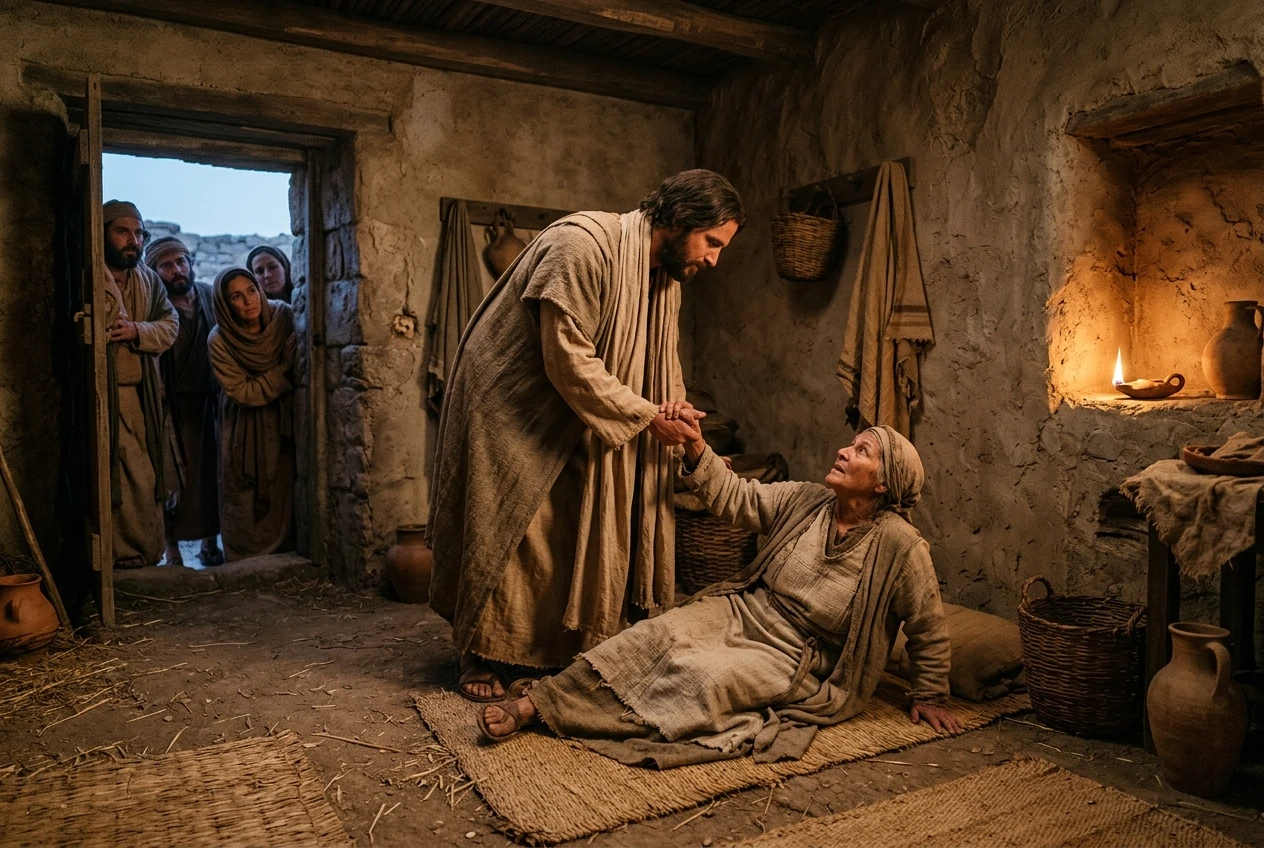
    Inside a simple first-century stone house at dusk, a robed man gently takes the hand of an older woman lying on a straw mat and lifts her up, while a few onlookers stand in the low doorway. Warm lamplight falls on rough plaster walls and earthen floor in soft ochre and brown tones.

    Consider the order. The Lord did not treat her sickness as an interruption of his ministry. He moved from the pulpit to the bedside in the same hour and gave the sick woman his full attention. Mark adds that she then served them, which shows that her healing was complete and that her household resumed its life.

    The same chapter shows that Jesus also withdrew to pray and moved on to preach in other towns (Mark 1:35 to 39). He did both. Scripture shows no rule that preaching always outranks the sick, and none that the sick always outrank preaching. It shows a Master who attended to what was in front of him with obedience and compassion.

    The Rebuke in Mark 7: When Devotion to God Becomes an Excuse

    In Mark 7:9 to 13 Jesus rebukes the scribes and Pharisees for setting aside the commandment of God to keep their tradition. Moses had said, “Honour thy father and thy mother.” Yet they taught that a man could say to his father or mother, “It is Corban,” meaning that what might have helped them was now a gift devoted to God. Having said so, he was excused from helping his parents. Jesus says this made the word of God “of none effect” through their tradition.

    The warning applies to any preacher, however poor. Time, money and strength can be declared “given to the Lord’s work” while a mother goes without medicine or a child without a uniform. That declaration sounds holy and is disobedience. The commandment to honour parents stays in force, and religious busyness does not cancel it.

    A frail elderly mother sits on a wooden stool in a bare doorway with an empty tin cup in her lap, while in the background a man in a worn jacket walks away carrying a Bible toward a distant church. Dry afternoon light, dusty earth, muted greens and browns.

    Some will recall harder sayings, such as Luke 14:26 or Matthew 8:21 and 22, where following Christ takes precedence over family claims. Those texts concern who holds first place in the heart, and they cannot be read as permission to leave a dependent relative hungry. Mark 7 shows what Jesus thought of that conclusion.

    What Paul Means by Providing for Your Own Household

    1 Timothy 5:8 is direct: “But if any provide not for his own, and specially for those of his own house, he hath denied the faith, and is worse than an infidel.” Paul writes in the context of widows. In verses 4 and 16 he tells children and grandchildren to care for widows in their family first, so that the church can then help those who have no relatives.

    The verse does not promise that a preacher will be able to provide abundantly. A retired pensioner cannot give what he does not have, and Paul does not ask it. He asks that a man not turn his back on those who depend on him. Providing in this sense covers food, clothing, medicine, school costs, and the plain presence of someone who stays and helps.

    James 1:27 supports this from another side: “Pure religion and undefiled before God and the Father is this, To visit the fatherless and widows in their affliction.” To visit in the biblical sense means to go and look after. The care of sick and dependent people is named as part of pure religion. It is not a distraction from it.

    Deciding What This Week Requires: A Plain Way to Weigh Sickness, Need and Preaching

    Scripture gives principles and not a timetable, so a preacher must still decide each week. The following questions can be answered in prayer, with pen and paper, on a Sunday evening or a Monday morning.

    A kitchen table in early morning light holding a worn Bible, a pair of reading glasses, a pencil and a handwritten list on lined paper, beside a small bottle of medicine, a folded school uniform and a bowl of rice. A pot steams softly on the stove behind.
    1. What must be done this week for the sick person’s body? List the medicine, the clinic visit, the food for each day and any care that cannot be delayed. A fever or a missing meal cannot wait.
    2. What costs have a deadline? School fees, a uniform needed before term starts, and the cost of transport to school all belong here. Write down what is due and when.
    3. What preaching is promised, and to whom? Name the appointments that exist. Note which ones depend on you alone and which could be covered by another brother, shortened, or postponed with an honest word to the congregation.
    4. Who else could do part of this? Include relatives, church members and neighbours. A task that someone else can do belongs to them for now.
    5. What is left? Fit your preaching and study into the time and strength that remain, and do it gladly.

    If the answers show that the sickroom needs the whole week, stay there, and count it as obedience. If they show that a preaching appointment can be kept without the sick person suffering, keep it. The Lord asks for faithfulness to the real needs in front of you, and no one else can judge those needs as well as the person who knows the household.

    For a fuller treatment of arranging hours, the post on finding daily bread when your hands are full of God’s work deals with the practical side. This article has addressed the question of duty.

    Giving Little From a Small Pension, and Why God Does Not Despise It

    A pensioner often feels that what he can give is too small to matter, whether to the family, the church or the poor. Scripture speaks to this. In Mark 12:41 to 44 Jesus watched people casting money into the treasury and said that a poor widow with two small coins had given more than all the rest, because she gave all she had to live on. In 2 Corinthians 8:12 Paul writes that if there is first a willing mind, the gift is accepted “according to that a man hath, and not according to that he hath not.”

    A small pension spent on rice, on a uniform or on a child’s school books is a gift that God sees. It is not a loss of resources that should have gone to the ministry. The pulpit does not disappear when a pension is spent this way, and a preacher on a pension still has one. That is the subject of The Retired Preacher on a Pension Still Has a Pulpit, which is worth reading for encouragement.

    Letting Others Share the Load Without Shame

    No one in Scripture is expected to carry every burden alone. Galatians 6:2 says, “Bear ye one another’s burdens, and so fulfil the law of Christ.” The early church shared goods so that no one among them lacked (Acts 4:34 and 35). A preacher who cares for a sick relative is entitled to receive help, and a congregation that gives it is doing what the gospel asks of it.

    The difficulty is usually pride or embarrassment. A man who has taught others to trust God finds it hard to say, “My niece needs school fees and I cannot pay them.” Yet to say so honestly gives the brethren a chance to obey. The article Asking Your Community for Help Is Not Greed explains how to put such a request plainly and without apology.

    Accepting help also allows someone else to take a share in the work. The brother who covers a Sunday message while you stay with a sick relative has joined in both ministries.

    The Reward Is Not Lost: What Scripture Says About the Cup of Water and the Work of Love

    Jesus said in Matthew 10:42 that whoever gives even a cup of cold water to one of his disciples “shall in no wise lose his reward.” In Matthew 25:35 and 36 he names among the deeds he will recognise: feeding the hungry, clothing the naked, and visiting the sick. He says that what was done to the least of his people was done to him.

    Hebrews 6:10 gives the same assurance: “For God is not unjust to forget your work and labour of love, which ye have shewed toward his name, in that ye have ministered to the saints, and do minister.” Paul closes his great chapter on the resurrection with the instruction to be “stedfast, unmoveable, always abounding in the work of the Lord, forasmuch as ye know that your labour is not in vain in the Lord” (1 Corinthians 15:58).

    The hours spent boiling food for a sick relative, walking a child to school or sitting beside a feverish patient are included in that promise. They are labour of love done in the Lord’s name, and he does not forget them. A preacher can say with confidence that the reward he hopes for, eternal life with Christ, does not depend on how many pulpits he stood in this month. It depends on whether he stayed faithful to the Lord who sent him.

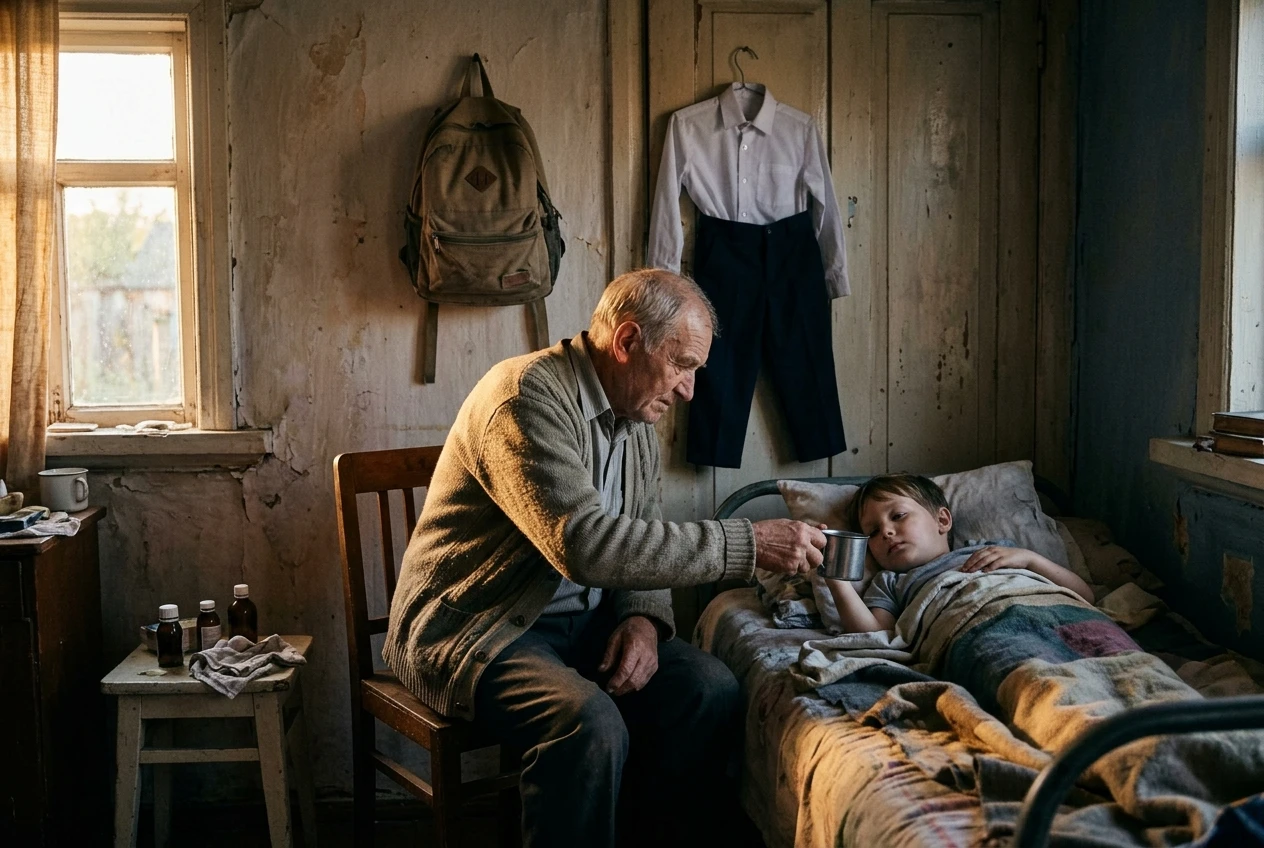
    An elderly man in a faded cardigan sits beside a narrow bed, holding a cup of water to a sick child's hand, with a school bag and neatly pressed uniform hanging on a nail on the wall. Golden evening light comes through a small window, with warm amber and soft blue tones.

    Bring One Name to God Today

    Choose one sick relative whom you are caring for, and say that person’s name to God in prayer today. Ask for healing, for food and for the wisdom to know what this week requires. Then read How a Preacher Can Pray When the Bread Is Running Short, which gives words and Scripture to pray when provision is thin.

  • How a Preacher Can Pray When the Bread Is Running Short

    How a Preacher Can Pray When the Bread Is Running Short

    When the bread runs short, a preacher feels pressure to do something at once: make a call, hint to a neighbour, work out where the next fare will come from. Scripture sets a different order. Before any plan, the need goes to God. The reasons are simple. He already knows what is lacking, He has invited His servants to ask, and a request made to Him changes the person asking before it changes anything else.

    This article is for the volunteer preacher who depends on God for daily food and travel, and who often carries the needs of sick relatives, school uniforms and school fees as well. It sets out how to pray about those needs, using the pattern the Lord Himself gave, and what to do once the prayer has been made. It is written in the confidence that prayer for preachers facing financial hardship is heard by a Father who does not despise the small and the poor.

    Why the First Answer to Lack Is to Kneel, Not to Scheme

    Scheming starts from the belief that the outcome rests on your own cleverness. Prayer starts from the truth that every good gift comes from above (James 1:17). A preacher who schemes first may find a way through, but he will have treated God as a last resort. A preacher who prays first receives whatever help follows as a gift from God’s hand.

    When King Jehoshaphat faced an enemy he could not match, he did not pretend to have a strategy. He prayed, “We have no might against this great company… neither know we what to do: but our eyes are upon thee” (2 Chronicles 20:12). Honest weakness, brought to God, was the whole of his plan, and God answered it.

    James gives a plain reason why prayer must come first: “Ye have not, because ye ask not” (James 4:2). Some lack remains because the need was never spoken to the one who can supply it.

    What Christ Taught Us to Ask: The Daily Bread of the Lord’s Prayer

    The Lord’s Prayer (Matthew 6:9-13) is the pattern Christ gave His disciples, and it speaks directly to a preacher’s condition. Three of its petitions bear on hardship.

    “Give us this day our daily bread.” The request is for today’s bread, not next year’s storehouse. It is made in the plural, “give us,” so it also covers the sick relative and the child who needs schooling. A preacher who lives from day to day has been placed by his circumstances where Christ tells every disciple to stand.

    A single round loaf of flat bread on a worn wooden table beside a small clay cup of water, lit by soft morning light through a window, with an open hand-worn Bible blurred behind. Warm browns and gold, simple and humble.

    “Forgive us our debts, as we forgive our debtors.” Hardship tempts a person to keep accounts: who owes me help, who has failed me, who has more than they need. Christ places forgiveness directly after bread because resentment spoils the prayer of a hungry man. Ask God to forgive your own failings, and release anyone you hold in debt, whether their debt is money or neglect.

    “Lead us not into temptation, but deliver us from evil.” Lack carries its own temptations: anxiety, envy, shortcuts, dishonest dealing, and the thought that God has forgotten. Shortly after giving this prayer, Christ addressed anxiety directly: “Take no thought for your life, what ye shall eat… Your heavenly Father knoweth that ye have need of all these things” (Matthew 6:25, 32). Praying for deliverance includes praying to be delivered from worry itself.

    Telling God the Exact Need: Food, Fare, Uniforms and School Fees

    Christ said that the Father knows what we need before we ask (Matthew 6:8). Yet He still tells us to ask. Specific prayer is a form of honesty and of trust. It shows that you believe God cares about particulars, and it lets you recognise His answer when it arrives.

    A general prayer such as “Lord, provide for me” is acceptable, but a specific one is easier to hold on to. Consider naming:

    On a plain table, a neatly folded child's school uniform with a pair of small black shoes, a modest bundle of bus fare coins, and a small bag of rice, arranged together in warm window light. Simple, honest, everyday objects.
    • the food needed for the household this week
    • the fare for the next journey to preach or to visit the sick
    • the uniform a child in your care needs before school resumes
    • the school fees due, and the date they fall due
    • medicine or a clinic visit for a sick relative

    Say the amounts and the dates to God if you know them. The Lord tells a parable of a man who knocks at midnight for three loaves and is given what he needs because he keeps asking (Luke 11:5-10). The parable is about a specific request, three loaves, made persistently.

    Praying Without Bitterness When Others Have More

    It is common for a preacher to see others eat well, travel easily and pay school fees without strain, and to feel the sting of it. Scripture does not hide this experience. The writer of Psalm 73 confesses that his feet had almost slipped when he saw the prosperity of the wicked. What steadied him was that he “went into the sanctuary of God” and understood how matters would end (Psalm 73:17).

    Pray about the bitterness itself. Tell God plainly that you feel it, and ask Him to remove it. Psalm 37 begins with the instruction, “Fret not thyself because of evildoers,” and the same psalm records a testimony worth repeating in prayer: “I have been young, and now am old; yet have I not seen the righteous forsaken, nor his seed begging bread” (Psalm 37:25).

    Asking for a clean heart is part of asking for bread. Agur prayed, “Give me neither poverty nor riches; feed me with food convenient for me” (Proverbs 30:8). That is a prayer for sufficiency, and it leaves no room for envy.

    A Simple Morning and Evening Rhythm of Prayer for a Busy Preacher

    A tired volunteer, who may be caring for the sick and travelling to preach, needs a rhythm short enough to keep. Scripture sets the pattern of morning and evening: “My voice shalt thou hear in the morning, O LORD; in the morning will I direct my prayer unto thee, and will look up” (Psalm 5:3), and “Let my prayer be set forth before thee as incense; and the lifting up of my hands as the evening sacrifice” (Psalm 141:2).

    A split scene of one humble room: on the left, a man kneeling by a simple bed at dawn with pale golden light on his folded hands; on the right, the same room at dusk lit by a small oil lamp, an open Bible and a small notebook on the bedside stool.

    Morning (about five to ten minutes)

    1. Give thanks for the night’s rest and for the day itself.
    2. Pray the Lord’s Prayer slowly, pausing at the petition for daily bread.
    3. Name today’s specific needs aloud to God: food, fare, any fee or medicine.
    4. Commit the day’s work of preaching and visiting to Him.

    Evening (about five to ten minutes)

    1. Thank God for what He supplied today, however small.
    2. Ask forgiveness for anything done or said in anxiety or anger, and forgive anyone who failed you.
    3. Bring tomorrow’s need to Him again.
    4. Entrust the sick and the household to His care, and rest.

    If you can do no more than a minute at each hour on a hard day, do that. A short prayer made faithfully is better than a long one made rarely.

    Prayers from Scripture You Can Pray in Your Own Words

    Words given by God are safe to borrow. Here are several, each with its source, that you may restate in your own language.

    • For bread and sufficiency: “Give me neither poverty nor riches; feed me with food convenient for me” (Proverbs 30:8).
    • When you do not know what to do: “Neither know we what to do: but our eyes are upon thee” (2 Chronicles 20:12).
    • For release from anxiety: “Casting all your care upon him; for he careth for you” (1 Peter 5:7). Pray it by naming each care in turn.
    • With thanksgiving: “In every thing by prayer and supplication with thanksgiving let your requests be made known unto God” (Philippians 4:6).
    • In trust of supply: “My God shall supply all your need according to his riches in glory by Christ Jesus” (Philippians 4:19).

    Praying these verses is not a formula that compels God. It is a way of agreeing with what He has already said, so that your requests rest on His word.

    After the Prayer: Watching, Waiting and Acting with Honesty

    When Nehemiah’s builders were threatened, the record says, “We made our prayer unto our God, and set a watch” (Nehemiah 4:9). Prayer came first, and then attentive, practical work. The same order holds for a preacher in need.

    A small notebook and pencil on a wooden table beside a steaming cup, open to a handwritten list of short lines, with a village path and an open doorway visible in the soft background, suggesting a preacher watching for answers. Calm afternoon light.

    Watch. Expect that God may answer through ordinary means: a neighbour’s gift, an opportunity to work, an unexpected kindness. Note each answer, perhaps in a small notebook, so that you can give thanks accurately.

    Wait. Some answers come the same day and others take longer. Christ taught persistence: “men ought always to pray, and not to faint” (Luke 18:1).

    Act with honesty. Paul commanded that those who can work should do so quietly and eat their own bread (2 Thessalonians 3:12), and he never excused deceit as a way out of want. Do not exaggerate a need, borrow what you cannot repay, or mislead anyone to obtain help. If it is right to speak to others about your situation, do it truthfully; the piece on how a volunteer preacher can ask honestly deals with that question. Prayer and honest asking do not compete, because God often answers through His people.

    Giving Thanks Before the Answer Comes, and Trusting That Your Labor Is Not in Vain

    Before He fed the five thousand, Christ “took the loaves; and when he had given thanks, he distributed” (John 6:11). The thanks came while the crowd was still hungry and the baskets held only five loaves and two fish. A preacher can follow that example by thanking God each morning for the bread He has promised, before it is on the table.

    Thanksgiving also guards the heart. It turns attention from what is missing to what has been given, and it makes bitterness harder to keep.

    Finally, remember what your labor is worth. Paul wrote, “Be ye stedfast, unmoveable, always abounding in the work of the Lord, forasmuch as ye know that your labour is not in vain in the Lord” (1 Corinthians 15:58). Hebrews adds, “God is not unrighteous to forget your work and labour of love” (Hebrews 6:10). The preacher who serves without pay, and prays for bread while he serves, has a Master who sees all of it and will reward it.

    Bring the Need to God This Week

    If you want to see what the Lord actually promised to those who preach, read the related article on what God has promised to provide for the preacher. Then take a page this week and write down one specific need: a fare, a bag of food, a uniform, a fee. Bring that single need to God each morning and each evening, give thanks as you do, and note what He does.

  • Asking Your Community for Help Is Not Greed: How a Volunteer Preacher Can Ask Honestly

    Asking Your Community for Help Is Not Greed: How a Volunteer Preacher Can Ask Honestly

    A preacher who lives by prayer and by the kindness of others often finds it harder to say “I am in need” than to preach a whole sermon. The hesitation comes from a good place, because Scripture warns against those who use the gospel for gain. It becomes a fault only when it keeps a real need hidden until the preacher is hungry, or until the journey to the next congregation cannot be made.

    This article gives plain tests from Scripture for telling a request that sustains the messenger from a request that serves greed. It then shows how to word an honest request, whom to ask, how to receive, and how to stay at peace when no help comes. Anyone learning how to ask for support as a volunteer preacher should understand that the aim is a clean conscience before God and before the people who hear you.

    Why a Preacher Hesitates to Speak of His Need, and When That Hesitation Is Right

    Peter charges the elders to shepherd the flock of God “not for shameful gain, but eagerly” (1 Peter 5:2). Paul tells Titus that an overseer must not be greedy for gain (Titus 1:7), and he names those who suppose that godliness is a means of gain (1 Timothy 6:5). A preacher who knows these verses will feel the weight of them whenever he thinks of asking for anything.

    That caution is right in several cases. It is right when the wish is for comfort beyond need, when the request is meant to pressure people who cannot refuse, and when the hope of reward has begun to shape what is preached. A man who notices these motives in himself should stay silent until they are dealt with.

    The caution is wrong when it is used to avoid honesty about a simple need. Nobody is helped when a preacher goes without food rather than tell a brother who would gladly give it. Hiding the need can be pride dressed as humility, and it takes from believers a chance Scripture itself gives them: to share in the work (Philippians 4:14-17).

    What Paul Did: The Right He Had and the Times He Laid It Down

    Paul gives the clearest pattern in 1 Corinthians 9. He states that he and Barnabas have the right to food and drink, and that “the Lord commanded that those who proclaim the gospel should get their living by the gospel” (verse 14). He asks, “If we have sown spiritual things among you, is it too much if we reap material things from you?” (verse 11). The right is real, and he does not apologise for it.

    He then says he did not use it among the Corinthians: “We endure anything rather than put an obstacle in the way of the gospel of Christ” (verse 12). His reward, he says, is that “in my preaching I may present the gospel free of charge” (verse 18). Elsewhere he reminds the elders of Ephesus that he coveted no one’s silver or gold or apparel, that his own hands supplied his needs and those of his companions, and that the Lord Jesus said, “It is more blessed to give than to receive” (Acts 20:33-35).

    Paul did not always refuse help, however. He thanked the Philippians for sending aid to him more than once, and he said of the gift, “Not that I seek the gift, but I seek the fruit that increases to your credit” (Philippians 4:15-17). He also writes that he “robbed other churches” by accepting their support so that he could serve the Corinthians, and that brothers from Macedonia supplied what he lacked (2 Corinthians 11:8-9).

    A weathered tentmaker's workbench in warm lamplight, with coarse goat-hair cloth, a curved needle, an awl and a half-stitched tent panel, beside a worn leather satchel and a pair of dusty sandals. Earthy browns and ochre tones convey a preacher working with his own hands to supply his needs.

    Two lessons follow. The preacher has a right to be sustained, and he may lay that right down when taking it would hinder the gospel. Paul decided by asking what would serve the hearers and the message, not what he was owed. For the fuller list of what Scripture says a preacher’s body requires, see Bread, Cloak, Rest and Road: The Bodily Needs of the Preacher in Scripture.

    Greed or Sustenance: Four Questions to Examine Your Own Motive

    No one can read another man’s heart, and the preacher cannot always read his own. These four questions, each drawn from the passages above, help him look honestly.

    1. Is the need real, and can I name it? Food for the week, the fare for a journey to a congregation, a cloak for the cold: these are needs. A request that cannot be named in plain terms deserves suspicion, since vague asking tends to cover vague wanting. Paul wrote to Timothy that “if we have food and clothing, with these we will be content” (1 Timothy 6:8).
    2. Would I preach the same if the answer were no? Paul’s boast in 1 Corinthians 9:18 is that the message stayed free whether or not he was paid. If a refusal would make you cut the journey short, soften a hard saying, or sulk toward the people who declined, the request has become tied to the preaching in a way it should not be.
    3. Is what I ask the size of the need? Peter sets “shameful gain” against eagerness to serve (1 Peter 5:2). An amount that fits the fare and the food is sustenance. An amount that goes well past them, or that grows each time, is the sign to stop and pray.
    4. Could I tell the whole matter openly? Paul arranged that no one could accuse him in the handling of gifts, “for we aim at what is honorable not only in the Lord’s sight but also in the sight of man” (2 Corinthians 8:21). If you would be ashamed for your elders, or the givers, to see what you asked for and what you did with it, do not ask yet.

    Let the Need Be Named, Not the Amount Demanded: How to Word an Honest Request

    An honest request states a fact, makes no claim on the hearer, and leaves him free to decline. It names the need and the purpose. It does not name a sum the giver is expected to meet, and it does not hint that refusing would be a sin.

    Wording of this kind is plain and short:

    Two men seated side by side on a plain wooden bench outside a small village church in soft morning light. One, a modest traveller with a worn bag at his feet, speaks quietly while the older elder listens with a gentle, open expression. Muted greens and tan stone walls give a calm, private, unpressur
    • “The fare to reach the congregation on Sunday is more than I have this week. If the Lord moves you to help, I would be thankful.”
    • “My food is low until the end of the month. I am telling you so that you may know, and I ask nothing beyond what you are free to give.”

    Several habits keep a request clean:

    • Speak of the need, not of the giver’s duty. “I am short of fare” informs. “You ought to support me” demands.
    • Do not borrow urgency. Calling a small need a crisis to move people is a form of pressure, and pressure is the mark of the greed Peter describes.
    • Do not link the request to the message. Never ask in the same breath as a rebuke, and never suggest that a good hearer will give.
    • Ask in private, not before a gathering. A request made from the pulpit puts the whole congregation under pressure, and a person who cannot give feels it most. Speaking to one elder or one brother lets him decide freely.

    Timing matters as much as wording. Ask before the journey, while there is time for the answer to arrive, not after the cost is already behind you. Avoid asking a person who is grieving, a new hearer who has not yet learned to trust the message, or anyone who has just been corrected by you.

    Who to Ask First: Your Own Church, Those You Have Served, and Those Who Offered

    Scripture suggests an order. Paul writes, “Let the one who is taught the word share all good things with the one who teaches” (Galatians 6:6). The first people to ask are therefore those closest to the work: the elders and brothers of your own congregation, who know your character and your labor and are best placed to judge the need.

    Next come the people you have served. Paul’s question in 1 Corinthians 9:11 about sowing spiritual things and reaping material things was addressed to a church he had taught. A congregation you have taught regularly has more reason to share than a stranger, though even here the asking should be gentle.

    Last, and often first in practice, are those who have already offered. John praises Gaius for his faithful care of traveling brothers who “went out for the sake of the name, accepting nothing from the Gentiles,” and writes, “We ought to support people like these, that we may be fellow workers for the truth” (3 John 5-8). When someone has offered, accept the offer and thank him. A preacher who refuses every kindness out of pride may block a blessing meant for the giver.

    Relatives and church members who wish to stand with a preacher need not wait to be asked. If you see that he is short of food or fare, give quietly. A gift offered without being sought is the cleanest kind, because no one is pressed and nothing is owed.

    Receiving a Gift Without Becoming Bound to the Giver or Changing the Message

    A gift sustains the preacher, and it should never steer him. Paul’s refusal to use his right at Corinth was meant to prevent any obstacle to the gospel, and the same care applies to every gift received. A few rules protect the preacher:

    A woman's hands passing a small cloth-wrapped bundle of bread and a folded coat across a rough wooden table to a traveller's open hands, with a modest bus fare folded beside them. Warm window light and homely browns and creams show a gift freely given, with no strings attached.
    • Prefer a gift to a loan. “The borrower is the slave of the lender” (Proverbs 22:7). A loan with expectations of repayment can become a weight on the preaching, while a gift freely given carries no such claim.
    • Show no partiality. James warns against favoring the man in fine clothing (James 2:1-4). A preacher who treats the generous giver better in the congregation than the poor one has been bought, even if nothing was said.
    • Keep the message the same. Paul wrote, “If I were still trying to please man, I would not be a servant of Christ” (Galatians 1:10). If a giver wishes to change what you teach in return for help, decline the gift kindly and keep preaching what you were given to preach.
    • Use the gift for what it was given for. Fare given for a journey goes to the journey. If something remains, tell the giver or the elders what you did with it.
    • Thank the giver and say so plainly. Paul thanked the Philippians by name and called their gift “a fragrant offering, a sacrifice acceptable and pleasing to God” (Philippians 4:18). Gratitude shown honestly keeps the relationship free of debt.

    When the Answer Is Silence or No, and How to Keep Preaching in Peace

    Some requests receive no reply, and some receive a refusal. Silence may mean that the person did not understand, that he has no means to give, or that he has simply delayed. A refusal may come from real hardship. In either case, do not assume ill will, and do not repeat the request until it becomes a pressure of its own.

    Paul had learned a settled contentment that did not depend on being helped: “I have learned in whatever situation I am to be content. I know how to be brought low, and I know how to abound” (Philippians 4:11-12). He could say this because he had also written that the Lord’s own provision is certain. He wrote it to people who had given, so it is a word of thanks, and it should not be read as a way to shame those who have not.

    A lone preacher walking a dusty country road at early dawn toward distant hills, Bible tucked under his arm and a small bag on his shoulder. Soft gold light breaks over the horizon and long shadows fall across the path, conveying peaceful, contented resolve.

    When help does not come, there are practical and spiritual responses:

    • Pray again and ask the Lord whether the journey should be made as planned, or changed to one that fits what you have.
    • Speak of the need to no one in the pulpit, and do not complain against the congregation.
    • Ask another person, as in the order above, if the need is still real.
    • Keep preaching what you can reach on foot, and do not treat the limit as a failure.

    “God is not unjust so as to overlook your work and the love that you showed for his name in serving the saints” (Hebrews 6:10). Paul’s closing word to the Corinthians is that in the Lord “your labor is not in vain” (1 Corinthians 15:58). A volunteer preacher who asks honestly, receives thankfully, and goes on preaching when the answer is no has done what he was given to do, and his reward does not depend on any man’s reply.

    Read Next

    Before you ask anyone, take your need to the Lord in prayer first. Then read what He has actually promised the preacher in God Has Promised to Provide for the Preacher. Here Is What He Actually Promised.

  • The Retired Preacher on a Pension Still Has a Pulpit, and God Has Not Forgotten Him

    The Retired Preacher on a Pension Still Has a Pulpit, and God Has Not Forgotten Him

    A retired preacher living on a pension often feels that two things have been taken from him at once: the strength to stand and speak, and the income that once made the work easier to carry. A smaller purse and a weaker body can make a man wonder whether he is still of any use. Scripture answers that question directly, and the answer is that he is.

    This article is written for the preacher in that season, and for the family and church members who look after him.

    What the Levites Teach Us About Retiring From the Work and Keeping the Charge

    The Lord gave Moses a rule for the Levites in Numbers 8:23-26. A Levite entered the service of the tent of meeting at twenty-five years of age. At fifty he retired from the work of that service and served no more in its labor.

    The next words matter more than the age. The retired Levite “shall minister with his brethren in the tabernacle of meeting, to keep the charge, but he shall do no work.” He kept the charge, and he laid down the heavy labor. He stayed among his brothers, in the same place, under the same God.

    An elderly bearded man in a plain robe stands at the edge of a large woven tent courtyard at dusk, resting one hand on a carved wooden staff while younger men in the background carry bundles and bowls. Warm amber light falls on his calm face as he watches over the work without joining it.

    Retirement in this passage changes the kind of service. It does not remove the man from the people of God or from his calling. A retired preacher may no longer travel to distant congregations or stand through a long service. He still keeps the charge: he guards the faith, watches over the flock in the ways open to him, and remains a brother among brothers.

    Receiving the Pension as Bread From God’s Hand

    Many retired preachers feel an uneasy shame about a pension, especially a small one. They preached for years without a salary, and a monthly payment can feel like something they have not earned. That feeling deserves a gentle correction.

    Scripture teaches that every good gift comes from above (James 1:17). The Lord has many ways of feeding His servants. He fed Elijah by ravens at the brook and later by a widow’s jar of flour. A pension is one more way, arranged through ordinary people and ordinary systems, and it is still His provision.

    A simple wooden table by a window in a modest home, set with a loaf of bread, a cup of tea and an open worn Bible beside a folded pension envelope. Soft morning light pours across the table and an old man's weathered hands are folded in thanks.

    A man who thanks God before he eats the bread his pension buys is not taking what he did not earn. He is receiving what his Father has given him. Gratitude is the right response, and shame has no place in it. If the amount is small, he can still say with Paul that he has learned to be content in whatever state he is in (Philippians 4:11).

    Psalm 92:14: Why Fruit in Old Age Is Not a Lesser Fruit

    The psalmist writes of the righteous that “they shall still bear fruit in old age; they shall be fresh and flourishing.” The word “still” tells us that the Lord expects fruit in the later years, and that He is pleased to give it.

    An old olive tree with a thick gnarled trunk, heavy with ripe dark fruit and bright green leaves, standing in a dry golden field under a clear blue sky. Late afternoon light highlights the contrast between the ancient bark and the abundant fruit.

    Fruit in old age comes from a different kind of growth than fruit in youth. A younger preacher may bring energy, speed and a full calendar. An older preacher brings years of walking with the Lord, many hours in the Scriptures, and a sorrow and joy that only time provides. Those things shape how he prays, how he listens and what he says.

    The fruit may be fewer sermons and more depth. It may be one conversation instead of one hundred. God does not weigh fruit by how much noise it made, and a quiet harvest is a full one in His sight.

    Five Ministries That Need No Pulpit

    A retired preacher living on a pension can serve in several ways that ask little money and no platform. Each of these is a real work of ministry.

    An elderly man in a cardigan sits at a small kitchen table writing a letter by hand with a fountain pen, a worn Bible and reading glasses beside him, a mug of tea steaming. A lamp casts a warm glow and rain streaks the dark window behind him.
    • Prayer. Paul asked the churches to pray for him, and Epaphras is remembered for laboring fervently in prayer for the Colossians (Colossians 4:12). A retired preacher has the time to pray by name for the sick, for the young preachers, for the leaders and for the families of his congregation. This work does not depend on his strength.
    • Visiting the sick. James tells the sick to call for the elders of the church (James 5:14). A short visit, a reading of a psalm and a prayer by the bed comfort a person in a way a sermon cannot. If he cannot travel, the elders of a church can arrange for someone to bring him, or he can speak by telephone.
    • Counsel. People bring their troubles to someone who has lived long and kept the faith. A retired preacher can sit with a troubled marriage, a grieving widow or a discouraged young believer and give advice grounded in Scripture. Counsel of this kind is described in Proverbs as a source of life.
    • Teaching the young. Paul told Titus that the older men and women should teach what is good (Titus 2:2-5). A few children gathered on a weekday, or one young man who wants to learn to preach, can receive from him what no book supplies.
    • Writing letters. Much of the New Testament is letters, written by men who were often in prison, in poor health or far from those they loved. A retired preacher can write to a struggling believer, to a congregation far away or to his own grandchildren. A letter can be read again and again, and it keeps teaching after the writer has gone to rest.

    When the Body Is Weak and the Purse Is Thin: Asking for Help With Humility

    There will be times when a pension does not cover the cost of medicine, a journey to the clinic, school fees for a grandchild or a repair to the roof. The preacher then faces a second difficulty: asking.

    Scripture treats asking for help as a normal part of life among believers. The early church shared what it had so that none lacked (Acts 4:34-35). Paul wrote to the Galatians that they should bear one another’s burdens (Galatians 6:2). Someone who allows others to carry a burden is giving them a chance to obey that command.

    Two church elders sit on a simple bench on a veranda beside an elderly preacher, one with a hand on his shoulder, listening closely as he speaks. Soft late-day sunlight, plain clothes, a walking stick leaning against the bench, a dirt yard and green hills behind them.

    A humble request is plain and specific. He can tell the elders or a trusted brother exactly what the need is, thank them for whatever they can do, and leave the rest with God. He should avoid hinting or waiting in silence. Families and church members who care for him can help by asking him regularly how he is managing, because many proud and gentle men will not volunteer that they are in need.

    Hebrews 6:10 and 2 Timothy 4:7-8: The Reward No Pension Can Measure

    The writer to the Hebrews says that God is not unjust to forget your work and the love you showed for His name, in that you have ministered to the saints and still minister. God does not misplace a record. Every sermon prepared in the evening, every journey made on a poor road and every sick person visited remains known to Him.

    The verse also says “still minister.” The writer assumes that the service continues in some form, and that God sees the continuing as well as the beginning.

    Paul, near the end of his life, wrote: “I have fought the good fight, I have finished the race, I have kept the faith. Finally, there is laid up for me the crown of righteousness, which the Lord, the righteous Judge, will give to me on that Day, and not to me only but also to all who have loved His appearing” (2 Timothy 4:7-8). The crown is promised to all who have loved His appearing, which includes every preacher who has kept the faith, whether his pension was large or small.

    No monthly payment measures that reward. It is eternal life with the Lord Jesus Christ, and the retired preacher is closer to it today than he was when he first began to preach.

    An Evening Prayer for the Retired Preacher

    Lord, my Father, I thank You for this day and for the bread You gave me in it. I thank You for the years in which You let me speak Your word, and for the strength You still give me, though it is less than it was.

    Teach me to receive my pension as a gift from Your hand, and to give thanks without shame. Show me the work You have set before me in this season: someone to pray for, someone to visit, someone to teach. Give me humility to ask when I am in need, and give Your people generous hearts to answer.

    Keep me in the faith to the end, and remember my labor as You have promised. In the name of the Lord Jesus Christ I pray. Amen.

    If you need further encouragement that your service has not been wasted, read When the Ministry Takes All Your Time and Leaves Nothing Extra, Your Labor Is Still Not in Vain.

    Send This to a Retired Preacher You Know

    Think of one retired preacher in your church or family who may be wondering whether God has forgotten him. Send him this article today, with a few words of your own. Then read next God Has Promised to Provide for the Preacher. Here Is What He Actually Promised.

  • When the Ministry Takes All Your Time and Leaves Nothing Extra, Your Labor Is Still Not in Vain

    When the Ministry Takes All Your Time and Leaves Nothing Extra, Your Labor Is Still Not in Vain

    Weariness in ministry is not a sign of weak faith. A preacher who gives his evenings, his travel money and his strength to the gospel, and who receives no salary for it, will feel the cost. Scripture says so openly, and it does not ask anyone to pretend otherwise.

    This article is written for the volunteer preacher who is tired, and for the family and friends who watch him go out to preach while the household needs are still waiting. It speaks from Scripture, and it makes no promise of wealth. The aim is to help you read your sacrifice the way the Bible reads it, so that you can stay in the work. That is the practical answer to how to stay motivated in ministry without pay.

    Why the Weariness Is Real and Why Scripture Does Not Hide It

    The apostle Paul described his own ministry without softening it. He wrote of “toil and hardship, often without sleep, in hunger and thirst, often without food, in cold and nakedness” (2 Corinthians 11:27). He did not list these things to complain. He listed them because they were the plain facts of the work, and the churches needed to know them.

    Elijah reached a point where he asked to die, and the Lord’s first response was to let him sleep and then feed him (1 Kings 19:4-8). Our Lord Himself sat down at a well “wearied from His journey” (John 4:6). Weariness appears in the lives of the faithful throughout Scripture, and God does not rebuke them for it.

    A weathered clay-brick well in the midday sun, a worn leather sandal and a dusty traveler's staff resting against its stone rim, with a wooden bucket and rope beside them. Warm ochre earth, pale hazy sky, long soft shadows.

    This matters for a volunteer preacher because discouragement often arrives with a second burden, which is guilt. A man thinks, “If my faith were stronger, this would not trouble me.” Scripture gives no ground for that thought. The Bible treats tiredness, hunger and lack as real conditions that the Lord sees. Paul’s counsel is that we “not grow weary while doing good” (Galatians 6:9), and a command like that would be unnecessary if weariness never came.

    Where the Bible has written about the preacher’s bodily needs, it has done so honestly. If you want to see those passages gathered together, Bread, Cloak, Rest and Road: The Bodily Needs of the Preacher in Scripture sets them out.

    What “Your Labor Is Not in the Lord in Vain” Actually Says

    The verse is 1 Corinthians 15:58: “Therefore, my beloved brethren, be steadfast, immovable, always abounding in the work of the Lord, knowing that your labor is not in vain in the Lord.” (Quotations in this article are from the New King James Version.)

    Two details are easy to miss. First, Paul wrote this to the whole church at Corinth, to ordinary believers as well as to preachers. It is the closing sentence of a long chapter on the resurrection of Christ and the resurrection of the dead. The word “therefore” ties the promise to that teaching. Because Christ is risen and the dead will be raised, the labor done in His name is not wasted.

    Second, the promise is placed “in the Lord.” The labor is secure because of whose work it is and who receives it. Paul did not say that the labor will always be rewarded with comfort, with money or with visible results. The ground of the promise is the resurrection, so its fulfilment is also in the resurrection.

    The writer to the Hebrews says something similar: “For God is not unjust to forget your work and labor of love which you have shown toward His name” (Hebrews 6:10). God does not forget. A preacher who feels forgotten by his congregation, by his neighbors or by his own bank balance can still hold to this: nothing done for the name of Christ falls outside His memory.

    The Difference Between God’s Provision for Today and His Reward in Eternity

    Scripture speaks of two things that are often mixed together, and mixing them causes much discouragement.

    The first is provision. Our Lord taught us to pray, “Give us this day our daily bread” (Matthew 6:11), and He said that the Father knows what we need (Matthew 6:32). Provision is for the present life: food, clothing, a way to travel, a roof. Paul wrote to the Philippians, who had supported him, “my God shall supply all your need according to His riches in glory by Christ Jesus” (Philippians 4:19). Provision is a real promise, and the member’s other pages deal with exactly what was promised and what was not.

    The second is reward, and Scripture places it in the age to come. “For our light affliction, which is but for a moment, is working for us a far more exceeding and eternal weight of glory” (2 Corinthians 4:17). Paul, near the end of his life, wrote that there was laid up for him “a crown of righteousness, which the Lord, the righteous Judge, will give to me on that Day, and not only to me but also to all who have loved His appearing” (2 Timothy 4:8).

    Trouble begins when a preacher expects the reward to arrive as present wealth. He then reads every lean month as a sign that God is displeased or that the work is wasted. Scripture does not teach that. Jesus told His followers that those who leave houses, family or lands for His sake will receive a hundredfold now in this time, “with persecutions,” and in the age to come, eternal life (Mark 10:29-30). Eternal life is named as the reward that remains.

    So the honest reading is this. God will provide what the preacher needs to continue, and the preacher’s reward is to be with the Lord Jesus Christ forever. A needy week does not cancel either promise. To read the first promise in detail, see God Has Promised to Provide for the Preacher. Here Is What He Actually Promised.

    Paul’s Tentmaking and His Rights as a Preacher: When to Work and When to Receive

    Paul’s own practice answers a question every unpaid preacher asks: should I be working with my hands, or should I be receiving support?

    Paul affirmed the right of the preacher to be supported. “Even so the Lord has commanded that those who preach the gospel should live from the gospel” (1 Corinthians 9:14). He taught that “the laborer is worthy of his wages” (1 Timothy 5:18) and that elders who labor in the word and doctrine are worthy of double honor (1 Timothy 5:17). The right is real and it comes from the Lord’s own command.

    Yet Paul often chose not to use it. In Corinth he worked at tentmaking with Aquila and Priscilla (Acts 18:3). To the elders of Ephesus he said, “these hands have provided for my necessities, and for those who were with me” (Acts 20:34). Of his reason he wrote, “What is my reward then? That when I preach the gospel, I may present the gospel of Christ without charge” (1 Corinthians 9:18). In Thessalonica he worked night and day so as not to burden anyone, and also to leave the believers an example to follow (2 Thessalonians 3:8-9).

    A rough wooden workbench in a small first-century-style workshop, with heavy goat-hair cloth half stitched into a tent panel, a curved bone needle, coils of cord and an awl, beside an open scroll. Warm lamplight on brown and cream textures.

    He also received gifts when they came. He told the Corinthians that other churches had supplied what he lacked while he served them (2 Corinthians 11:8-9), and he thanked the Philippians for sending to his need more than once (Philippians 4:15-16).

    Three conclusions follow from Paul’s example:

    • Receiving support is not shameful, and it is the Lord’s own order.
    • Working with one’s hands is not a failure of ministry. Paul did it by choice and for the sake of the hearers.
    • The deciding question was what would best serve the gospel in that place and at that time, and Paul did not settle it by what was owed to him.

    A volunteer preacher who has little time for paid work may find that Paul’s example fits some seasons and not others. Where hours are taken by caring for sick relatives, see Finding Daily Bread When Your Hands Are Full of God’s Work.

    Three Daily Practices That Keep a Tired Preacher Steady in the Mission

    Motivation that depends on feeling rested will fail. Steadiness comes from habits that point the mind back to what is true. These three are drawn from Scripture and fit into a day that is already full.

    An early-morning kitchen table by a window: a worn open Bible with a pencil across the page, a simple cup of steaming tea and a small piece of bread on a plain plate. Pale gold sunrise light, muted blue shadows.

    1. Begin with the resurrection

    Read a short passage each morning that anchors the work in Christ’s victory. The last verses of 1 Corinthians 15 take about two minutes. Since Paul rests the promise of “not in vain” on the resurrection, the preacher should begin where Paul begins.

    2. Ask for today’s bread and give thanks for what has come

    Pray Matthew 6:11 by name, listing the day’s actual needs: food, fare, the school costs of a relative. In the evening, give thanks for what was received, however small. This keeps provision, which belongs to today, separate in the mind from reward, which belongs to eternity. It also trains the eye to notice what the Lord has done, which Psalm 103:2 commands: “forget not all His benefits.”

    3. Commit the work to the Lord and rest

    At the close of the day, name the people you taught or prayed for and hand them to God. The result of preaching is not in the preacher’s power: “I planted, Apollos watered, but God gave the increase” (1 Corinthians 3:6). Then sleep. “It is vain for you to rise up early, to sit up late… for so He gives His beloved sleep” (Psalm 127:2). Rest is itself an act of trust.

    None of these practices needs money, and none takes more than a few minutes. They keep the preacher turned toward the Lord when the day offers many reasons to look elsewhere.

    When Your Sacrifice Is Seen Only by God: How to Serve Without Applause or Pay

    Much of a volunteer preacher’s cost is invisible. The congregation sees a sermon. It does not see the walk home in the dark, the meal skipped to pay for transport, or the evening given to sermon preparation instead of rest. Family members may see more, and they carry part of the cost too.

    A lone figure seen from behind walking a dirt road home at dusk, carrying a worn satchel, with the lit windows of a village ahead and a streak of amber light along the horizon. Deep blue-violet sky, quiet and still.

    Jesus spoke to this directly. Of giving, praying and fasting, He said that what is done in secret will be repaid by the Father: “your Father who sees in secret will Himself reward you openly” (Matthew 6:4). The word is plain. The Father sees. A sacrifice that no one thanks is not unseen, and it is not lost.

    Paul gave the same direction to servants: “Whatever you do, do it heartily, as to the Lord and not to men, knowing that from the Lord you will receive the reward of the inheritance; for you serve the Lord Christ” (Colossians 3:23-24). The one served is Christ, and He is the one who pays.

    For the families and friends who support a preacher, this carries a duty as well. Scripture calls the church to share in the work: “Let him who is taught the word share in all good things with him who teaches” (Galatians 6:6). A kind word, a meal, a contribution toward fare, or help with a household task is a share in the preaching. Those who give such help are included in the promise that God does not forget a work of love.

    The preacher who continues without wages is not doing something the Bible regards as small. He is doing what Paul called the work of the Lord, and the Lord who commanded it will not leave it unpaid. The reward is to be with Christ, and Scripture says it is worth more than every present loss.

    Return to What the Lord Actually Promised

    When weariness comes, go back to the words themselves and read what the Lord said, not what others have added to it. Read God Has Promised to Provide for the Preacher. Here Is What He Actually Promised.

  • Bread, Cloak, Rest and Road: The Bodily Needs of the Preacher in Scripture

    Bread, Cloak, Rest and Road: The Bodily Needs of the Preacher in Scripture

    The question of what the Bible says about caring for a preacher’s physical needs is answered across both Testaments, in narrative, in letters, and in the words of Christ Himself. Scripture speaks of the preacher’s food, his coat, his bed, his health and his travel, and for each it names who is expected to supply it. It also records the occasions on which the preacher worked with his own hands.

    This article goes through those needs one at a time. It builds on two earlier pieces: what God actually promised to the preacher and the wider survey of provision for volunteer preachers in the Bible. Here the attention is on the body of the one who preaches.

    Why the Lord counts the body of His servant as worth caring for

    God made the body, and Scripture never treats its needs as beneath His notice. Christ said of food, drink and clothing, “your heavenly Father knoweth that ye have need of all these things” (Matthew 6:32). He fed the crowd that had followed Him for three days, saying, “I have compassion on the multitude… they have nothing to eat” (Matthew 15:32). He Himself sat down at Jacob’s well “wearied with his journey” (John 4:6).

    The apostles lived with these needs as well. Paul wrote to the Corinthians of “weariness and painfulness… hunger and thirst… fastings often, in cold and nakedness” (2 Corinthians 11:27). He did not hide these facts or treat them as signs of failure. They are part of the record of faithful service.

    The Lord also keeps an account of what is done for His servants. “God is not unrighteous to forget your work and labour of love” (Hebrews 6:10). The sections below show how that care is meant to reach the preacher in practice.

    Food and drink: the laborer and his worthiness

    When Christ sent out the seventy, He gave a direction about the table: “And in the same house remain, eating and drinking such things as they give: for the labourer is worthy of his hire” (Luke 10:7). To the twelve He said, “the workman is worthy of his meat” (Matthew 10:10). The word “meat” in that verse means food. The preacher is to receive what is set before him, and he is told not to move from house to house looking for a better table.

    Paul argues the same principle at length in 1 Corinthians 9:7-14. He asks three questions drawn from ordinary life: who goes to war at his own cost, who plants a vineyard and eats none of its fruit, who feeds a flock and takes no milk from it. He then turns to the law of Moses, “Thou shalt not muzzle the mouth of the ox that treadeth out the corn” (Deuteronomy 25:4), and asks whether God’s concern there was for oxen alone. His answer is that it was written “altogether for our sakes,” because “he that ploweth should plow in hope” of a share in the harvest.

    He ends with a plain statement: “Even so hath the Lord ordained that they which preach the gospel should live of the gospel” (1 Corinthians 9:14). The burden of supply falls on those who receive the teaching. The preacher is not asked to find his own bread while he labors for them.

    Scripture also shows food reaching a servant by direct provision. At the brook Cherith, ravens brought Elijah “bread and flesh in the morning, and bread and flesh in the evening” (1 Kings 17:6). God has used both channels, His people and His own hand.

    Clothing and a place to rest the head

    On clothing, the sent disciples were told to carry little. Christ forbade them “two coats” and told them to take no extra provision (Matthew 10:9-10; Mark 6:8-9). The instruction assumed that hosts along the way would supply what was lacking. It was a calling to depend on others, and it did not treat the body as unimportant.

    Paul shows the same need in his own life. Near the end of his ministry he wrote from prison to Timothy: “The cloak that I left at Troas with Carpus, when thou comest, bring with thee, and the books, but especially the parchments” (2 Timothy 4:13). He asked again, “Do thy diligence to come before winter” (2 Timothy 4:21). An apostle felt the cold and said so to a fellow worker without embarrassment.

    Shelter appears throughout the record. The widow of Zarephath fed Elijah from her last meal and oil, and he stayed in her house, where he lodged in an upper room (1 Kings 17:9-19). A woman of Shunem, seeing that Elisha passed by often, said to her husband, “Let us make a little chamber, I pray thee, on the wall; and let us set for him there a bed, and a table, and a stool, and a candlestick” (2 Kings 4:10). Her provision was exact: a place to sleep, to eat, to sit and to read by lamplight.

    A small whitewashed upper chamber in warm lamplight, holding a narrow bed with a woven blanket, a plain wooden table, a stool and a single oil lamp on a stand, with a window showing a dusky Middle Eastern hillside.

    The New Testament continues the pattern. Lydia constrained Paul and his company to stay at her house (Acts 16:15). Paul wrote to Philemon, “prepare me also a lodging” (Philemon 22). Gaius is called “mine host, and of the whole church” (Romans 16:23). In each case a believer’s home served the preacher, and the preacher received it with thanks.

    Rest and health

    After the contest on Mount Carmel, Elijah fled into the wilderness, sat under a juniper tree and asked that he might die. God did not rebuke him with a sermon. An angel touched him and said, “Arise and eat.” He found a cake baked on coals and a jar of water, ate, and lay down again. The angel came a second time and said, “Arise and eat; because the journey is too great for thee” (1 Kings 19:5-7). Food and sleep came before any further instruction. In the strength of that meal he went forty days to Horeb.

    A weary bearded man in a worn robe lying asleep under a juniper tree in a rocky desert at dawn, with a round flat cake baked on glowing coals and a clay jar of water beside his head, soft golden light on the sand.

    Christ made the same provision for the apostles. When they returned from preaching, and “there were many coming and going, and they had no leisure so much as to eat,” He said, “Come ye yourselves apart into a desert place, and rest a while” (Mark 6:31). The Lord Himself called for rest in the midst of fruitful work.

    Health is addressed directly in the letters. Paul wrote to Timothy, “Drink no longer water, but use a little wine for thy stomach’s sake and thine often infirmities” (1 Timothy 5:23). Timothy was a faithful minister who suffered frequent illness, and the apostle’s counsel concerned his body. Elsewhere Paul mentions that he “left Trophimus at Miletum sick” (2 Timothy 4:20), and he writes of Epaphroditus, who “was sick nigh unto death: but God had mercy on him” (Philippians 2:27). Sickness in a servant of God is recorded as a trial to be met with prayer and care. Scripture does not read it as a sign that his work was in vain.

    A preacher who also looks after a sick relative carries both burdens at once. A separate piece, finding daily bread when your hands are full of God’s work, takes up that situation.

    The road

    The early church sent its preachers on their journeys and paid for the sending. Paul wrote to the Romans of his plan to travel to Spain, “to be brought on my way thitherward by you” (Romans 15:24). He asked the Corinthians for the same help: “that ye may bring me on my journey whithersoever I go” (1 Corinthians 16:6). Of Timothy he said, “conduct him forth in peace” (1 Corinthians 16:11).

    Two travelers with staffs and bundled packs on a dusty Roman road at the edge of a town, while a small group of believers hands them a loaf of bread, a water skin and a rolled cloak, in warm late-afternoon light.

    Titus received a similar charge: “Bring Zenas the lawyer and Apollos on their journey diligently, that nothing be wanting unto them” (Titus 3:13). The phrase “that nothing be wanting” shows that the sending church was responsible for the whole outfit of the journey. The fare, the provisions and the companions were all included.

    John writes most fully on the matter in his third letter. He praises Gaius for his care of traveling brethren, “whom if thou bring forward on their journey after a godly sort, thou shalt do well: because that for his name’s sake they went forth, taking nothing of the Gentiles. We therefore ought to receive such, that we might be fellowhelpers to the truth” (3 John 5-8). Two points stand out. The preachers took nothing from unbelievers, so their support had to come from the church. And John says “we ought,” which makes the duty one of obligation. Helping them is a share in the work of the truth itself.

    When the preacher works with his own hands

    Scripture does not say that every preacher must live on the gifts of others. Paul, who defended the right of the preacher to be supported, often laid that right down. At Corinth he found Aquila and Priscilla, “and because he was of the same craft, he abode with them, and wrought: for by their occupation they were tentmakers” (Acts 18:3). To the elders of Ephesus he said, “these hands have ministered unto my necessities, and to them that were with me” (Acts 20:34), and he reminded them of the Lord’s words, “It is more blessed to give than to receive” (Acts 20:35).

    A workshop in an ancient city where a man stitches a large panel of rough brown goat-hair cloth, with tent canvas, awls and cord on the bench and scrolls resting on a shelf behind him, lit by sunlight through an open doorway.

    He gives his reasons in several places. To the Corinthians: “we suffer all things, lest we should hinder the gospel of Christ” (1 Corinthians 9:12). To the Thessalonians: “labouring night and day, because we would not be chargeable unto any of you” (1 Thessalonians 2:9). And again, “Not because we have not power, but to make ourselves an ensample unto you to follow us” (2 Thessalonians 3:9). He worked where taking support might have given offence or become a stumbling block to new believers.

    His example has limits worth noting. Paul did not refuse help everywhere. He wrote to the Philippians that they sent to his need “once and again” while he was at Thessalonica (Philippians 4:16), and he told the Corinthians that brethren from Macedonia “supplied” what was lacking (2 Corinthians 11:9). Tentmaking was a liberty he used when it served the gospel. It was not a rule laid on all preachers, and it did not excuse the churches from their part.

    The saying “if any would not work, neither should he eat” (2 Thessalonians 3:10) is addressed to the idle, those who “walk disorderly” and do nothing. It does not describe the preacher who labors in the word. A preacher who earns his own living, or lives on his own means, follows Paul’s pattern by choice. The flock’s duty to the laborer remains.

    What the flock owes and what the preacher may ask

    Paul states the obligation of the taught in one sentence: “Let him that is taught in the word communicate unto him that teacheth in all good things” (Galatians 6:6). “Communicate” means to share, and “all good things” is broad. The verse is a charge to the congregation, and it carries no condition about whether the teacher has asked.

    In 1 Timothy 5:17-18 Paul writes, “Let the elders that rule well be counted worthy of double honour, especially they who labour in the word and doctrine. For the scripture saith, Thou shalt not muzzle the ox that treadeth out the corn. And, The labourer is worthy of his reward.” The next verse supports the word “honour” with the law of the ox and the saying of Christ about the laborer, so material support is plainly in view. The same chapter teaches that believers must first care for their own relatives (verse 8). Duties to family and duties to the preacher stand together, and neither cancels the other.

    What may the preacher ask? Paul shows the proportion. He made his needs known quietly: a cloak and books, a lodging, a hand on the way to Spain. He also wrote, “Not because I desire a gift: but I desire fruit that may abound to your account” (Philippians 4:17). Peter charges elders to feed the flock “not for filthy lucre, but of a ready mind” (1 Peter 5:2). A preacher may state a need to those able to meet it, and he may thank them. He may not preach for gain, and he may not make demands.

    Where the preacher’s trust rests when the need is not yet met

    Paul wrote Philippians 4:19 to a church that had given. “But my God shall supply all your need according to his riches in glory by Christ Jesus.” The promise follows his thanks for their gift and his statement that he had “learned, in whatsoever state I am, therewith to be content” (Philippians 4:11). He knew both abundance and hunger (4:12). The verse carries its full weight in that setting: God provides, often through the hands of believers, and the preacher is taught to remain steady while he waits.

    Elijah’s history shows how provision can change. The brook Cherith “dried up” (1 Kings 17:7), and the Lord then sent him to a widow in Zarephath. The ending of one supply was followed by direction to the next. God did not forget him during the interval.

    The work itself is not lost. “Be ye stedfast, unmoveable, always abounding in the work of the Lord, forasmuch as ye know that your labour is not in vain in the Lord” (1 Corinthians 15:58). Christ said that even “a cup of cold water” given to a disciple will not lose its reward (Matthew 10:42), and He counts food given to the hungry and care given to the sick as done to Himself (Matthew 25:35-40). Paul looked ahead to the “crown of righteousness” the Lord would give on that day (2 Timothy 4:8). The volunteer preacher who goes without pay can rest on those promises, and the believers who stand beside him may take the same words as their assurance.