How to teach grandchildren to trust God when money is tight comes down to what you say and do in the moment of shortage. Tell the truth plainly, pray aloud in simple words, promise only what Scripture promises, and let the child see you thank God when help arrives and keep trusting when it has not.
Why does a grandparent’s response to a shortage teach more than any lesson?
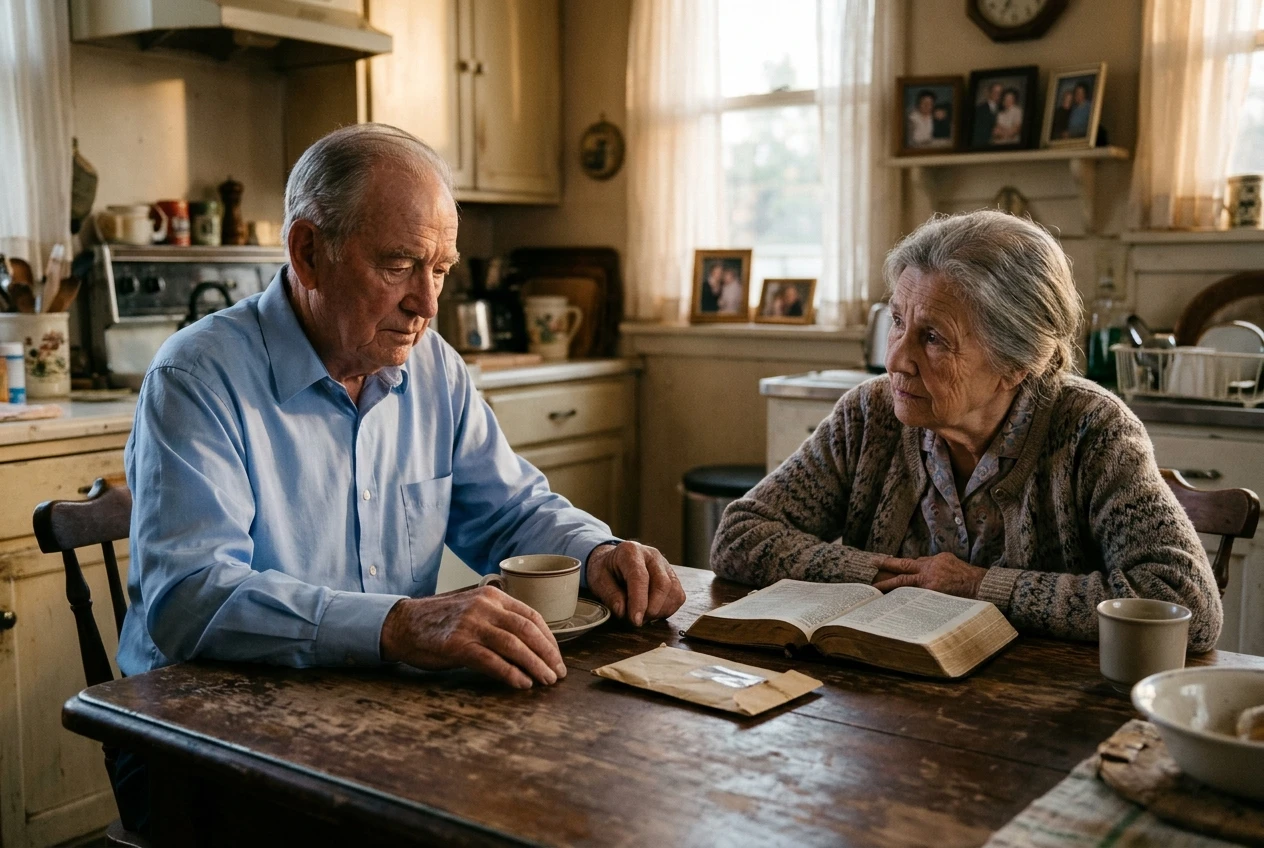
A child learns what trust looks like by watching an adult who has run short of money, because the shortage shows what that adult actually relies on. A lesson on Matthew 6:25-34 is easy to say at a calm table. A pension that has run out before the month has, with a grandchild standing in the kitchen, shows whether the lesson is believed.
You do not need a perfect response. You need a truthful one, spoken calmly and followed by prayer and by the ordinary work of seeking help. Children notice tone, faces and what is left unsaid, so the words below matter less than the steadiness behind them.
For the longer practice of letting a child watch you wait on the Lord day by day, see Let Your Grandchildren Watch You Wait on God for Daily Bread. This article covers the single moments when you must speak.
What do you say when a grandchild asks for something you cannot afford?
Say plainly that you cannot buy it, give the true reason, and turn the child toward what God has already given. Do not invent an excuse, and do not describe the refusal as a punishment or as a sign that God is displeased.
A short form you may adapt:
“I cannot buy that. My pension does not stretch that far this month. We will thank God for what we have, and if it is something you truly need, we will ask Him about it together.”
Notice what this does. It is honest about the limit. It does not shame the child for asking. It keeps a clear line between a want and a need, which Scripture also draws in 1 Timothy 6:8: “having food and raiment let us be therewith content.”
Avoid these replies:
- “We are poor,” said with bitterness, which teaches the child to fear.
- “God doesn’t want you to have it,” which claims knowledge of God’s will that you do not have.
- “Maybe later,” when you know the answer is no, which teaches the child that adults say what is convenient.
If the child is upset, allow the disappointment. You may say, “I understand that you are sad. It is all right to be sad.” Do not rush to correct the feeling, and do not give in to end it.
How do you pray aloud about a need without frightening a child?
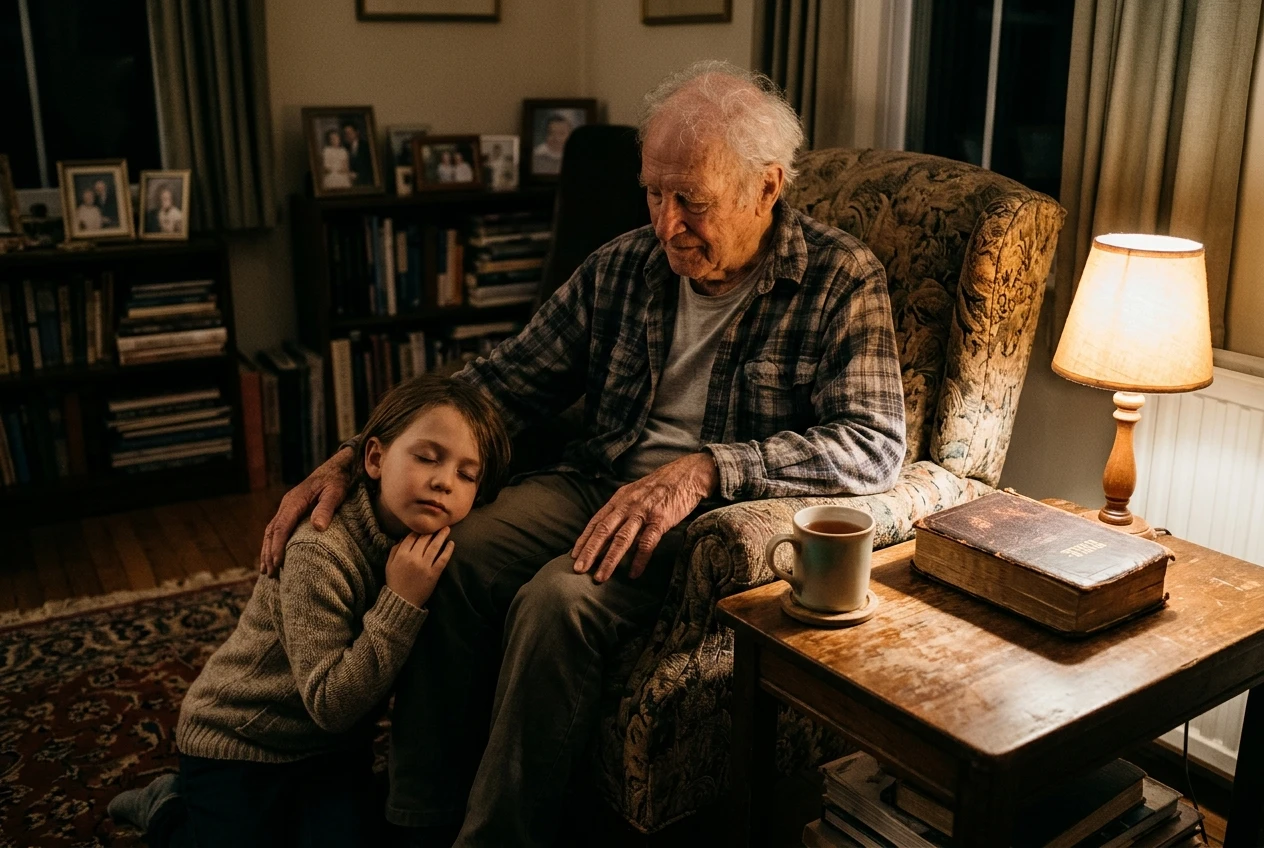
Pray in the child’s hearing about the actual need, in short sentences, and end by giving thanks for something already received. A child is not frightened by a need being named to God. A child is frightened by an adult’s panic, so the prayer should sound like speaking to a Father who is able.
Consider a bare or nearly bare cupboard. A grandchild may see it and say nothing, or say too much. You might kneel or sit with the child and pray:
“Father, You know we have little in the house today. You have taught us to ask for daily bread, and we ask it now. Thank You for the rice we have, and for this day. We will wait on You and do what is in our hands to do.”
Three things are worth keeping in such a prayer:
- Name the need exactly, whether it is bread, a school fee or a bus fare.
- Thank God for something real that is already present.
- State what you will do yourself, such as speaking to a relative, a congregation or a neighbor, so the child sees that prayer and honest effort go together.
Then do what you said. Prayer followed by a quiet, practical step shows the child that trust is not idleness. For a school need in particular, Pray for the Uniform, the Fees and the Lunch by Name, and Wait on God to Supply Them gives more on praying for each item specifically.
How do you teach trust without promising that God will give whatever we ask?
Promise the child only what Scripture promises, and be careful to separate it from what you hope for. God has promised to supply our need (Philippians 4:19), to be with us (Hebrews 13:5), and to care for those who seek His kingdom first (Matthew 6:33). He has not promised that every request will be granted in the form and at the time we choose.
A grandchild who is told “if we pray, God will give us the money by Friday” is being set up for a broken trust. When Friday comes and nothing has arrived, the child may decide that either God or the grandparent has lied. Neither conclusion is true, and neither was necessary.
Say something like this instead:
“God has promised to take care of what we truly need. I do not know how or when He will do it. I do know He has been faithful to His people, and I am going to keep trusting Him.”
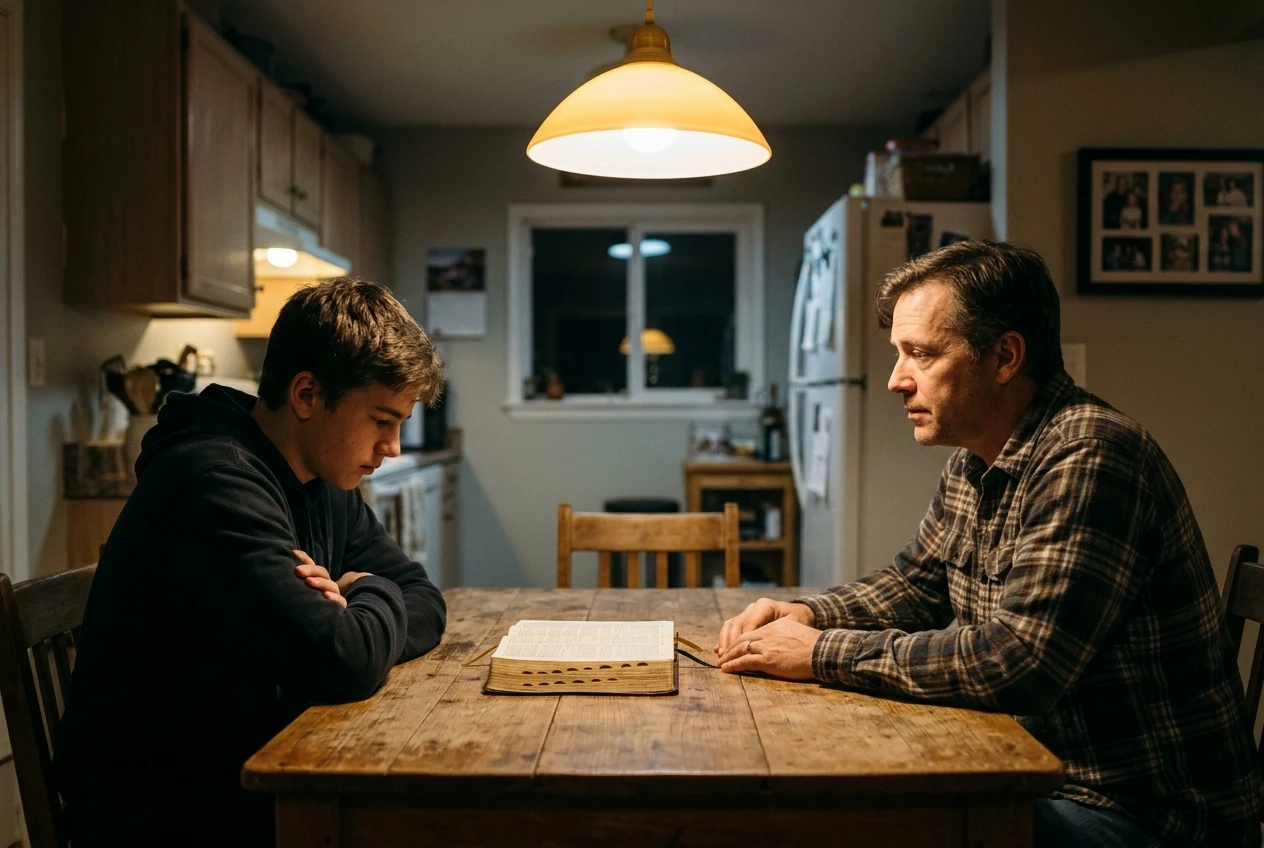
The three Hebrew young men in Daniel 3:17-18 give a pattern worth teaching an older grandchild: “Our God whom we serve is able to deliver us… but if not… we will not serve thy gods.” Their trust did not depend on the outcome they wanted. You can say to a child that God is able, that we ask Him, and that we will trust Him whatever He decides.
A comparison of honest and risky phrases:
Risky to say Truthful to say “God will send the money this week.” “We are asking God, and we will watch to see how He answers.” “If you have enough faith, you will get it.” “God hears us, and He knows what is best.” “We have no money because we do not have enough faith.” “We have little right now, and God is still our Provider.” “Don’t worry, everything will be fine.” “I am not worried, because God is with us, whatever happens.”
What should a grandchild see when provision comes, and when it has not come yet?
When help arrives, the child should see you stop and thank God aloud, and thank the person God used. When help has not arrived, the child should see you keep praying, keep working, and keep your manner steady. Both scenes teach trust, and the second is the harder and more valuable one.
When provision comes, whether it is a gift, a paid fee or a meal from a neighbor, do three things:
- Say the thanks to God in the child’s hearing, naming exactly what was given.
- Thank the human giver warmly and in front of the child, so the child learns that God works through people.
- Write the answer down in a notebook, with the date, so that the child can read it later. The sibling article Write It Down While You Remember explains a plain way to keep such a record.
When the answer is delayed, tell the child it has not come yet, because they will know anyway. Say, “We are still waiting. We prayed on Monday and we will keep praying.” Then keep a normal day: meals at their hour, prayers at their hour, no sudden gloom.
Some delays end in a different answer than the one asked for. If a school need is met some other way, or the family must manage without the item, say so truthfully and help the child find what God did give in the meantime.
How do you stay steady when your own faith feels thin?
Admit to God that your faith is weak, ask Him to help it, and say only true things to the child. The father in Mark 9:24 cried, “Lord, I believe; help thou mine unbelief,” and Christ did not turn him away. You may pray the same prayer.
You do not have to display confidence you do not feel. You need only avoid saying anything false. If a grandchild asks whether you are worried, you may answer, “A little. But I am bringing it to God, and He is able to carry it.” That is honest, and it shows the child what to do with worry.
Some practical supports for a tired believer:
- Keep a short passage in reach, such as Psalm 37:25 or Matthew 6:31-33, and read it aloud when anxiety rises.
- Ask a fellow believer to pray with you, so you are not carrying the need alone.
- Rest when you can. A weary body makes worry louder.
If the anxiety about money is heavy and constant, Why the Anxious Preacher Can Lay Down the Fear of Tomorrow’s Bread speaks to it directly.
Which one habit can you begin with your grandchildren this week?
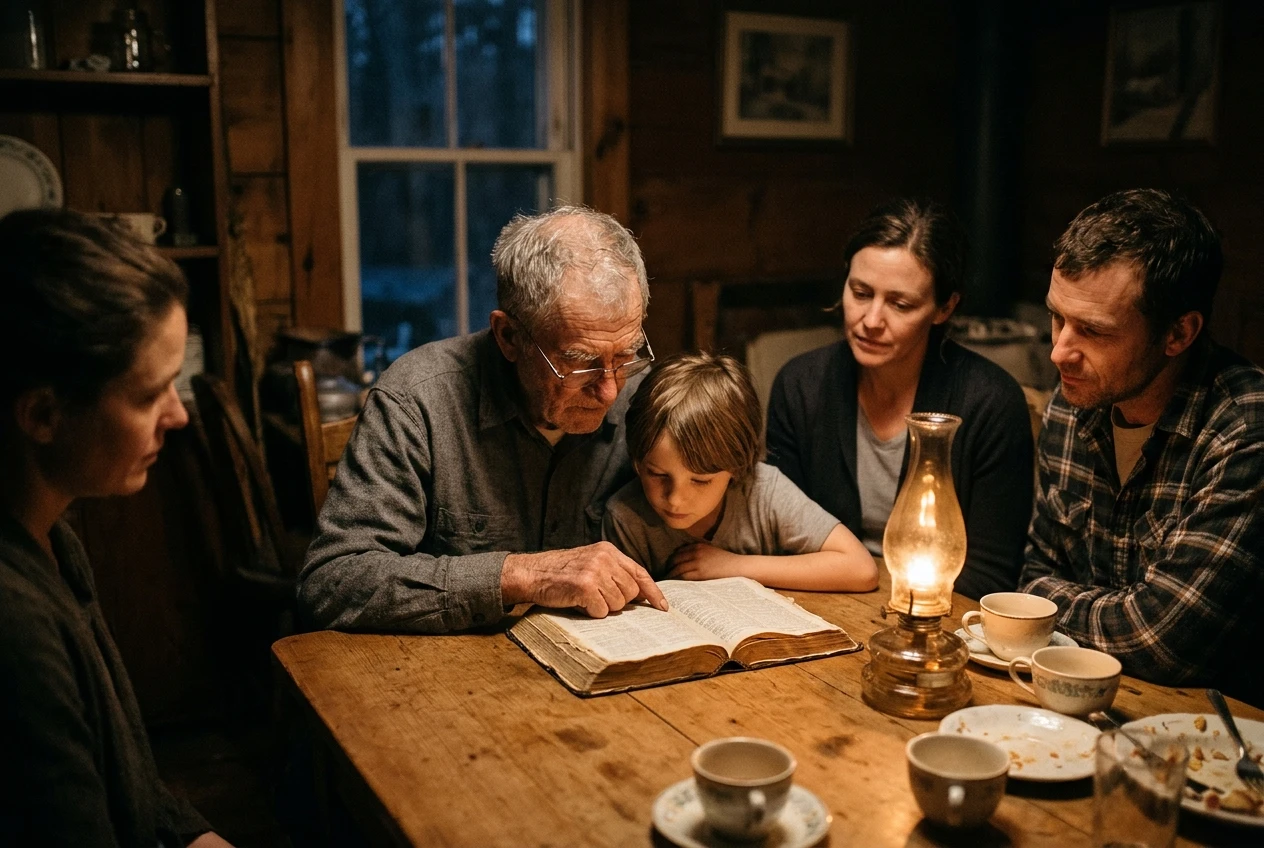
Begin a daily thanksgiving before the meal in which each person, child included, names one thing God gave that day. It costs nothing, takes a minute, and prepares the child to recognize provision when a harder day arrives.
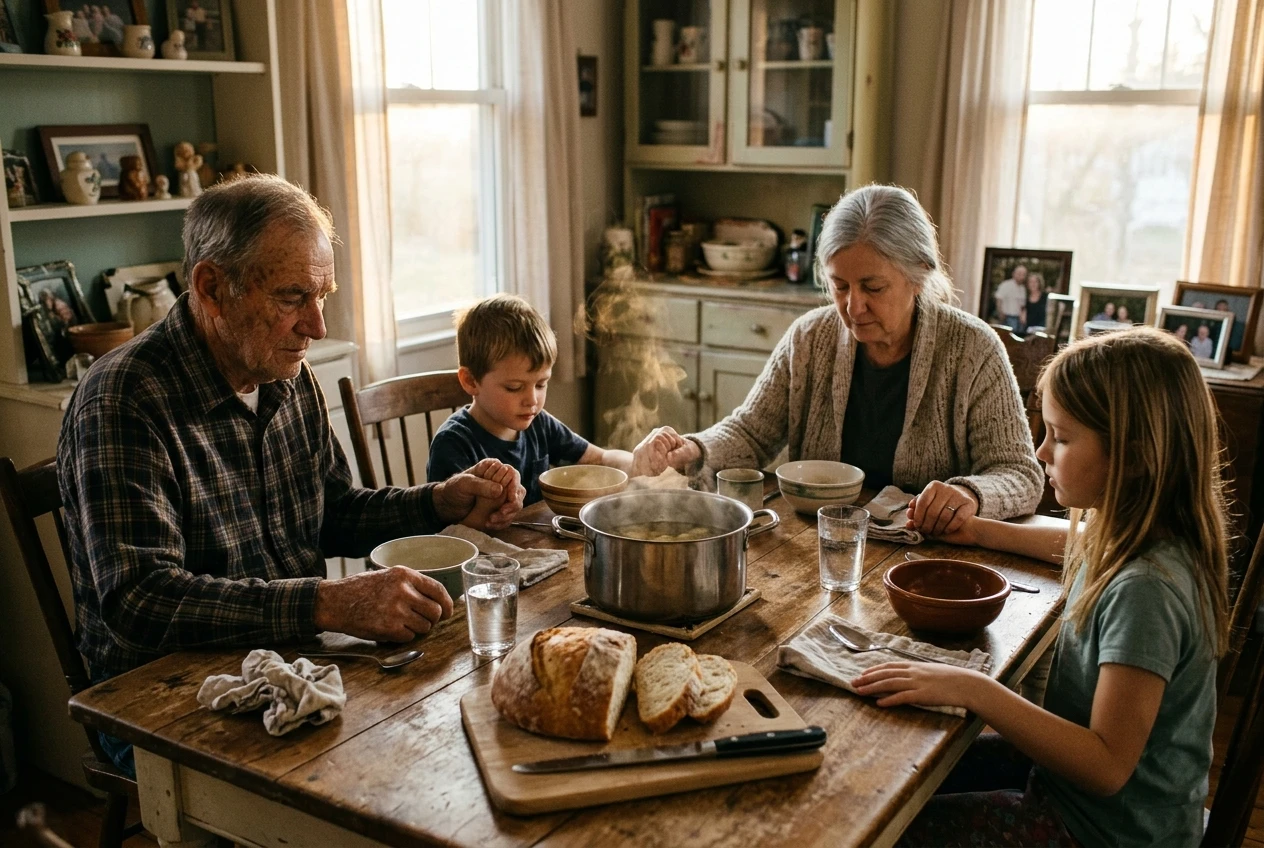
Here is a simple way to start:
- Choose a regular meal, the same one each day.
- Before eating, ask each person to name one thing received that day, however small.
- Say a short prayer of thanks together, including any need the household is carrying.
- Once a week, read aloud from your notebook an answer to prayer you have recorded.
A child who has said thanks every day for plain bread will recognize the same Giver on the day the bread is scarce. The habit does not remove hardship, but it gives the child a settled place to stand when hardship comes.
Choose one hard moment from this article, such as the next time a grandchild asks for something you cannot give, and decide beforehand the plain, truthful words you will say and the short prayer you will pray with them.